The Swiss retailer adopts integrated CO₂ refrigeration for its store in Bellinzona, cutting energy consumption by 20% thanks to Eliwell control technology
In the European landscape of large retailers, sustainability is no longer optional but a strategic driver, as demonstrated by the Swiss retail group, Migros. With a turnover of 31 billion Swiss francs and over 97,000 employees, the retailer continues to invest in advanced technological solutions to reduce the environmental impact of its operations.
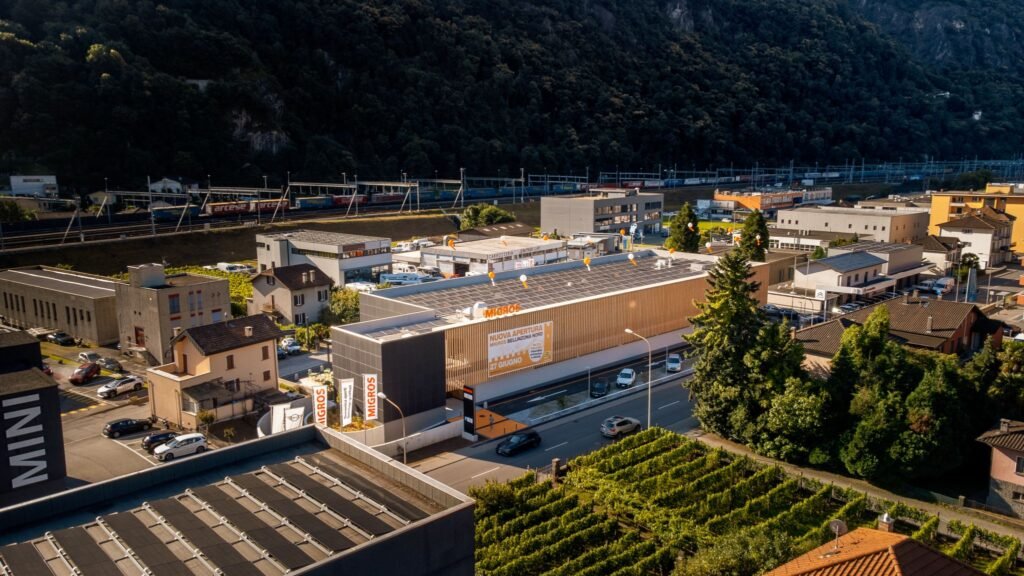
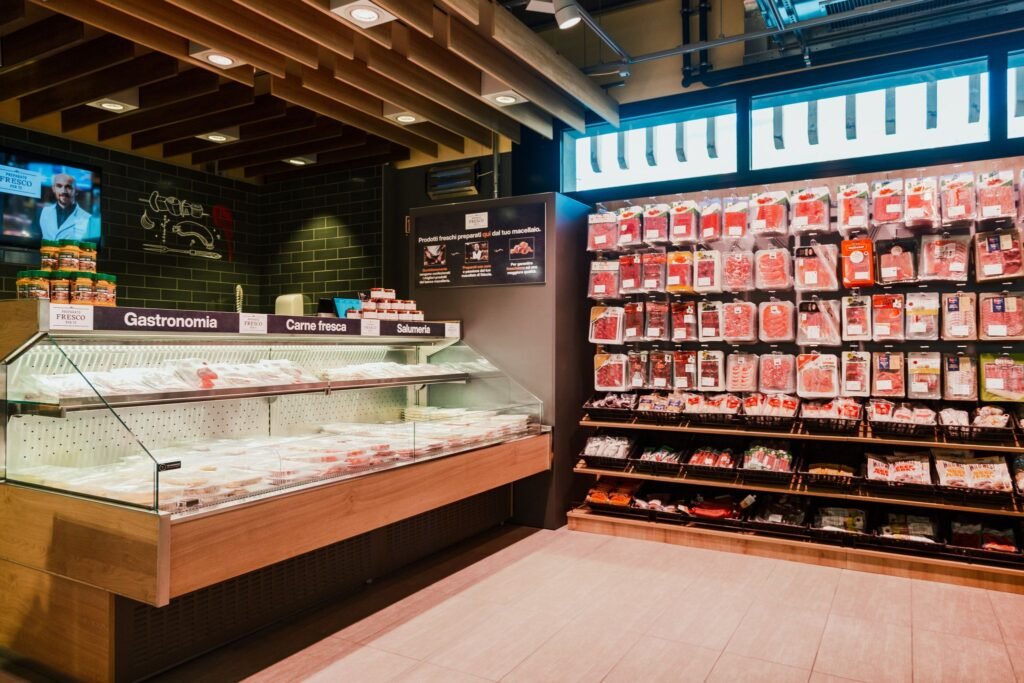
A highlight among the group’s most recent initiatives is the new Bellinzona store, opened in June 2024, where refrigeration is at the heart of an integrated and efficient energy model.
A system-driven climate control strategy
Founded in 1925 and organised as a cooperative with over 2.3 million members, Migros has placed sustainability at the heart of its corporate strategy, translating it into concrete actions, from the installation of photovoltaic systems to railway based logistics to the electrification of its road vehicle fleet.
In this context, improving the efficiency of refrigeration systems becomes a key lever not only for reducing energy consumption but also for rethinking the very role of refrigeration as part of a building.
Refrigeration and heating in a single intelligent central unit
A decisive step in this direction was already taken in 2016 by Migros Ticino, with the introduction of systems capable of simultaneously addressing industrial refrigeration and heating.
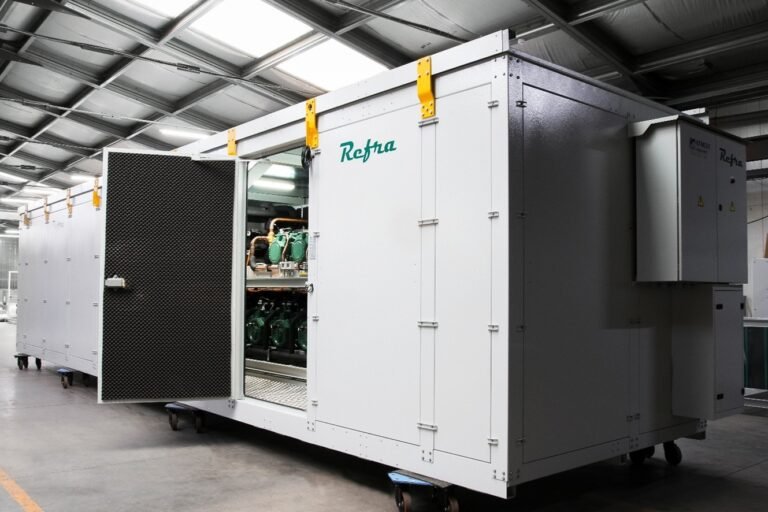
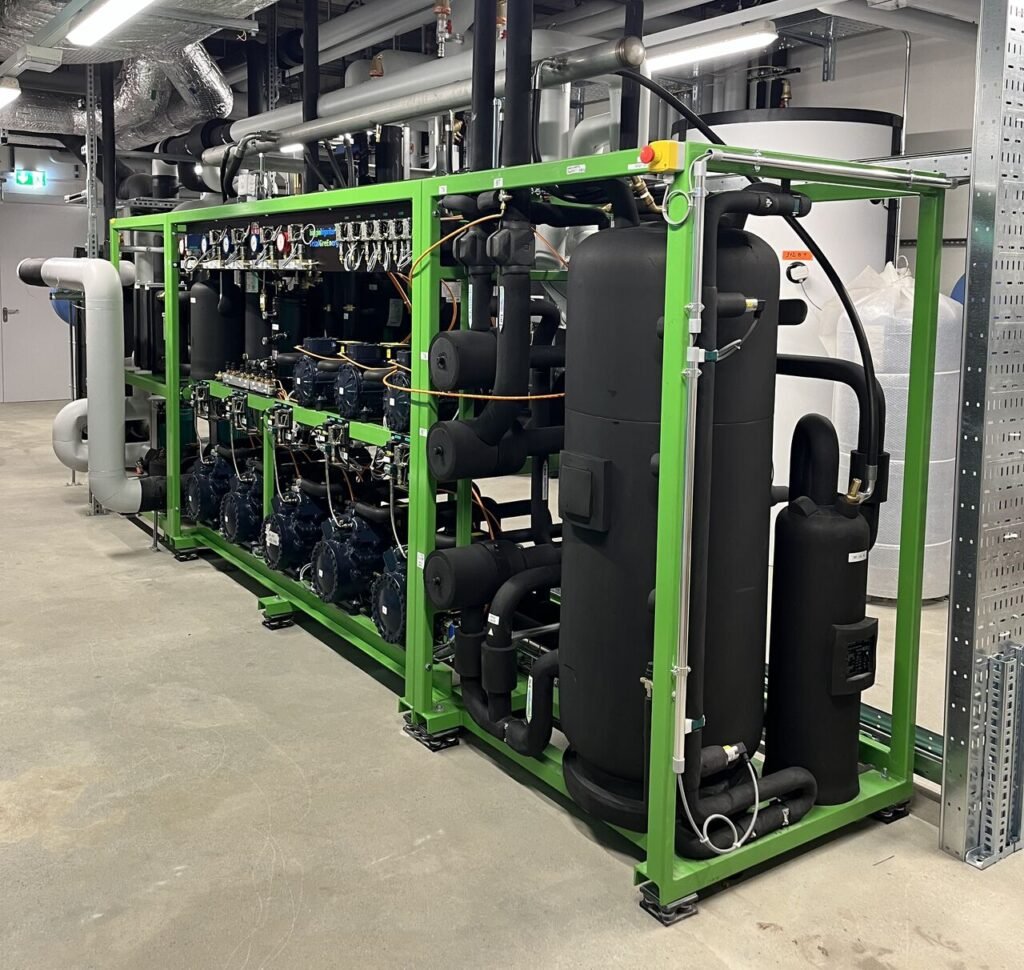
The solution, developed by E. Biaggini SA in collaboration with Eliwell by Schneider Electric, is based on an integrated CO₂ solution that combines refrigeration and heat recovery in a single central unit.
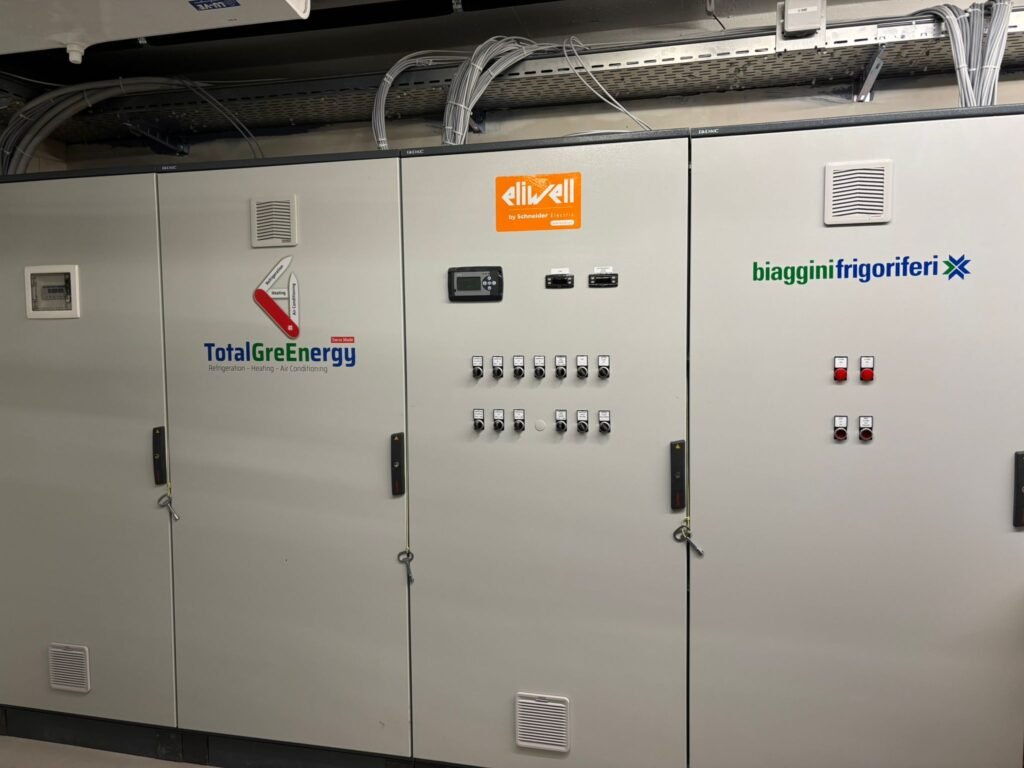
The heart of the system is Eliwell’s control technology, designed to optimally manage CO₂ systems and coordinate the sub-systems (refrigeration and heating) as a result maximising overall energy efficiency.
The Bellinzona case study: measurable performance from the very first months
This integrated architecture was implemented at the new Migros store in Bellinzona, with tangible results right from the start.
Eliminating the traditional boiler, made possible by recovering the heat generated by the refrigeration cycle, has led to a 25% reduction in overall system costs, including installation and operational costs.
On the environmental side, the benefit is equally significant: the store has recorded annual savings of approximately 3,300 cubic meters of natural gas, making a tangible contribution to curbing CO₂ emissions.
Refrigeration performance has also improved, with a 20% reduction in energy consumption compared to the average of stores equipped with conventional systems.
CO₂ technology as the standard for the future
The adoption of natural refrigerants such as CO₂ is a cornerstone of energy transition in the food retail sector. However, the real leap forward only occurs when technology is integrated into a system vision.
In the Bellinzona project, Eliwell’s advanced control technology plays a key role, enabling dynamic and coordinated management of energy resources. The result is a system capable not only of refrigerating, but also of actively contributing to the building’s heating.
Continuous innovation for a more sustainable retail sector
The Migros case confirms how technological innovation applied to refrigeration can generate concrete and measurable benefits, both economically and environmentally.
In a sector increasingly oriented towards sustainability, integrated solutions like the one developed with Eliwell and Biaggini represent a replicable model, destined to become a benchmark for next-generation stores.
The direction is clear: transforming refrigeration systems from simple technical solutions to true energy hubs at the heart of the decarbonisation strategies of large retailers.