The refrigeration industry has seen significant shifts in refrigerant choices over the decades, from natural substances to synthetic options and back again. Amidst growing environmental concerns and stringent regulations, ammonia (NH3) has re-emerged as a prominent player in the refrigeration landscape. This article provides an extensive exploration of ammonia as a refrigerant, detailing its functionality, advantages, challenges, and its position in comparison to other refrigerants.
How Ammonia Refrigeration Works
Fundamentals of Refrigeration Physics
Ammonia refrigeration systems operate on the same basic principles as other refrigeration cycles. The process involves the compression and expansion of the refrigerant to absorb heat from one area and reject it to another, effectively cooling the desired space.
Detailed Explanation of Ammonia Systems
Ammonia refrigeration systems typically operate in a vapor compression cycle. The cycle includes four main components:
- Compressor: Compresses low-pressure ammonia vapor, raising its temperature and pressure.
- Condenser: Cools the high-pressure vapor, condensing it into a liquid.
- Expansion valve: Reduces the pressure of the liquid ammonia.
- Evaporator: The low-pressure liquid ammonia absorbs heat and evaporates, providing the cooling effect.
Thermodynamic Properties of Ammonia
Ammonia has excellent thermodynamic properties that make it an efficient refrigerant:
- High latent heat of vaporization: 1371.2 kJ/kg at -33.3°C (-28°F)
- Low molecular weight: 17.03 g/mol
- High critical temperature: 132.4°C (270.3°F)
- Critical pressure: 11.33 MPa (1643.7 psi)
These properties allow ammonia systems to achieve high coefficients of performance (COP), typically ranging from 4.0-6.0 for industrial applications.
Advantages of Ammonia Refrigeration
Environmental Benefits
Ammonia is a natural refrigerant with zero Ozone Depletion Potential (ODP) and zero Global Warming Potential (GWP). Its use aligns with global efforts to reduce the environmental impact of refrigeration systems. Unlike synthetic refrigerants, ammonia has a very short atmospheric lifetime of only a few days, further minimizing its environmental impact.
Energy Efficiency
Ammonia systems are highly energy-efficient, often outperforming systems using synthetic refrigerants. This efficiency translates to lower operational costs and reduced indirect greenhouse gas emissions. For instance, industrial ammonia systems are generally 15% more energy-efficient than their HFC counterparts.
Cost-effectiveness
Despite higher initial costs, ammonia systems often prove more cost-effective in the long run due to lower refrigerant costs and higher energy efficiency. A typical 100-ton ammonia system may have 15-20% higher initial costs compared to an HFC system but can result in 20-30% lower annual operating costs.
Safety Features
While ammonia is toxic, its pungent odor serves as a built-in leak detection mechanism, alerting personnel to even small leaks long before they reach dangerous concentrations. The odor threshold for ammonia is 5-50 ppm, well below the OSHA permissible exposure limit of 50 ppm (8-hour time-weighted average).Modern ammonia systems incorporate advanced safety features:
- Automatic shut-off valves
- Sophisticated leak detection systems
- Emergency ventilation systems
- Secondary containment measures
These improvements have significantly enhanced the safety profile of ammonia refrigeration systems in recent years.
Disadvantages and Challenges
Toxicity and Safety Concerns
Ammonia is toxic at high concentrations, necessitating stringent safety measures and trained personnel for system operation and maintenance. Exposure limits are typically set at 25-35 ppm for short-term exposure. Despite its toxicity, ammonia’s strong odor provides an early warning of leaks, enhancing safety.
High Initial Costs
Ammonia systems typically have higher upfront costs due to the need for specialized equipment and safety features. However, these costs are often offset by lower operational expenses over the system’s lifespan.
Regulatory Compliance
The use of ammonia refrigeration systems is subject to various regulations and standards, which can be complex to navigate. For instance, the European Union’s EN 378 standard and the international ISO 5149 standard set stringent safety and environmental requirements for ammonia systems.
Comparative Analysis with Other Refrigerants
Comparison with HFCs, CO2, and Hydrocarbons
|
Refrigerant |
GWP |
ODP |
Toxicity |
Flammability |
Efficiency |
|---|---|---|---|---|---|
|
Ammonia |
0 |
0 |
High |
Low |
High |
|
HFCs |
High |
0 |
None |
None |
Moderate |
|
CO2 |
1 |
0 |
None |
None |
Moderate |
|
Hydrocarbons |
Low |
0 |
None |
High |
Moderate |
- HFCs: Ammonia offers superior environmental performance and often better energy efficiency.
- CO2: While both are natural refrigerants, ammonia typically offers better efficiency in warmer climates, especially above 26.7°C (80°F).
- Hydrocarbons: Ammonia has a lower flammability risk but higher toxicity compared to hydrocarbons.
Regulatory Influences
International agreements like the Montreal Protocol and the Kigali Amendment have accelerated the shift towards natural refrigerants like ammonia. These regulations are crucial in shaping the future landscape of refrigerant choices.
Real-World Applications
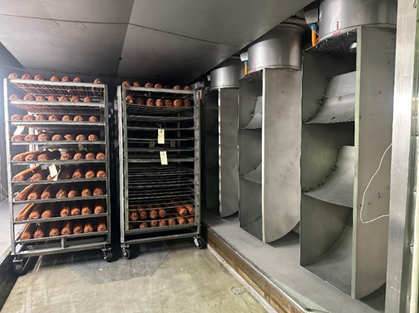
Ammonia is widely used in industrial refrigeration, particularly in food processing, cold storage, and ice rinks. Its efficiency and capacity make it ideal for large-scale applications, especially in temperature ranges from -40°C to 2°C (-40°F to 35.6°F).
Risks and Mitigation Strategies
Safety Measures
Proper system design, regular maintenance, leak detection systems, and emergency response plans are crucial for mitigating risks associated with ammonia refrigeration. Systems are typically designed to operate at temperatures ranging from -40°C to 38°C (-40°F to 100°F).
Training and Expertise
Specialized training is essential for personnel working with ammonia systems to ensure safe operation and maintenance, including understanding the behavior of ammonia at various temperatures and pressures. Industry stakeholders must invest in training programs to build the necessary expertise and ensure the safety and efficiency of ammonia systems.
Technological Advancements
Ongoing research focuses on developing low-charge ammonia systems and improving safety features to expand ammonia’s applicability, even in higher ambient temperature conditions up to 43°C (110°F). Innovations such as variable frequency drives, computer-based control systems, and advanced water treatment technologies have further enhanced the efficiency and safety of ammonia refrigeration systems.
Conclusion
Ammonia refrigeration technology offers a potent combination of environmental friendliness, energy efficiency, and cost-effectiveness for suitable applications. While it presents certain challenges, particularly in terms of safety and initial costs, its benefits make it a compelling choice for many industrial refrigeration needs. As the industry continues to prioritize sustainability and efficiency, ammonia is likely to play an increasingly important role in the future of refrigeration technology, especially in applications requiring temperatures from -40°C to 2°C (-40°F to 35.6°F).