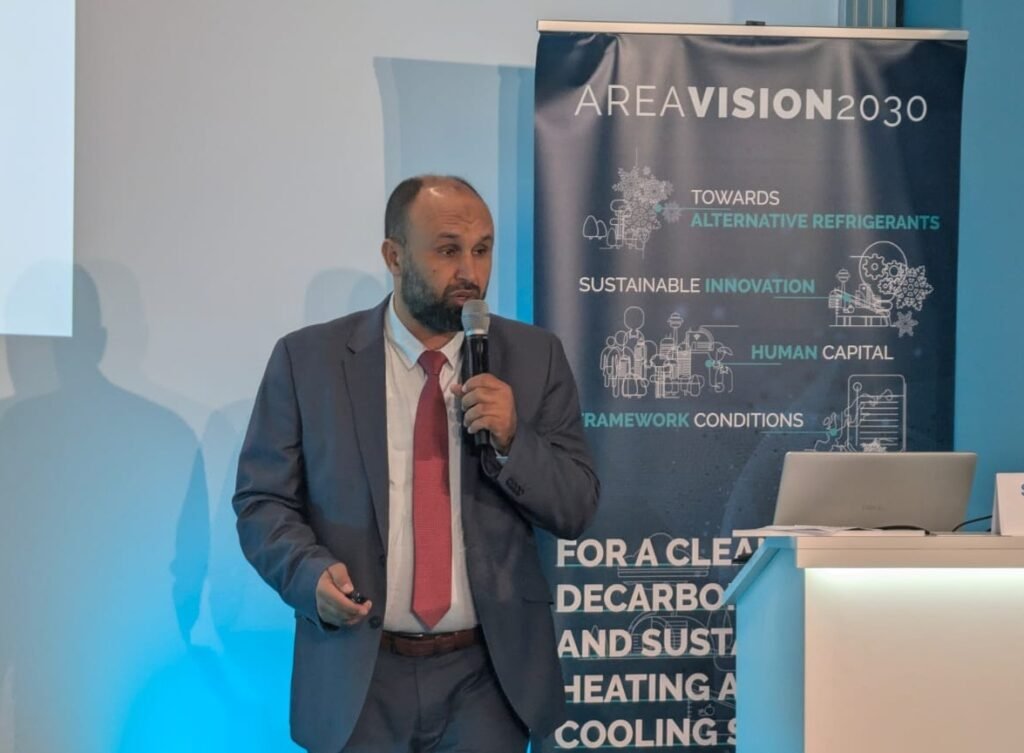
U-3ARC Vice President Said El Harch presented proposals for strengthening refrigeration and air conditioning (RAC) technician certification across Africa at Chillventa 2026, held from 13 to 15 October in Nuremberg, Germany. El Harch, also Director of Alpha Refrigeration Service, addressed certification challenges, workforce competencies, and opportunities for regional recognition.
The presentation highlighted three factors driving certification requirements: the transition to refrigerants such as R290, R32, CO2, and NH3; increasing cooling demand and equipment complexity; and the coexistence of formally educated and informally trained technicians. Certification initiatives are at different stages across Africa, with centres under development in Tunisia, Burkina Faso, and Morocco, alongside national approaches in Ghana, Benin, Nigeria, Egypt, and Tunisia.
El Harch identified six main challenges: fragmented certification schemes, limited recognition of informal experience, insufficient practical assessment facilities and qualified assessors, sustainable financing and governance, safety requirements for new refrigerants, and certificate recognition by authorities and employers. He proposed a four-level competency framework covering foundational skills, servicing operations, alternative refrigerants, and advanced diagnostics, controls, energy performance, and supervision.
For regional recognition, the proposed approach includes national certification frameworks, a common African competency reference, quality-assured assessments, digital credentials and technician registries, and mutual recognition between participating countries. U-3ARC aims to facilitate cooperation among national RAC associations, training organisations, and international partners while supporting capacity building and knowledge exchange.
The recommendations also call for mapping existing certification and licensing systems, investing in practical training centres and assessor development, and piloting cross-border recognition arrangements. “U-3ARC can facilitate dialogue and knowledge transfer while national authorities retain responsibility for regulation and certification,” El Harch stated.