CCF urges UK cold chain CNI status to protect food supply

The white paper sets out 10 measures to address energy instability, cyber-attacks, climate impacts, labour shortages and supply disruption.

CCF urges UK cold chain CNI status to protect food supply

The Cold Chain Federation has launched a white paper warning that growing pressures on the UK cold chain are increasing risks to food security, public health and economic resilience.

The report, The Critical Link: A Resilience Strategy for Protecting UK Food Supply Against Growing Threats to the Cold Chain, sets out ten recommendations, including recognition of the cold chain as Critical National Infrastructure.

The white paper identifies energy instability, cyber-attacks, climate impacts, labour shortages and global supply chain disruption as risks placing pressure on critical food supply infrastructure. It says disruptions could affect food availability, affordability and access to essential products, particularly for vulnerable communities.

The Cold Chain Federation says the cold chain supports 184,000 jobs and underpins food supply across supermarkets, restaurants, schools, foodbanks, hospitals and home deliveries. The recommendations focus on preparedness and response planning, cold chain consideration in food security policy, and recognition within national resilience planning.

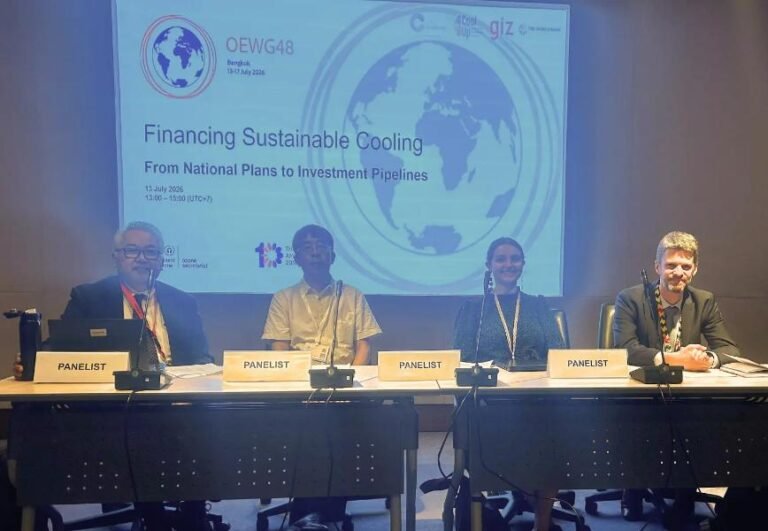
The launch event included remarks from Phil Pluck, CEO of the Cold Chain Federation, and Tom Southall, Deputy CEO. A panel discussion chaired by Southall included Pluck, Professor Tim Lang, Professor Emeritus of Food Policy at City St George’s, University of London, and Kristopher Gibbon-Walsh, Deputy Chief Executive Officer of FareShare and The Felix Project.

“By failing to act on food resilience planning in the UK, the government are failing to protect life essential food supplies to the UK public. The world is growing more and more unstable, and with that instability comes very real risks to food supplies from both the UK and globally,” said Phil Pluck, CEO, Cold Chain Federation. “Having created the strategy, now is the time for the government to act, and fast.”

Get the daily refrigeration briefing

One email a day. Trusted by 3,000+ RACHP professionals.

Related news

Most read this week

All news →

Related insights

Article

Secop’s Solar Direct Drive (SDD) System Earns WHO PQS Approval – The Team Behind It

Partner's material In March 2026, Secop’s Solar Direct Drive Power Management Module was granted WHO PQS prequalification and officially listed in the WHO Catalogue of Prequalified Immunization Devices. The WHO IMD-PQS (Immunization Devices Performance, Quality and Safety programme) is the global benchmark for cold chain equipment used in immunisation. Being listed in its catalogue is

22 Jun 2026
Market Research

EPA Delays Low-GWP Refrigerant Deadlines, Splitting the US Cooling Industry

The deadline that supermarkets faced to install new refrigeration systems running on low-GWP refrigerants was January 1, 2027. It is now January 1, 2032. On May 21, 2026, alongside President Trump in the Oval Office, EPA Administrator Lee Zeldin announced final revisions to the 2023 Technology Transitions Rule and a proposed technical fix to the

25 May 2026
Market Research

2025 in Refrigeration — What Changed, What Mattered, What’s Next

Refindustry has released its 2025 year-in-review, compiled from the most-read and most impactful updates published on https://refindustry.com/. The review captures how the industry moved from “refrigerant choice” discussions to real-world transition execution—where compliance pathways, safety engineering, component readiness, service capacity, and digital monitoring determine outcomes on projects and in day-to-day operations. What shaped 2025 in

21 Jan 2026