NewCold Expands Automated Cold Chain Facilities in Australia

The Sydney site will offer flexible, high-throughput storage across temperature zones while Melbourne gains capacity.

NewCold Expands Automated Cold Chain Facilities in Australia

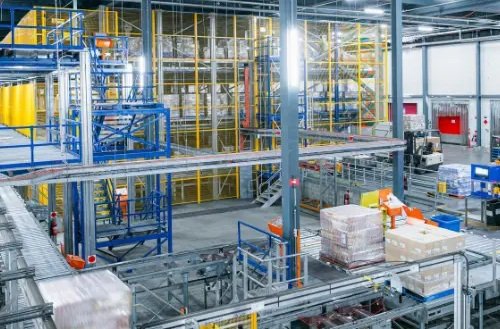
NewCold is expanding its cold chain infrastructure in Australia with continued investment in Melbourne and construction of a new automated cold storage warehouse in western Sydney, scheduled to open in 2026. The developments are intended to support growing demand across frozen, chilled and ambient temperature segments in Australia’s food supply chain.

In Melbourne, NewCold is increasing capacity to strengthen support for customers across Victoria and beyond. The company said its existing Melbourne facilities already support both frozen and chilled operations, helping customers consolidate volumes, reduce handling complexity and improve inventory visibility across categories.

In New South Wales, construction is progressing on the new Sydney automated cold storage warehouse. NewCold said the facility has been designed for flexibility, with high throughput and the ability to accommodate different temperature requirements and storage profiles.

The Sydney site was selected to reduce transport complexity, improve response times and support customers serving one of Australia’s fastest-growing population centers. Across its current operations and future developments, NewCold offers frozen capacity at scale, chilled solutions for faster-moving retail supply chains, and ambient capability and integration across temperature zones.

Automation is central to NewCold’s operating model. The company said automated storage and movement of goods improves safety outcomes, increases accuracy and supports predictable performance as volumes fluctuate.

NewCold said its Australian network is designed to adapt to different product types, turnover speeds and customer requirements, including full automation, hybrid solutions or staged growth over time. The company also said its facilities use energy-efficient systems and modern building design to support consistent temperature control and reduce environmental impact.
Get the daily refrigeration briefing

One email a day. Trusted by 3,000+ RACHP professionals.

Related news

Most read this week

All news →

Related insights

Article

Secop’s Solar Direct Drive (SDD) System Earns WHO PQS Approval – The Team Behind It

Partner's material In March 2026, Secop’s Solar Direct Drive Power Management Module was granted WHO PQS prequalification and officially listed in the WHO Catalogue of Prequalified Immunization Devices. The WHO IMD-PQS (Immunization Devices Performance, Quality and Safety programme) is the global benchmark for cold chain equipment used in immunisation. Being listed in its catalogue is

22 Jun 2026
Tech Guide

Case Study – Effect of Louvers or diffusers on air flow distribution and cooling time on a meat log during Chill cycle

By Kushal Aurangabadkar An experimental analysis was conducted on a cooler space measuring 3.66 m × 6.096 m (12.0 ft × 20.0 ft), equipped with an ammonia refrigeration coil, five 30 cm (12 in.) fans, and five diffusers. The study measured airflow patterns, cooling rates, and heat transfer efficiency in meat storage by testing two configurations:

Kushal Aurangabadkar · 21 Jan 2026
Tech Guide

Total Cost of Ownership (TCO) for Modular Refrigeration Systems in Life Sciences Distribution Centers

by Ramez Naguib, P.E. Introduction Life sciences distribution centers are under immense pressure to deliver consistent temperature control, comply with increasingly stringent regulations, and optimize operational efficiency. Traditional built-up refrigeration systems often prove cumbersome, costly, and slow to implement. In contrast, modular, factory-assembled refrigeration systems have emerged as a compelling alternative. Drawing on lessons from

14 Jan 2026