All-electric Endurance system to support frozen food logistics between UK sites.
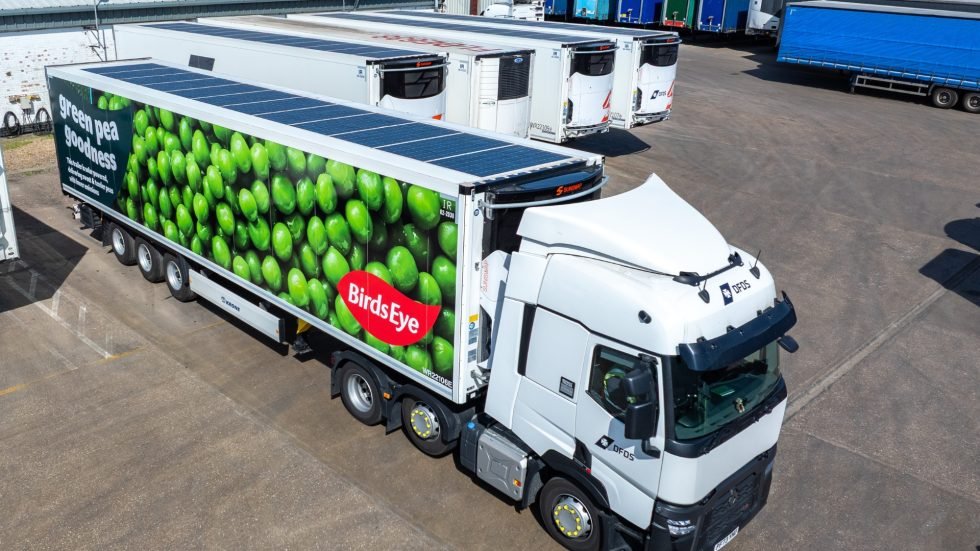
Sunswap has partnered with Birds Eye to deliver zero-emission transport refrigeration for the frozen food brand’s UK logistics operations. The deployment features Sunswap’s Endurance system, designed to support Birds Eye’s 2025 science-based carbon reduction goals by replacing diesel-powered refrigeration with fully electric alternatives.
Product Overview
Manufactured in the UK, the Endurance system integrates an advanced battery setup with roof-mounted solar panels to deliver zero-emission refrigeration suitable for temperature-critical frozen food transport. The system maintains consistent frozen temperatures and is capable of 24-hour frozen operation on a single charge. The trailers, used between Birds Eye’s Lowestoft production facility and Wisbech distribution hub, also feature solar-assisted energy capture during operation, particularly effective in summer months.
The Endurance units eliminate approximately 24 tonnes of CO₂ annually, along with nitrogen oxides and particulate matter. The technology also offers operational benefits such as reduced noise levels and potential cost savings of up to 80% compared to diesel systems.
“We’re delighted to be working with DFDS and Sunswap to help reduce the environmental impact of our operations,” said Anna Owen, Head of Sustainability at Birds Eye UK&I. “Sunswap’s proven electric technology enables us to maintain the highest standards of temperature-controlled transport while helping reduce our carbon emissions.”
Market Context
This deployment builds on Sunswap’s ongoing trials and validations, including more than 30 pilots with retailers and logistics firms. As part of the Move to -15°C coalition, both Sunswap and Birds Eye’s parent company Nomad Foods aim to reduce energy use in frozen food transport through zero-emission technologies and future temperature optimisation strategies.
Sunswap’s innovations have earned industry recognition, including the Made in Britain Innovation Award and TCS&D Transport Refrigeration Manufacturer of the Year 2024. The collaboration with Birds Eye reinforces Sunswap’s position as a key contributor to cold chain decarbonisation.