Esta página solo está disponible en inglés. Ir a la portada en español

×

Questa pagina è disponibile solo in inglese. Home page in italiano

×

Diese Seite ist nur auf Englisch verfügbar. Zur deutschen Startseite

×

Cette page est disponible uniquement en anglais. Aller à la page d'accueil en français

×

UPS Opens Philippines Hub with Refrigeration for Healthcare Shipments

The 30,000-square-meter facility adds three refrigeration and freezer units, re-icing capability and RFID tracking for critical shipments.

UPS Opens Philippines Hub with Refrigeration for Healthcare Shipments

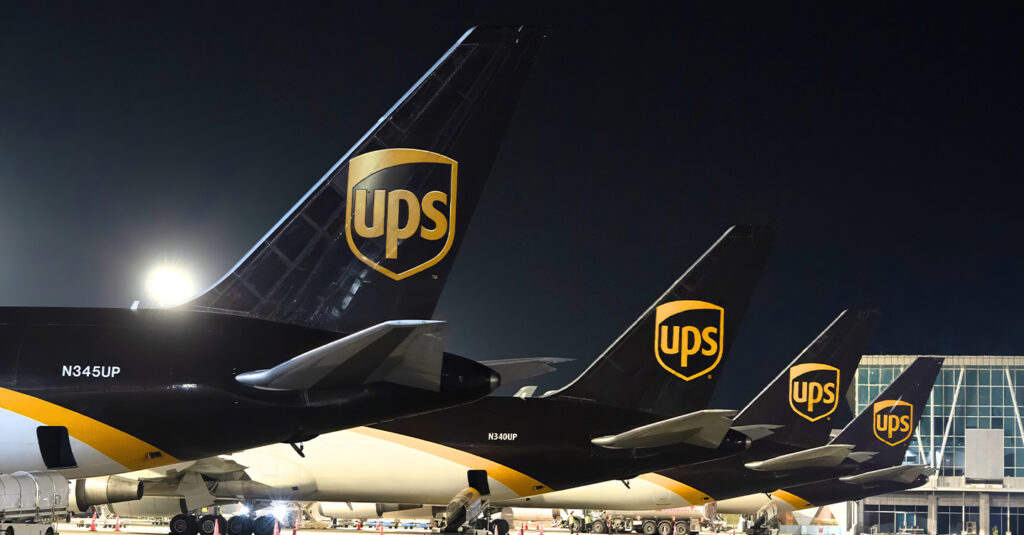
UPS opened a new logistics hub at Clark International Airport in the Philippines on October 15, 2026. The facility, representing an investment of more than $80 million, includes temperature-controlled storage and specialized handling for healthcare shipments. The expansion also improves delivery services across more than 1,100 global trade lanes.

The 30,000-square-meter (323,000-square-foot) hub is 15 times larger than the previous facility. It can process an average of 46,000 packages daily, with a maximum capacity of 15,000 packages per hour. The facility also supports time-sensitive and temperature-sensitive shipments for healthcare, high-tech and manufacturing customers.

The sustainability-certified hub houses three refrigeration and freezer units operating within a temperature range of -20 to 25°C (-4 to 77°F). It also includes dedicated re-icing capability and UPS Premier RFID technology for priority handling and enhanced visibility of critical healthcare shipments.

An automated sorting system can process up to 9,000 small packages per hour. The facility also uses electric ground servicing equipment, including cargo tractors, belt and cargo loaders, ground processing units and forklifts.

UPS now operates 170 weekly flight segments into and out of Clark, connecting Asia Pacific, India, Europe and the United States. The hub has created nearly 600 jobs and enables delivery improvements of up to two days on selected routes involving eastern China, Southeast Asia and India.

The opening forms part of UPS’s ongoing investment in its Asia Pacific logistics network. In 2026, the company also opened a logistics center in Taiwan, began construction of a hub at Hong Kong International Airport and expanded its facility at Incheon Airport.
Get the daily refrigeration briefing

One email a day. Trusted by 3,000+ RACHP professionals.

More on Cold Chain

All on Cold Chain →

Insights

Secop's Solar Direct Drive (SDD) System Earns WHO PQS Approval – The Team Behind It
Article

Secop’s Solar Direct Drive (SDD) System Earns WHO PQS Approval – The Team Behind It

Partner's material In March 2026, Secop’s Solar Direct Drive Power Management Module was granted WHO PQS prequalification and officially listed in the WHO Catalogue of Prequalified Immunization Devices. The WHO IMD-PQS (Immunization Devices Performance, Quality and Safety programme) is the global benchmark for cold chain equipment used in immunisation. Being listed in its catalogue is

22 Jun 2026
Case Study - Effect of Louvers or diffusers on air flow distribution and cooling time on a meat log during Chill cycle
Tech Guide

Case Study – Effect of Louvers or diffusers on air flow distribution and cooling time on a meat log during Chill cycle

By Kushal Aurangabadkar An experimental analysis was conducted on a cooler space measuring 3.66 m × 6.096 m (12.0 ft × 20.0 ft), equipped with an ammonia refrigeration coil, five 30 cm (12 in.) fans, and five diffusers. The study measured airflow patterns, cooling rates, and heat transfer efficiency in meat storage by testing two configurations:

Kushal Aurangabadkar · 21 Jan 2026
Total Cost of Ownership (TCO) for Modular Refrigeration Systems in Life Sciences Distribution Centers
Tech Guide

Total Cost of Ownership (TCO) for Modular Refrigeration Systems in Life Sciences Distribution Centers

by Ramez Naguib, P.E. Introduction Life sciences distribution centers are under immense pressure to deliver consistent temperature control, comply with increasingly stringent regulations, and optimize operational efficiency. Traditional built-up refrigeration systems often prove cumbersome, costly, and slow to implement. In contrast, modular, factory-assembled refrigeration systems have emerged as a compelling alternative. Drawing on lessons from

14 Jan 2026
Everything on Cold Chain: 2,050 articles, 2 case studies, 23 insights

Most read this month

All news →