Esta página solo está disponible en inglés. Ir a la portada en español

×

Questa pagina è disponibile solo in inglese. Home page in italiano

×

Diese Seite ist nur auf Englisch verfügbar. Zur deutschen Startseite

×

Cette page est disponible uniquement en anglais. Aller à la page d'accueil en français

×

Seven Kenyan Counties Present Sustainable Cooling Projects for Investment

Projects span cold chains, healthcare refrigeration, dairy cooling and efficient buildings as SEforALL launches a finance-readiness guide.

Seven Kenyan Counties Present Sustainable Cooling Projects for Investment

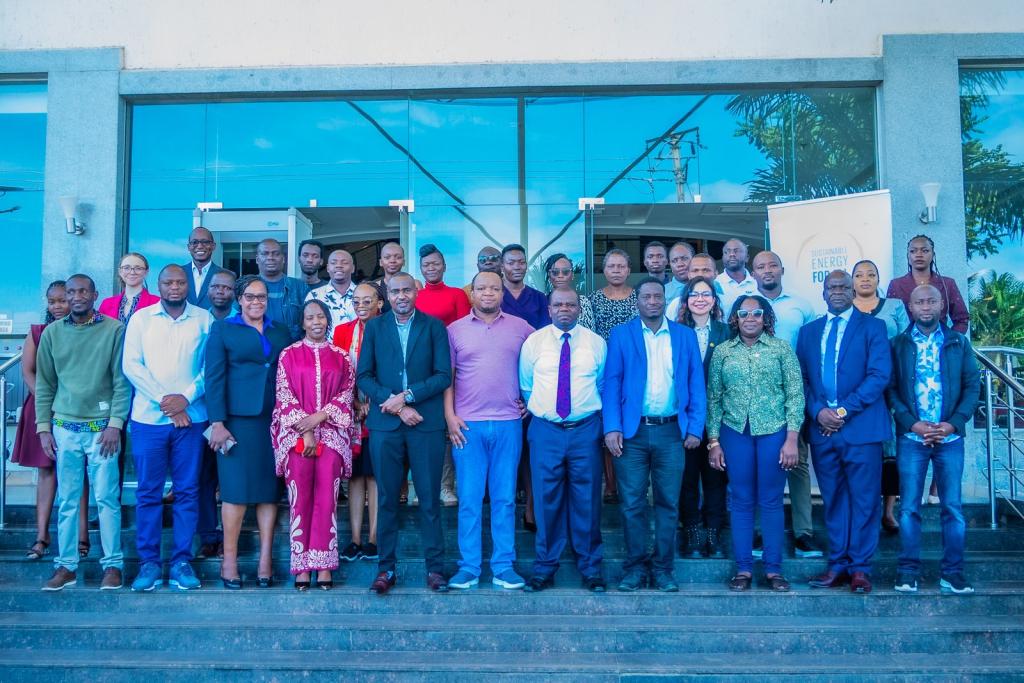
Seven counties in Kenya presented sustainable cooling projects to government officials, development partners, technology providers and industry representatives at the Sustainable Cooling Marketplace in Kisumu. The event, organized in collaboration with the County Government of Kisumu and supported by Sustainable Energy for All (SEforALL), also marked the launch of SEforALL’s Investment Prospectus Guide for Heat and Cooling Action Plans.

Representatives from Homa Bay, Kilifi, Kisumu, Makueni, Nakuru, Taita Taveta and Tana River identified seven potential projects covering agricultural and fisheries cold chains, healthcare refrigeration, dairy cooling and energy-efficient buildings. Proposed installations include solar-powered ice-making plants, fish cold rooms, solar cold storage for fishing communities and a vegetable packhouse with 15 tonnes (approximately 16.5 US tons) of cold storage capacity for African leafy vegetables.

Other proposals include six solar-powered milk-chilling plants, new and replacement vaccine refrigerators and cold chain equipment for healthcare facilities, and the replacement of air conditioners in 30 public classrooms with high-efficiency units. Counties also proposed passive cooling measures, green building design and urban cooling interventions.

The Investment Prospectus Guide provides a five-step process for developing finance-ready projects, covering project definition, stakeholder engagement, costing, financing scenarios, investment documentation and connections with financing partners. Potential funding sources include public budgets, grants, concessional finance and blended finance. Participants identified limited technical capacity, insufficient data and project preparation requirements as key barriers to securing investment.

Kenya’s National Cooling Action Plan, launched in 2023, prioritizes energy-efficient cooling appliances, low-global-warming-potential refrigerants and expanded access to sustainable cooling, including agricultural cold chains. William Melau, Assistant Coordinator of the National Ozone Unit at the Ministry of Environment, Climate Change and Forestry, also highlighted solar-powered cooling, passive cooling and Kenya’s commitments under the Kigali Amendment. SEforALL plans to continue supporting counties in identifying priority projects and engaging potential financiers.

Get the daily refrigeration briefing

One email a day. Trusted by 3,000+ RACHP professionals.

More on Cold Chain

All on Cold Chain →

Insights

Secop's Solar Direct Drive (SDD) System Earns WHO PQS Approval – The Team Behind It
Article

Secop’s Solar Direct Drive (SDD) System Earns WHO PQS Approval – The Team Behind It

Partner's material In March 2026, Secop’s Solar Direct Drive Power Management Module was granted WHO PQS prequalification and officially listed in the WHO Catalogue of Prequalified Immunization Devices. The WHO IMD-PQS (Immunization Devices Performance, Quality and Safety programme) is the global benchmark for cold chain equipment used in immunisation. Being listed in its catalogue is

22 Jun 2026
Case Study - Effect of Louvers or diffusers on air flow distribution and cooling time on a meat log during Chill cycle
Tech Guide

Case Study – Effect of Louvers or diffusers on air flow distribution and cooling time on a meat log during Chill cycle

By Kushal Aurangabadkar An experimental analysis was conducted on a cooler space measuring 3.66 m × 6.096 m (12.0 ft × 20.0 ft), equipped with an ammonia refrigeration coil, five 30 cm (12 in.) fans, and five diffusers. The study measured airflow patterns, cooling rates, and heat transfer efficiency in meat storage by testing two configurations:

Kushal Aurangabadkar · 21 Jan 2026
Total Cost of Ownership (TCO) for Modular Refrigeration Systems in Life Sciences Distribution Centers
Tech Guide

Total Cost of Ownership (TCO) for Modular Refrigeration Systems in Life Sciences Distribution Centers

by Ramez Naguib, P.E. Introduction Life sciences distribution centers are under immense pressure to deliver consistent temperature control, comply with increasingly stringent regulations, and optimize operational efficiency. Traditional built-up refrigeration systems often prove cumbersome, costly, and slow to implement. In contrast, modular, factory-assembled refrigeration systems have emerged as a compelling alternative. Drawing on lessons from

Ramez Naguib · 14 Jan 2026
Everything on Cold Chain: 2,061 articles, 2 case studies, 23 insights

Most read this month

All news →