Esta página solo está disponible en inglés. Ir a la portada en español

×

Questa pagina è disponibile solo in inglese. Home page in italiano

×

Diese Seite ist nur auf Englisch verfügbar. Zur deutschen Startseite

×

Cette page est disponible uniquement en anglais. Aller à la page d'accueil en français

×

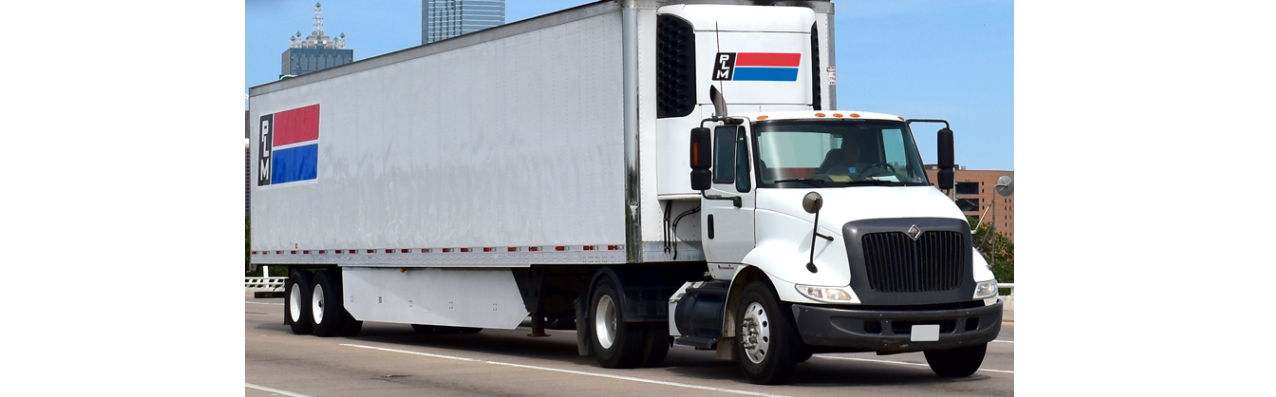
Delivery of zero-emission refrigerated trailers for leasing by PLM Fleet, LLC

Delivery of zero-emission refrigerated trailers for leasing by PLM Fleet, LLC

Marubeni Corporation and Mizuho Leasing Company, Limited have begun delivery of zero-emission (*) refrigerated trailers designed and manufactured by Advanced Energy Machines in the United States to customers in December last year through PLM Fleet, LLC, a U.S.-based refrigerated trailer leasing and rental business.

As a leader in the U.S. cold chain supply industry, PLM has been educating refrigerated fleet operators on the viability of zero-emission refrigerated trailers, holding joint exhibitions and lectures with AEM, since 2019. In May 2020, PLM signed an agreement with AEM and started sales activities in the U.S. market. PLM has since signed agreements with major customers and began delivery of zero-emission refrigerated trailers in 2020. Interest and demand for the zero-emission technology is steadily increasing as the technology continues to prove itself as a viable alternative to diesel.

In the United States, hybridization and electrification are accelerating in not only passenger cars and trucks, but also refrigerated trailers equipped with transport refrigeration units traditionally powered by diesel engines. Companies have begun to transition fleet equipment to green alternatives leveraging lease flexibility as an important tool in the change. The state of California is leading the way with guidance aimed at accelerating the reduction of harmful pollutants by providing support for zero-emission vehicles and equipment as well as infrastructure and distributed energy solutions.

Compared to diesel powered transport refrigeration units (hereinafter “TRUs”), AEM zero-emission technology eliminates many tons of carbon dioxide annually while also eliminating harmful nitrogen oxides. In addition to helping the environment, the AEM TRUs use low-voltage, safe charging to greatly reduce the risk of electric shock to equipment users. Available across all trailer sizes and configurations, including multiple temperature applications, the AEM TRUs use battery technology along with solar and momentum generation to extend useful routes before recharging.

Through PLM, Marubeni and Mizuho Leasing will contribute to deliver low-carbon and sustainable solutions by expanding environmentally focused products with advanced technology in the cold chain market, which will continue to grow and evolve in the years to come.


(*) Zero emission: No exhaust gas such as carbon dioxide and nitrogen oxides discharged while driving.
Get the daily refrigeration briefing

One email a day. Trusted by 3,000+ RACHP professionals.

More on Cold Chain

All on Cold Chain →

Insights

Secop's Solar Direct Drive (SDD) System Earns WHO PQS Approval – The Team Behind It
Article

Secop’s Solar Direct Drive (SDD) System Earns WHO PQS Approval – The Team Behind It

Partner's material In March 2026, Secop’s Solar Direct Drive Power Management Module was granted WHO PQS prequalification and officially listed in the WHO Catalogue of Prequalified Immunization Devices. The WHO IMD-PQS (Immunization Devices Performance, Quality and Safety programme) is the global benchmark for cold chain equipment used in immunisation. Being listed in its catalogue is

22 Jun 2026
Case Study - Effect of Louvers or diffusers on air flow distribution and cooling time on a meat log during Chill cycle
Tech Guide

Case Study – Effect of Louvers or diffusers on air flow distribution and cooling time on a meat log during Chill cycle

By Kushal Aurangabadkar An experimental analysis was conducted on a cooler space measuring 3.66 m × 6.096 m (12.0 ft × 20.0 ft), equipped with an ammonia refrigeration coil, five 30 cm (12 in.) fans, and five diffusers. The study measured airflow patterns, cooling rates, and heat transfer efficiency in meat storage by testing two configurations:

Kushal Aurangabadkar · 21 Jan 2026
Total Cost of Ownership (TCO) for Modular Refrigeration Systems in Life Sciences Distribution Centers
Tech Guide

Total Cost of Ownership (TCO) for Modular Refrigeration Systems in Life Sciences Distribution Centers

by Ramez Naguib, P.E. Introduction Life sciences distribution centers are under immense pressure to deliver consistent temperature control, comply with increasingly stringent regulations, and optimize operational efficiency. Traditional built-up refrigeration systems often prove cumbersome, costly, and slow to implement. In contrast, modular, factory-assembled refrigeration systems have emerged as a compelling alternative. Drawing on lessons from

Ramez Naguib · 14 Jan 2026
Everything on Cold Chain: 2,058 articles, 2 case studies, 23 insights

Most read this month

All news →