Esta página solo está disponible en inglés. Ir a la portada en español

×

Questa pagina è disponibile solo in inglese. Home page in italiano

×

Diese Seite ist nur auf Englisch verfügbar. Zur deutschen Startseite

×

Cette page est disponible uniquement en anglais. Aller à la page d'accueil en français

×

VFD controlled refrigeration system saves 35% in energy costs

VFD controlled refrigeration system saves 35% in energy costs

Energy savings of an average of 35 per cent have been achieved on a supermarket refrigeration rack system and roof top package units following the installation of variable frequency drive (VFD) technology.

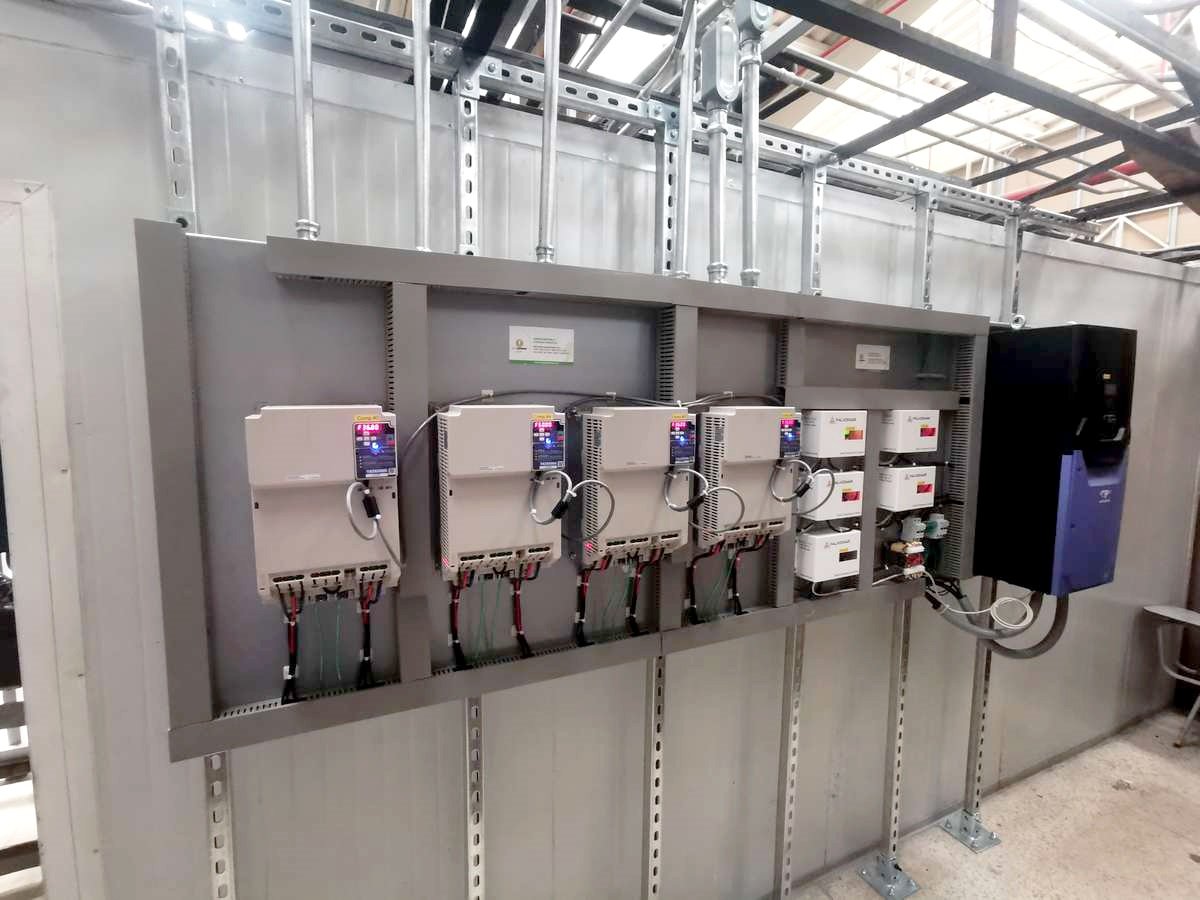
Falkonair Inc, a specialist HVAC-R software manufacturer, partnered with EcoPower, a contractor in Costa Rica, to retrofit multiple systems at a large supermarket retailer’s sites. They used Invertek Drives Optidrive Eco VFDs.

Falkonair’s product, the Smart Compressor Control (SCC), was utilised to enable inefficient fixed speed compressors to be converted to variable speed systems, the only product in the market to use temperature sensors versus pressure control. 

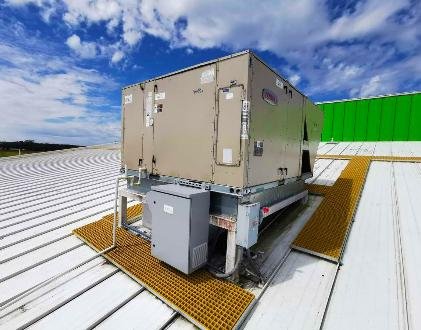
“We were dealing with both HVAC and refrigeration systems and the Optidrive Eco was used on the compressor within the refrigeration rack systems and roof top packaged units.

“The customer wanted the installation to be done as quickly as possible. Invertek had the advantage due to their reliability and the company’s sales partner in Costa Rica having the relevant stock available,” said Christopher Micallef, CEO of Falkonair.

Optidrive Eco, 3PH, 480V and 230V VFDs with both IP55 enclosures were mounted on both the roof and in the refrigeration plant room. These drives were installed on both Bitzer and Copeland Discus reciprocating and LG scroll compressors.

The installed systems demonstrate the compatibility and effectiveness of the Optidrive VFD range in increasing efficiencies in HVAC-R systems and reducing energy use.

Not only does the system reduce energy use and associated costs, but it’s also helping contribute to a reduction in emissions which is beneficial for the environment. Additionally, the system is more efficient with less downtime which is critical for a retailer with a large refrigeration system.

The Optidrive Eco is designed for a range of HVAC-R and pump systems. The Eco is available in a range of frame sizes and enclosures, including IP66 / NEMA 4X. It’s available in models ranging from 0.75kW to 250kW / 1HP to 350HP and 200V to 600V single and three-phase.
 

Get the daily refrigeration briefing

One email a day. Trusted by 3,000+ RACHP professionals.

More on Cold Chain

All on Cold Chain →

Insights

Secop's Solar Direct Drive (SDD) System Earns WHO PQS Approval – The Team Behind It
Article

Secop’s Solar Direct Drive (SDD) System Earns WHO PQS Approval – The Team Behind It

Partner's material In March 2026, Secop’s Solar Direct Drive Power Management Module was granted WHO PQS prequalification and officially listed in the WHO Catalogue of Prequalified Immunization Devices. The WHO IMD-PQS (Immunization Devices Performance, Quality and Safety programme) is the global benchmark for cold chain equipment used in immunisation. Being listed in its catalogue is

22 Jun 2026
Case Study - Effect of Louvers or diffusers on air flow distribution and cooling time on a meat log during Chill cycle
Tech Guide

Case Study – Effect of Louvers or diffusers on air flow distribution and cooling time on a meat log during Chill cycle

By Kushal Aurangabadkar An experimental analysis was conducted on a cooler space measuring 3.66 m × 6.096 m (12.0 ft × 20.0 ft), equipped with an ammonia refrigeration coil, five 30 cm (12 in.) fans, and five diffusers. The study measured airflow patterns, cooling rates, and heat transfer efficiency in meat storage by testing two configurations:

Kushal Aurangabadkar · 21 Jan 2026
Total Cost of Ownership (TCO) for Modular Refrigeration Systems in Life Sciences Distribution Centers
Tech Guide

Total Cost of Ownership (TCO) for Modular Refrigeration Systems in Life Sciences Distribution Centers

by Ramez Naguib, P.E. Introduction Life sciences distribution centers are under immense pressure to deliver consistent temperature control, comply with increasingly stringent regulations, and optimize operational efficiency. Traditional built-up refrigeration systems often prove cumbersome, costly, and slow to implement. In contrast, modular, factory-assembled refrigeration systems have emerged as a compelling alternative. Drawing on lessons from

Ramez Naguib · 14 Jan 2026
Everything on Cold Chain: 2,058 articles, 2 case studies, 23 insights

Most read this month

All news →