Nidec Global Appliance expanded into the refrigeration sector with its acquisition of compressor manufacturer Embraco in 2019. Since then, the company has invested heavily in R&D, bringing various exciting new products to market.
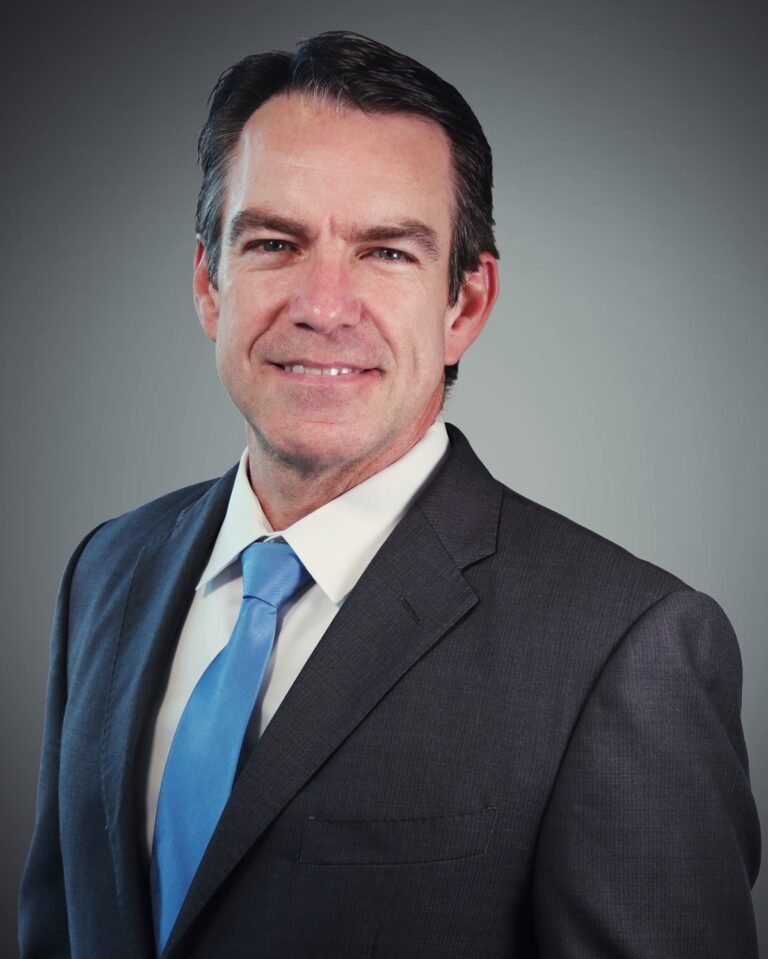
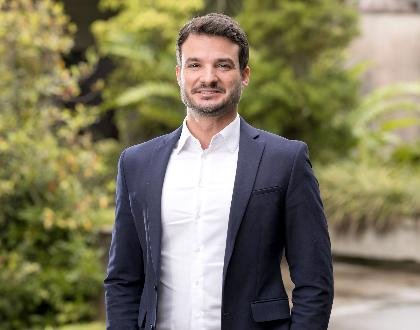
In an exclusive interview, Refrigeration Industry speaks to Nidec Global Appliance President Guilherme Almeida about Embraco’s new brand position, global refrigeration industry trends on the rise, and natural refrigerant product growth—amongst others.
What does the future of refrigeration look like?
Refrigeration Industry (Ri): Since the acquisition of Embraco, how has the company evolved?
Guilherme Almeida (GA): First, it is important to explain the structure of the Nidec group. It has six divisions and one of them is ACIM (Nidec Appliance, Commercial, and Industrial Motors business unit). In its turn, ACIM has three business platforms and one of them is Nidec Global Appliance (GA), which is the one that incorporated Embraco.
Before the acquisition of Embraco, Nidec Global Appliance was composed of plants focused on motor manufacturing for home appliances (washing machines, dryers, and dishwashers). With Embraco, the platform’s scope of action expanded to the refrigeration market, both residential and commercial. It also added Embraco’s seven manufacturing plants, thousands of employees, and high-end research centers.
The new structure created a competitive, innovative, and robust company that is a global partner for home and commercial appliances industries, and that accounts for a significant percentage of ACIM’s annual turnover.
Ri: Embraco recently announced a new brand positioning. What has already been put in place to facilitate this plan, and what is planned for 2024?
GA: That’s right, at the end of 2023, Embraco announced a new positioning to consolidate its leadership in the refrigeration industry, highlighting the “thing ahead” spirit that has been in the brand’s DNA since its beginning in 1971. To think ahead means that we anticipate trends, focus on future needs, develop smart products that can transform the market, and are innovation leaders making a positive impact on global refrigeration.
We are thinking of solutions beyond technology, and developing products and values that can transform the market. It’s a behavior that reflects our concern and actions toward the real needs of the future. We think ahead and find ways to make our customers’ lives easier while meeting society’s challenges.
We started 2024 by launching (on February 8th), a new pack of electronic components—the Embraco AIR fan and the Embraco SYNC controller; a components’ integration concept called Sync it All (involving Embraco compressors and condensing units); and the YouControl software.
Our priority for 2024 is to increasingly consolidate Embraco’s position as an integrated solutions provider who always thinks ahead. We want to be seen as a single trusted partner for our key component customers.
Ri: How important is R&D to Nidec Global Appliance?
GA: Research and Development (R&D) is one of our main differentiation attributes. Our investment in innovation is 3% to 4% of Nidec Global Appliance’s annual revenues.
Nidec Global Appliance has eight R&D centers around the world and more than 500 expert engineers, working in a global structure. Our advanced engineering team researches technologies and market trends five years ahead of time.
We also have a robust external structure for innovation based on partnerships with universities and research centers, not to mention our application engineers working directly with customers in their projects.
We are always working on projects of new compressors, cooling solutions, and motors, whether to launch improved versions of existing models or to launch new products following four drivers: energy efficiency, natural refrigerants, low noise, and miniaturization.
Ri: With a growing emphasis on sustainability, what are Nidec Global Appliance’s initiatives and plans regarding developing and adopting natural refrigerant products and services?
GA: For Embraco, focusing on innovation is the way to deliver solutions that tackle climate change and improve people’s well-being around the world while providing the best technology for customers.
Compressors are a vital part of appliances but also contribute to their life cycle impacts, especially due to energy consumption and the use of refrigerant fluids. That is why we seek to lead the market in the development of solutions that are aligned with the current and future trends, such as the regulation to phase down fluorocarbon refrigerants (as per the Kigali Amendment to the Montreal Protocol).
The company’s deep expertise in R&D aims to deliver innovation focused on customers’ demands and anticipating trends and regulations, to minimize risks and potentialize opportunities in our product portfolio. Working with natural refrigerants is an example of that. The gradual reduction in hydrofluorocarbons (HFCs) in the refrigeration sector represents an important contribution to international efforts to mitigate climate change.
The investment in compressors that use refrigerants with low global warming impact started in the early 1990s and continues to be one of our product development guidelines for Embraco and, today, almost 100% of our new developments use natural refrigerants.
For commercial refrigeration, for example, we already have entire portfolios ready to work with higher charges of the natural refrigerant R290, in preparation for future regulations currently under discussion.
Ri: What are Global Appliance’s environmental commitments, particularly relating to the reduction of carbon emissions and enhancing energy efficiency?
GA: Our sustainability framework is composed of three fronts: to build a sustainable company by pursuing carbon neutrality in our operations and by developing our people; to manufacture sustainable solutions by providing products and services that support our customers’ decarbonization journey; and to foster a sustainable supply chain by relying on partners aligned to our environmental, social, and governance commitments.
Regarding our products and solutions, case studies show that our variable speed compressors already reach up to 40% energy efficiency if compared to conventional on-off compressors. A total of 82% of all compressors produced and sold by Nidec Global Appliance in 2022 to new applications, excluding replacement market, already use natural refrigerants. Also, our compressors’ size was reduced by 41%, with a 60% weight reduction, using embedded technology to save natural resources and deliver the same cooling capacity and efficiency in a smaller frame. All of this innovation allows our products to have a smaller carbon footprint.
Talking about formal global commitments, we have been signatories of the United Nations (UN)’s Global Compact since 2004 as Embraco and kept the commitment under Nidec Corporation. We have also committed to the Science Based Targets in 2022, and recently launched a new target to reach carbon neutrality in our operations by 2030.
As a way to keep track of and achieve our environmental goals, we have disclosed environmental data through a global non-profit organization, CDP, since 2020. During the 2023 cycle, we once again received a B score, representing excellent management of climate change.
Ri: What percentage of your global business is made up of natural refrigerant products and services currently? How is this expected to grow in the near- to medium-term?
GA: So, in 2022, 70% of the Embraco compressors sold globally, for the residential and commercial sectors as well as the replacement market, were for natural refrigerants R290 or R600a. But, as mentioned, if we exclude replacement, and use only the number of compressors sold for new applications, the percentage of natural refrigerants in our sales mix was 65% in 2021 and then 82% in 2022. This percentage is growing fast.
We expect it to keep growing. The regulations phasing out the use of high-GWP (Global Warming Potential) HFC refrigerants are present all over the world, in various countries, in different stages of development. Natural refrigerants have been chosen as the best alternative for HFC in a great number of applications and this trend grows year by year.
Ri: What are the main challenges and opportunities Nidec Global Appliance faces in the current market, especially with the shift towards eco-friendly solutions?
GA: Regarding opportunities in the market as a whole, most of them are certainly related to the global concern with climate change and energy consumption. The opportunity lies in the development of key solutions that can address these fronts, and we are working to do just that.
We are committed to putting innovation into sustainability service, and developing high-efficiency products that support our customers’ decarbonization journeys. Embraco’s new electronic devices and the Sync it All concept are examples of that. We can deliver significant energy savings when all the technologies we offer are integrated and being used to their full capacity.
Moreover, all of our launches, both the solutions for refrigeration or motors and components for home appliances always bring improvements connected to environmental impact reduction, such as energy efficiency increase or product size reduction, and the use of natural refrigerants.
Talking about market challenges, since the pandemic, we have concluded that logistics must be managed with a careful risk-management approach. From that point on, we have further expanded our global presence and employed specific strategies to mitigate the risk of logistics disruptions. One of them is to have a “double sourcing” of our key product platforms, which means to have at least two plants, in different countries, producing the same model. This strategy is also linked to the concept of “local production,” which can be translated into having strategic products manufactured in factories that are close to the market regions they are targeted to.
Ri: Looking at the RACHP/ HVAC&R industry as a whole, what future trends do you predict for the next 5-10 years?
GA: We see that the main trends in the refrigeration industry are grouped in the following directions: digitalization and connectivity, sustainability (involving energy efficiency and natural refrigerants), low noise, and miniaturization.
What Embraco is proposing with the Sync it All concept is already a response to the first topic. With our knowledge of electronics and compressors, we can contribute to better integration of components that will allow us, in the future, to obtain data and introduce more technology for this connection into the system, delivering even more efficiency. This integration is the first phase towards a future where everything is connected.
Talking about sustainability, the refrigeration industry can have a significant participation in the fight against global warming. One way to do that is to push the limits of energy-saving products, since energy generation is responsible for a significant percentage of greenhouse gas emissions. Another way is in the choice of refrigerant fluids, migrating from the traditional HFCs and their high GWP to natural refrigerants like R290 and R600a, which have ultra-low GWPs and are also more energy efficient than the HFCs.
The miniaturization trend is to develop compressors that are smaller but offer the same cooling capacity, thanks to the use of technology. A smaller compressor allows more internal space in the refrigerator or refrigeration equipment, enables the reduction of materials used in the production flows, and optimizes transportation.
As a fourth important trend, there is the demand for lower noise in the residential market segment, due to people living in smaller spaces and with open-concept designs. In commercial refrigeration, it is a concern especially for specific applications, such as outdoor equipment installed in areas that are under noise pollution regulations and in commercial establishments that want to offer a better shopping experience for customers by reducing the surrounding noise.
Ri: Are there any plans for global expansion or market adaptation in response to different geographical and regulatory environments?
GA: Nidec Global Appliance already has a very well-established global presence, with 12 manufacturing plants located in four continents—North America, South America, Europe, and Asia. It has allowed us to be compliant and adaptable to regulations all around the world. But, we have made expansions due to geographical reasons, as part of our “local production” strategy, having strategic products manufactured in factories that are close to the market regions they are targeted to.
In this sense, we expanded our production lines in our Beijing factory in 2023, providing better lead times and service support to Asian customers, and another new line is under implementation in 2024, with the same goal.
In parallel, also in China, we are investing, in partnership with the local government, in the construction of a new campus which will accommodate our two existing operations in Qingdao: one that manufactures electronics components and another that produces motors for washing machines, dryers, and dishwashers. It will allow us to expand production and strengthen our R&D structure for these products in the region.
Ri: What is your vision for Nidec Global Appliance?
GA: Nidec Global Appliance aims to be the main local partner for home and commercial appliances industries through an innovative portfolio. To deploy this vision, we have specific approaches for the home appliances segment and the commercial appliances segment.
In home appliances, we plan on sustaining our technology leadership, especially regarding energy efficiency, sound quality, miniaturization, and integration—always planning products two generations ahead.
In commercial appliances, we plan on growing our product portfolio to expand our presence in the refrigeration market on two different fronts: launching products that broaden the range of applications we can serve (such as compressors and condensing units with more cooling capacity) and launching products that complement our current to deliver complete and integrated solutions.
I am confident that with teamwork, respect, and energy we will continue to thrive and make a positive impact on the industry and the great people that make this company. I hope to leave a legacy of consistent growth, driven towards competitiveness, innovation, and sustainability. Also a legacy of excellence in product quality, processes, and customer service; a company where people feel proud to work.
Thanks a lot for the interview!