Sergei Mukminov, Editor-in-Chief of Refindustry.com, interviewed David Bolaños, Director of Marketing and Product Management at Heatcraft Refrigeration Products, about the direction of the North American commercial refrigeration market and the thinking behind the company’s refrigerant strategy. The interview was conducted in writing in August 2026.
It comes at a point when the regulatory ground has shifted again. On 21 May 2026 the EPA finalized its reconsideration of the 2023 Technology Transitions Rule. New supermarket systems may use refrigerants up to 1,400 GWP from 1 January 2027, and new remote condensing units up to 1,400 and new cold storage equipment up to 700 from 60 days after publication in the Federal Register. In all three cases the original 150 and 300 limits return on 1 January 2032, a delay of five to six years against the schedule the industry had been planning around. That optionality arrived at the moment the market had finally moved from planning the transition to executing it.
The distance still to travel is considerable. In its 2025 market report, ATMOsphere puts CO2 penetration in North American supermarkets at around 6 percent, against roughly a third in Europe, with about 5,120 stores in the region running transcritical systems, a quarter more than a year earlier. Whether that gap closes on a European trajectory, or on a different one entirely, is the question underneath most equipment decisions being made in the region today.
Bolaños argues that the timing changed but the destination did not, and that the market is not converging on a single refrigerant at all. He makes the case for A2Ls as a durable answer rather than a transitional bridge, sets out where CO2 does and does not fit in North America, explains how dual-listed A2L and A1 equipment is meant to let customers defer the refrigerant decision, and describes the technician shortage as a real constraint on how fast the transition can move.
North America is often described as several years behind Europe on low-GWP adoption, with CO2 penetration in supermarkets still a fraction of the European level. Is that gap closing, or is it being shaped by different drivers entirely, and what is a realistic timeline for most new installations to move off high-GWP HFCs?
The gap is narrowing, but North America is not simply trailing Europe on a delayed timeline. The market is being shaped by different application, regulatory, infrastructure and cost drivers, which means adoption is happening at different rates across different segments. In areas like food retail, operators are already gaining real-world CO2 experience and moving from evaluation to implementation. The transition away from high-GWP HFCs will continue, but is unlikely to follow a single deadline or a single refrigerant pathway. Instead, adoption will occur in stages as lower-GWP solutions become the right fit for specific applications and operating environments.
The industry is split on whether A2Ls are a durable long-term answer or a transitional bridge that will eventually face its own lifecycle and chemical-policy scrutiny. Where does Heatcraft place A2L in its refrigerant strategy, and how do you respond to those who see it as an interim step?
Heatcraft views A2Ls as a durable part of the North American transition, not a temporary bridge, particularly for small and medium commercial applications where system architecture, service practices and total installed cost matter. We do not see A2L and CO2 as competing answers because they solve different problems. A2Ls are well suited for smaller systems, foodservice and walk-ins, while CO2 is often a better fit for supermarkets, industrial refrigeration and larger centralized systems. That is why we believe A2Ls will remain an important lower-GWP solution alongside other refrigerant technologies, rather than a stage the market passes through.
Environmental scrutiny is widening beyond GWP toward lifecycle impacts and chemical-policy pressure, including PFAS and the TFA that HFO refrigerants break down into. For manufacturers whose transition path leans on A2Ls and HFOs, what is the real risk if that scrutiny tightens over the next five years, and how are you factoring it into your own refrigerant thinking?
Environmental policy, refrigerant technology, and sustainability expectations have continued to evolve throughout our industry’s history, and we expect that evolution to continue. Rather than developing products around a single regulatory scenario, Heatcraft’s roadmap focuses on customer applications and maintaining a broad portfolio of compliant low-GWP solutions.
Regulation in North America has become less linear, with the AIM Act, the EPA Technology Transition Rule, state-level programs, and shifting timelines all in play at once. How do you plan a product roadmap and commit capital when you have to design for several regulatory scenarios simultaneously?
We plan by designing for flexibility rather than committing capital to a single regulatory outcome. Specific requirements may change, but the broader direction toward lower-GWP refrigerants, greater efficiency and more sophisticated controls remains clear. That allows us to invest with confidence while maintaining flexibility to adapt as regulations evolve.
Our A2L-convertible system platform is a good example. It gives customers options based on their application, timing, and local requirements rather than forcing a one-size-fits-all solution. A key feature of the new A2L equipment is its dual refrigerant class UL listing. This means the same newly designed equipment can be used with either legacy A1 HFC refrigerants or newer A2L refrigerants, giving contractors, distributors, and end users a more flexible path as the industry transitions from A1 to A2L refrigerants.
For new installations, customers can order a fully configured A2L system with the Refrigerant Detection System installed at our factory. For replacement applications, customers can order UL-listed A2L/A1 dual-class condensing units and/or A2L/A1 dual-class convertible unit coolers that can operate initially with A1 refrigerants and later be converted for A2L use with our proprietary field-installed Refrigerant Detection System kit.
The conversion option applies only to Heatcraft’s newly designed A2L/A1 unit coolers, not older A1-designed equipment. This approach is intended to support a safer, simpler, and more flexible transition for the commercial refrigeration market while helping customers manage equipment replacement and future refrigerant requirements.
CO2 is well established in European food retail but remains a minority architecture in North America. What specifically has to change, on installed cost, high-ambient efficiency, and service capacity, for CO2 to become a default choice here rather than one option among several?
For CO2 to move from a strong choice in select segments to a default, three things need to improve: installed cost, high-ambient performance and service capacity. Contractors need broader experience with the technology, customers need confidence in its performance across climates, and the industry needs deeper service and supply-chain support. That said, North America is unlikely to follow Europe’s path exactly because our building stock, operating environments and customer requirements are different. We continue to invest in CO2 solutions, training and application support, but our view is that CO2 should be chosen when it is the best fit for the application, not simply because it offers the lowest GWP.
The technician shortage is deepening just as A2L, CO2, and controls-heavy systems raise the skill bar for installation and service. How is that shortage reshaping what the industry, and manufacturers specifically, are expected to provide, and is it becoming a real constraint on how fast the transition can actually move?
The technician shortage is absolutely a constraint on how quickly the transition can move because newer refrigerants, controls and connected systems require a higher level of skill to install, commission and service. Selling equipment is no longer enough. Customers need training, application expertise, controls support and practical field education to successfully adopt these technologies. Heatcraft views training as part of the solution itself, which is why we expanded our training programs and facility to help contractors and distributors build confidence with new refrigerants, controls and system architectures.
Equipment is only half of the refrigerant transition. The other half is the workforce, ensuring those installing and servicing this equipment are prepared for new refrigerants and the safety practices they require. In 2026, we trained 1,274 contractors. Certification takes it further, providing a credential that demonstrates field readiness. As of 1 August, 844 contractors nationwide are certified, up 91 this year. Training builds reach, certification builds depth, and together they ensure contractors are equipped to succeed in the field.
Looking three to five years out, where do you see the growth in North American commercial refrigeration beyond traditional food retail, and what is the one shift most of the industry still underestimates?
Beyond traditional food retail, we see growth over the next three to five years in cold storage, food processing, industrial refrigeration, pharmaceutical storage, data center and other specialized cooling applications. But the shift most of the industry still underestimates is that refrigeration is becoming a systems-driven business rather than a product-driven one. Refrigerant choice is now only one part of a broader decision that includes compliance, safety, controls integration, energy performance, serviceability and lifecycle cost. As those decisions become more complex, customers increasingly need expertise and support in selecting the right solution for their application, not simply another piece of equipment.
Thank you, David, for sharing your insights!
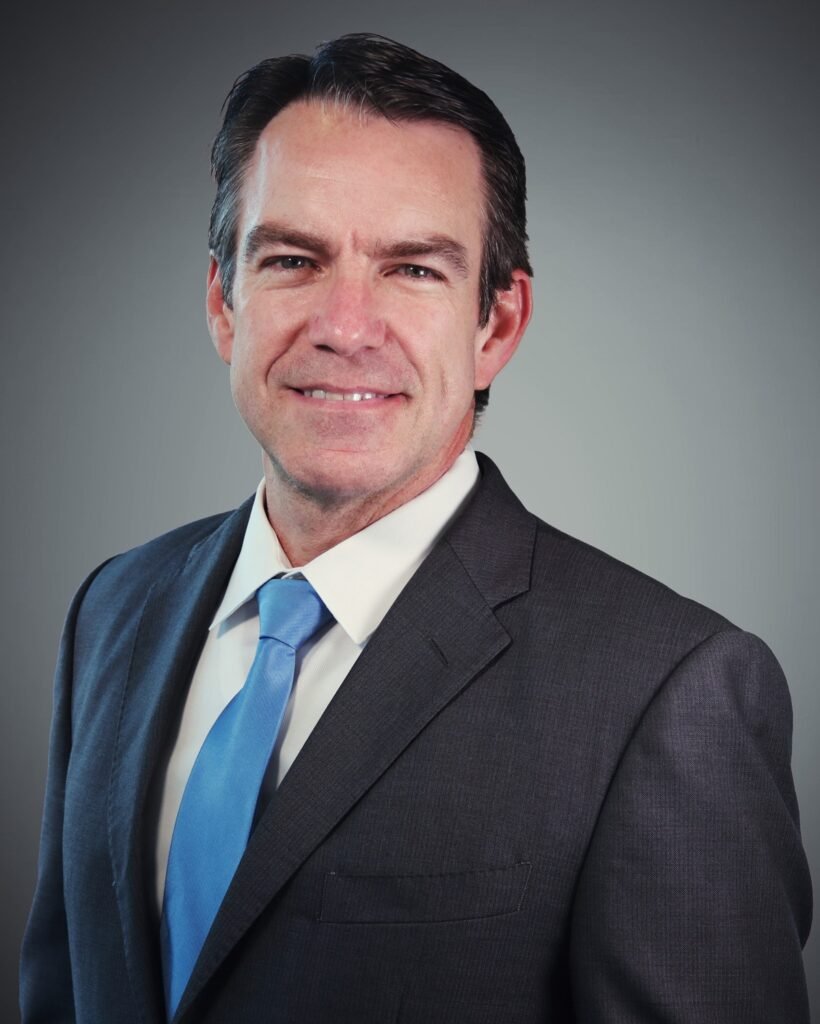
David Bolaños is Director of Marketing and Product Management at Heatcraft Refrigeration Products, with over 25 years of experience in HVACR, primarily with Lennox International, Heatcraft’s parent company. He has led business development, sales and customer service in domestic and international markets, focusing on commercial and industrial refrigeration. He holds a Bachelor of Science in mechanical engineering and an MBA from Florida International University, and is Six Sigma Green Belt certified.