Esta página solo está disponible en inglés. Ir a la portada en español

×

Questa pagina è disponibile solo in inglese. Home page in italiano

×

Diese Seite ist nur auf Englisch verfügbar. Zur deutschen Startseite

×

Cette page est disponible uniquement en anglais. Aller à la page d'accueil en français

×

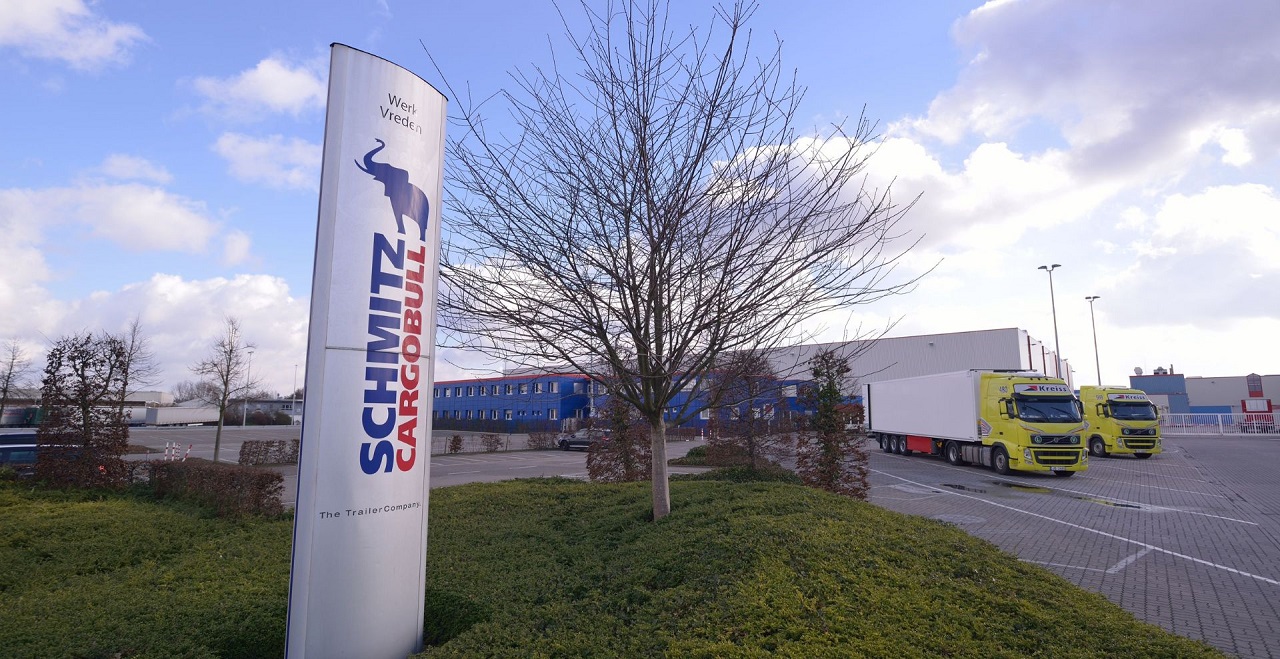
Schmitz Cargobull Invests Over €50 Million in Vreden Site Expansion

Schmitz Cargobull Invests Over €50 Million in Vreden Site Expansion

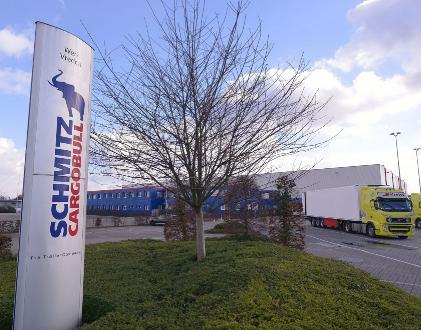
Trailer manufacturer Schmitz Cargobull is set to expand its Vreden site, investing more than €50 million to boost production capacities for refrigerated and box body semi-trailers. The investment focuses on enhancing the company’s competitiveness through a range of measures including the construction of a new 4,500 m² production hall.

The new facility will feature cutting-edge technology aimed at increasing production efficiency. The restructuring will enable the production of up to 40 refrigerated vehicles per shift, with the cycle time per trailer being reduced from 15 minutes to just 10 minutes due to increased automation and digitalisation.

A significant aspect of the project is the use of digital tools for planning new buildings and machinery, optimizing work processes and ensuring efficiency. Digital simulations will validate new production workflows early on.

The Vreden site is a key player in the “Datenfabrik.NRW” project, which promotes the development of data-based factories. Schmitz Cargobull is setting a new benchmark for digital transformation within the industry.

Alongside the new production hall, a new logistics concept will refine internal workflows. Upgrades to components production will also be implemented to future-proof the site. Significant measures will take place at the main refrigerated vehicle production plant in Südlohner Diek.

The expansion includes increasing the supply center at the Große Mast site and doubling existing parking capacity by extending into a neighboring brownfield site. This will speed up vehicle delivery and reduce costs by eliminating the need for rented parking areas. The use of electrically powered tractor units will enhance the efficiency and sustainability of logistics processes.

Schmitz Cargobull’s investment in the Vreden site underlines its commitment to achieving environmental goals and fostering ecological and economic sustainability.
Get the daily refrigeration briefing

One email a day. Trusted by 3,000+ RACHP professionals.

More on Cold Chain

All on Cold Chain →

Insights

Secop's Solar Direct Drive (SDD) System Earns WHO PQS Approval – The Team Behind It
Article

Secop’s Solar Direct Drive (SDD) System Earns WHO PQS Approval – The Team Behind It

Partner's material In March 2026, Secop’s Solar Direct Drive Power Management Module was granted WHO PQS prequalification and officially listed in the WHO Catalogue of Prequalified Immunization Devices. The WHO IMD-PQS (Immunization Devices Performance, Quality and Safety programme) is the global benchmark for cold chain equipment used in immunisation. Being listed in its catalogue is

22 Jun 2026
Case Study - Effect of Louvers or diffusers on air flow distribution and cooling time on a meat log during Chill cycle
Tech Guide

Case Study – Effect of Louvers or diffusers on air flow distribution and cooling time on a meat log during Chill cycle

By Kushal Aurangabadkar An experimental analysis was conducted on a cooler space measuring 3.66 m × 6.096 m (12.0 ft × 20.0 ft), equipped with an ammonia refrigeration coil, five 30 cm (12 in.) fans, and five diffusers. The study measured airflow patterns, cooling rates, and heat transfer efficiency in meat storage by testing two configurations:

Kushal Aurangabadkar · 21 Jan 2026
Total Cost of Ownership (TCO) for Modular Refrigeration Systems in Life Sciences Distribution Centers
Tech Guide

Total Cost of Ownership (TCO) for Modular Refrigeration Systems in Life Sciences Distribution Centers

by Ramez Naguib, P.E. Introduction Life sciences distribution centers are under immense pressure to deliver consistent temperature control, comply with increasingly stringent regulations, and optimize operational efficiency. Traditional built-up refrigeration systems often prove cumbersome, costly, and slow to implement. In contrast, modular, factory-assembled refrigeration systems have emerged as a compelling alternative. Drawing on lessons from

Ramez Naguib · 14 Jan 2026
Everything on Cold Chain: 2,058 articles, 2 case studies, 23 insights

Most read this month

All news →