A University of Maine graduate student has developed a wood-based foam as an alternative to polyurethane insulation in beverage coolers. The material is intended to reduce the health and environmental risks associated with petroleum-based polyurethane.
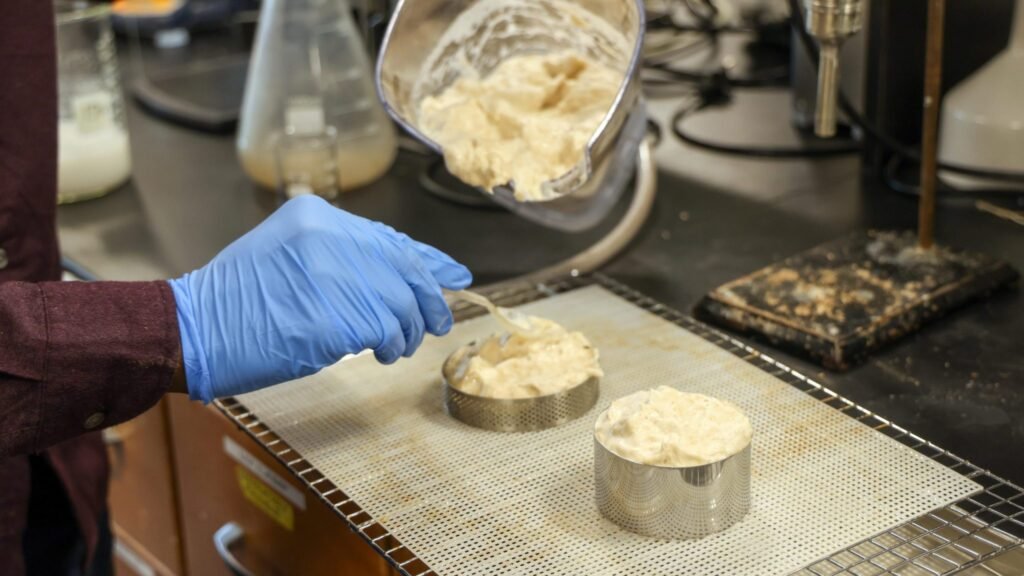
The foam consists of cellulose nanofibrils, wood fiber, finely ground wood flour and a surfactant that increases foam volume. The cellulose nanofibrils act as a binder and stabilizer, forming web-like structures within the wood fiber and wood flour.
The ingredients are blended to generate foam, which is poured into molds shaped like cooler inserts. Water is drained from the molds before the foam is dried and enclosed in a protective plastic shell.
Testing showed that the wood-based foam and polyurethane had nearly identical thermal conductivity. However, the researchers still need to improve the material’s mechanical properties, durability and encapsulation process. Damage or crushing can reduce its insulating performance.
Future work will include ice-retention tests and research into whether finished foam can be dispersed in water and remolded. The project uses renewable materials derived from byproducts of Maine lumber mills.