LUVE is participating in COLLINS, a three-year research project to develop a validated digital twin of liquid cooling systems for AI data centers. Running from September 2026 to August 2029, the project aims to simulate the complete cooling chain, from chip-level cold plates to heat rejection, using models calibrated against physical equipment under realistic AI workloads.
The project is coordinated by Modelon and includes RISE, Korea Testing Laboratory, Luleå University of Technology, Vertiv, SWEP and LUVE. It is partly funded by Sweden’s innovation agency Vinnova, with the partners providing the remaining funding. The research addresses the challenges of rapidly changing thermal loads in high-density GPU racks, where power consumption already exceeds 100 kW (approximately 341,000 BTU/h) and can fluctuate within seconds.
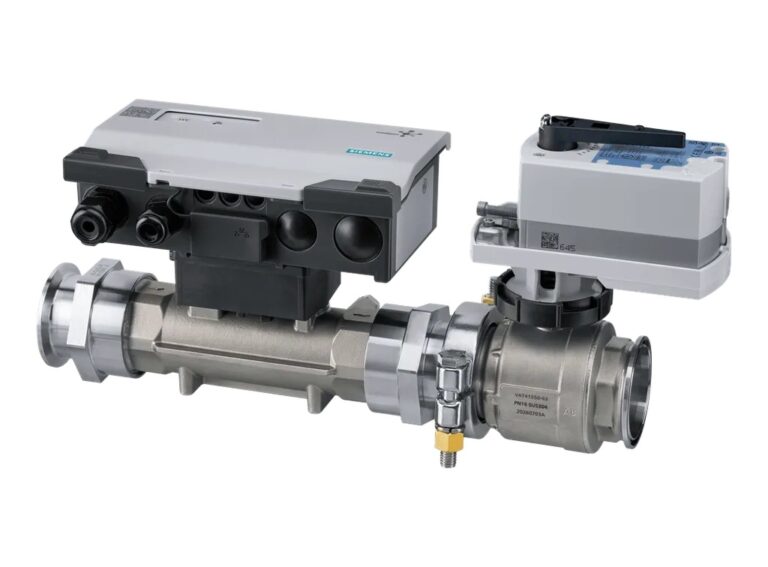
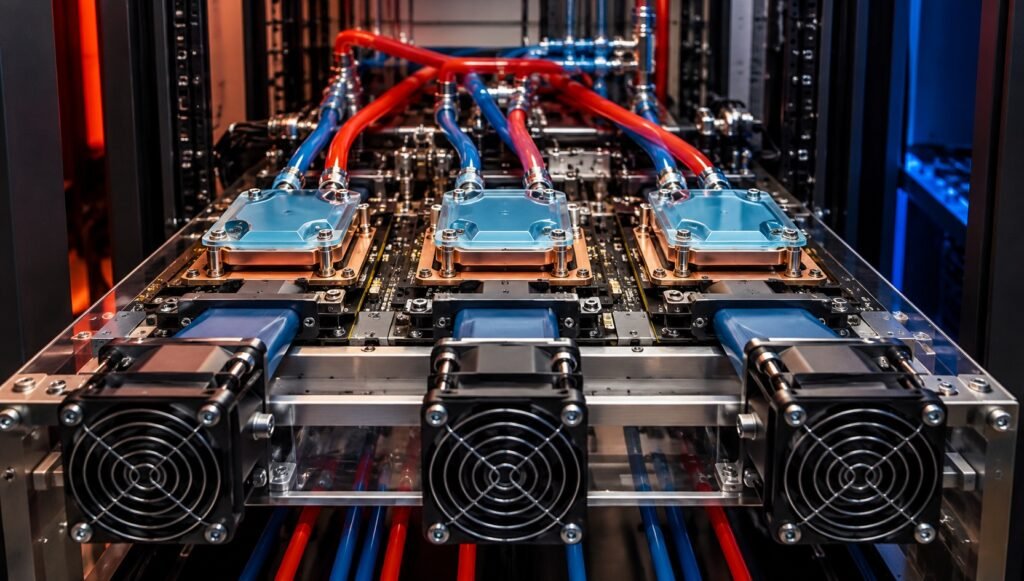
The digital twin will allow engineers to evaluate cooling system configurations, equipment sizing, redundancy requirements and control strategies before implementing changes. It will also support operational adjustments, condition-based maintenance, retrofit assessments and heat recovery evaluations. The models will cover cold plates, coolant distribution units (CDUs), heat exchangers, pumps, valves, chillers and cooling towers, including single-phase and two-phase liquid cooling technologies.
Modelon will provide its Modelon Impact simulation platform and Data Center Library, while LUVE, SWEP and Vertiv will contribute equipment and technical expertise covering dry coolers, condensers, brazed plate heat exchangers and CDU technology. RISE and Korea Testing Laboratory will conduct testing and measurements, including transient load tests using server emulators that reproduce realistic AI workloads. The models will use open Modelica and FMI standards to support integration across the cooling system.
“Heat rejection gets sized on worst case assumptions, and that margin is paid for in equipment, space and energy. A model validated across the full operating range lets us show what the equipment really does, so the customer can size accordingly,” said Stefano Filippini, Technical Director at LUVE.
The first year will focus on component testing and model calibration, followed by system integration and an integrated demonstrator. The consortium plans to make its validation methodology, test protocols and measured reference cases publicly available to support reproducible research.