Data Centre Cooling
460 articles 11 insights
Data centre cooling has become a refrigeration problem at industrial scale: rack densities that air alone cannot hold, liquid and immersion systems moving from pilots into production, and heat rejection that neighbouring buildings now want back. Refindustry follows what is actually being installed: daily news, partner case studies, and the engineers designing these systems.
Insights on Data Centres
All Data Centres insights →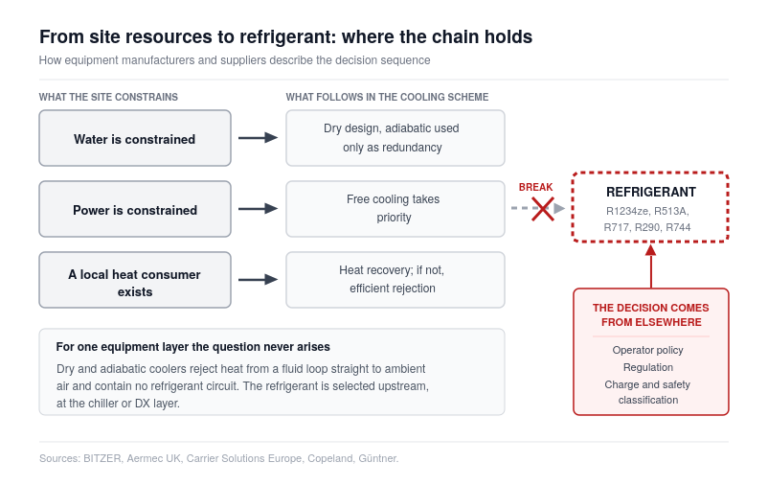
Data Center Cooling: The Site Decides the System, the Operator Decides the Refrigerant
The first part of this series traced a chain of decisions from public data and disclosed projects: what a site can supply in power, water, and demand for waste heat sets the cooling architecture, and the architecture narrows the refrigerant. This part puts that chain to six people who build and supply the equipment. The
Chillventa 2026 Preview: Key Technologies Ahead of the October Show
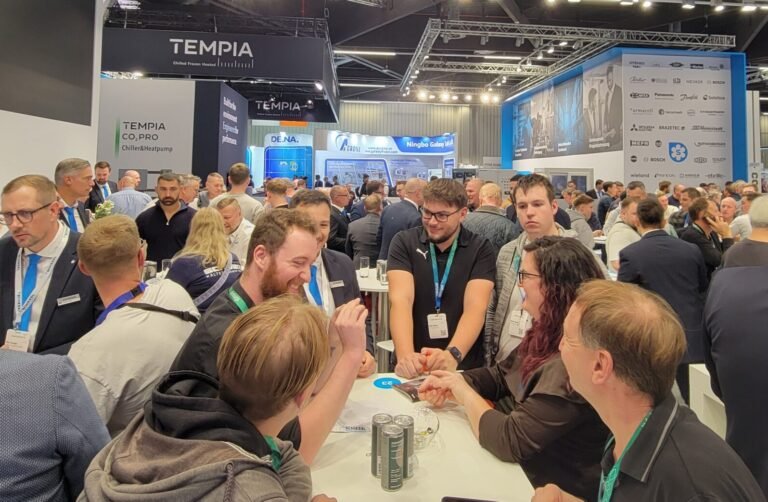
Exhibitors arriving in Nuremberg on 13 to 15 October are no longer arguing about whether to move to natural refrigerants. They are showing how fast the move can be made, and at what cost. That single change of question runs through nearly every release we have received ahead of Chillventa 2026, the largest edition of
Power, Water, and Heat: How Site Resources Now Decide the Refrigerant in a Data Center
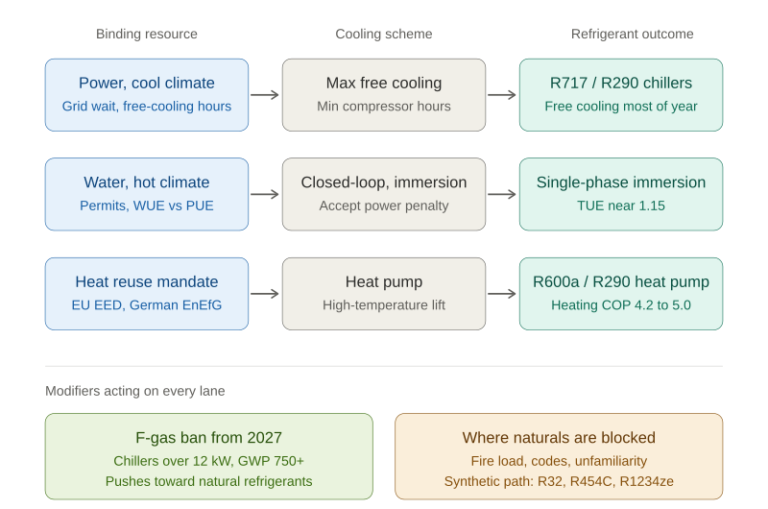
For an engineer reading a data center brief in 2026, the first constraint is rarely the heat load. It is whether the site has the electricity, the water, and a use for the rejected heat to run a given cooling scheme at all. The cooling technology, and with it the refrigerant, follows from what the
News on Data Centres
Graco’s ETM and ABB Partner on Motor Technology for Data Center Cooling
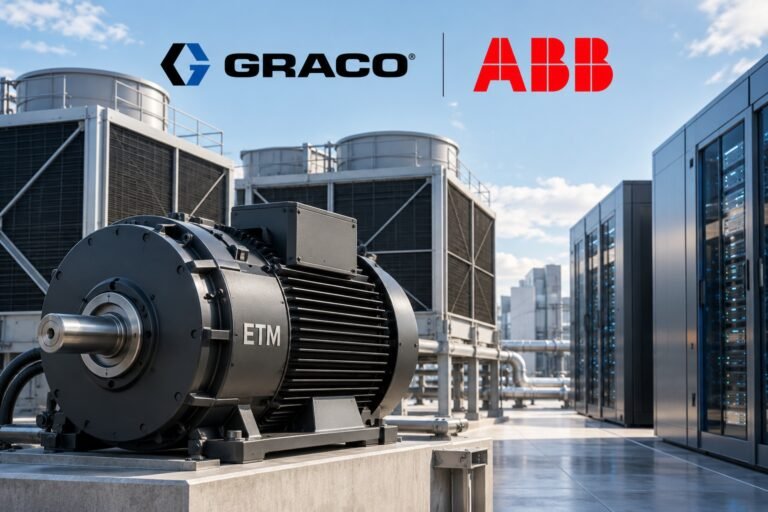
The partners aim to install TFM-based direct-drive systems in data centers by the end of 2029, targeting reliability and simpler maintenance.
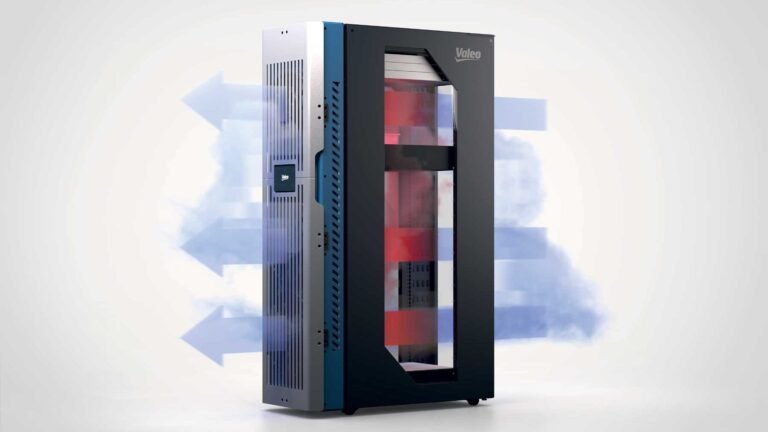
Valeo presents aluminum cooling technology for data centers in California
Valeo says its rear-door aluminum solution boosts cooling capacity by 38% and cuts fan electricity use by 25% versus copper.
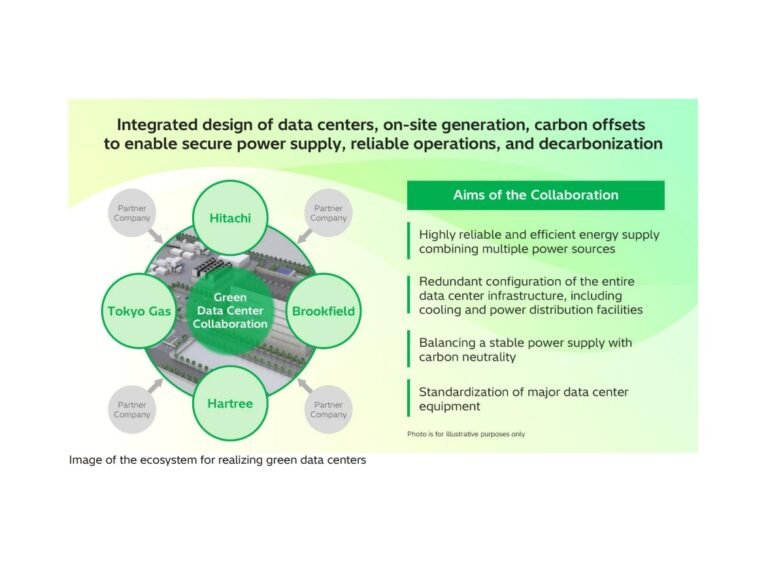
Hitachi, Brookfield, Hartree and Tokyo Gas to Develop Data Centers with Redundant Cooling in Japan
The partners will standardize modular facilities combining on-site generation, battery storage and grid power for projects in Kanto and Kyushu.
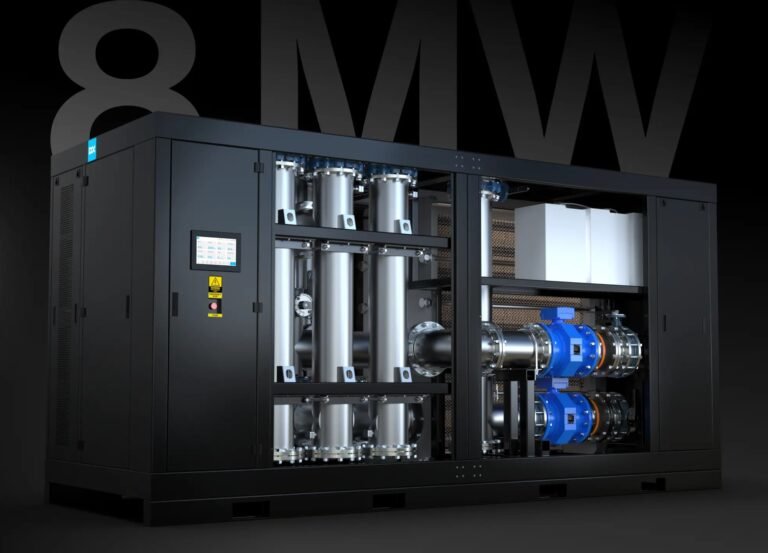
DCX Introduces 8 MW CDU with Integrated Coolant Quality Control
The FDU family supports flows up to 3,000 GPM and ASHRAE W45/W+ operation for hyperscale data centers and AI data halls.
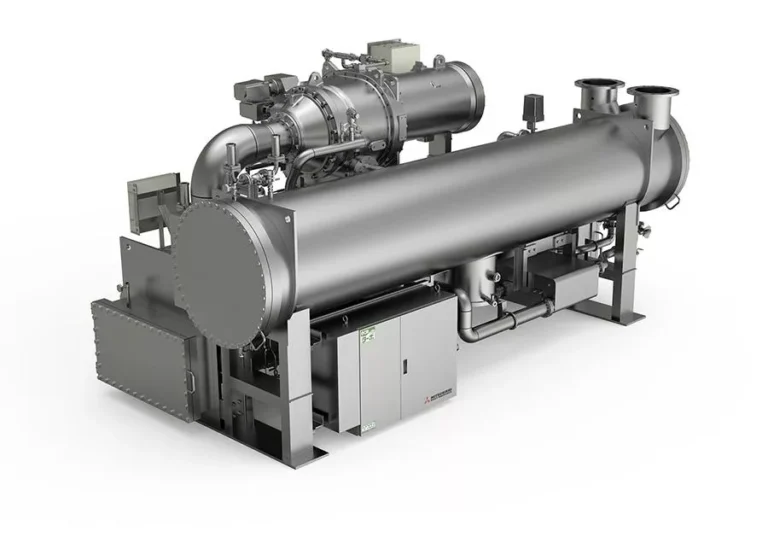
Mitsubishi Heavy Industries Certifies 10 MW Chiller for US Data Centers
The unit anchors MHI's modular platform, combining hybrid free cooling and closed-loop water systems for scalable AI infrastructure.

LG Partners with GS E&C and GRC to Develop AI Data Center Immersion Cooling
The companies will validate performance and reliability while creating integrated solutions and standardized data center designs.
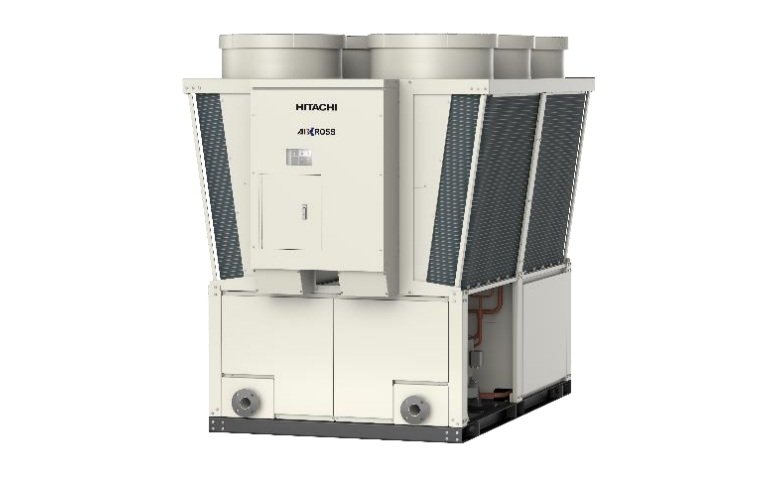
Hitachi to Launch AIXROSS Air-Cooled Chillers for Data Centers in April 2027
Hybrid refrigerant pump configurations target lower energy and water use, while modular controls support resilient, expandable cooling.
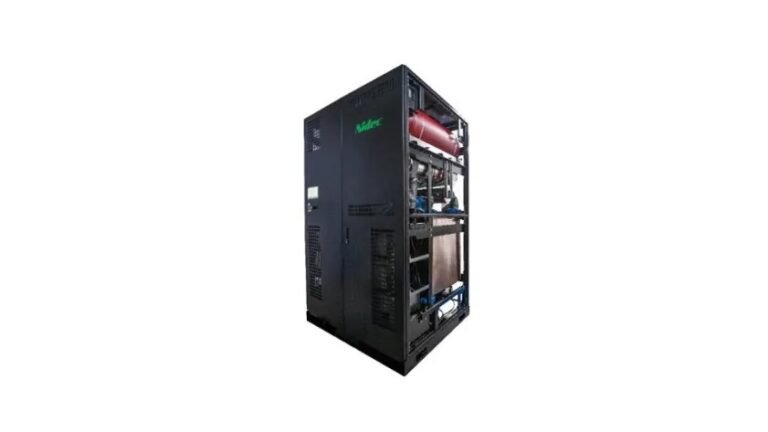
Nidec Unveils 3.2 MW In-Row CDU Prototype with 800 VDC Compatibility
Nidec targets first-half 2027 mass production as it refines the liquid cooling system for high-density AI clusters.
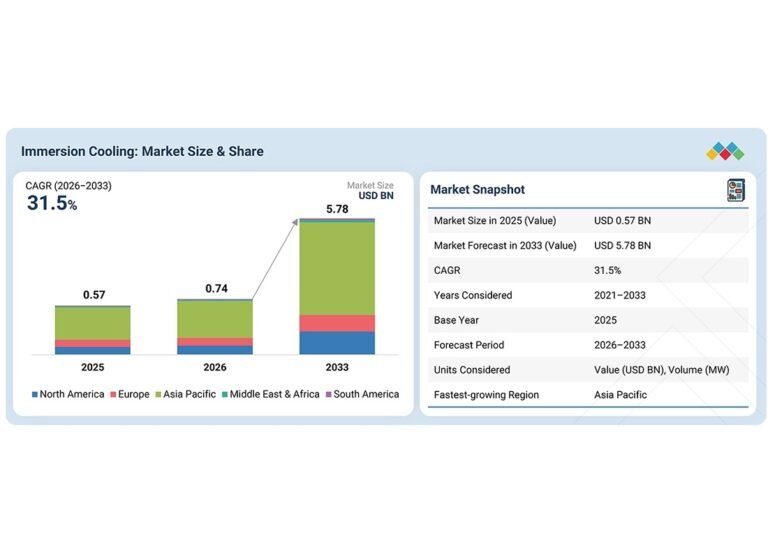
MarketsandMarkets forecasts immersion cooling market at $5.78 billion by 2033
Demand from AI, high-performance computing and cryptocurrency mining is expected to drive adoption, with single-phase systems leading.
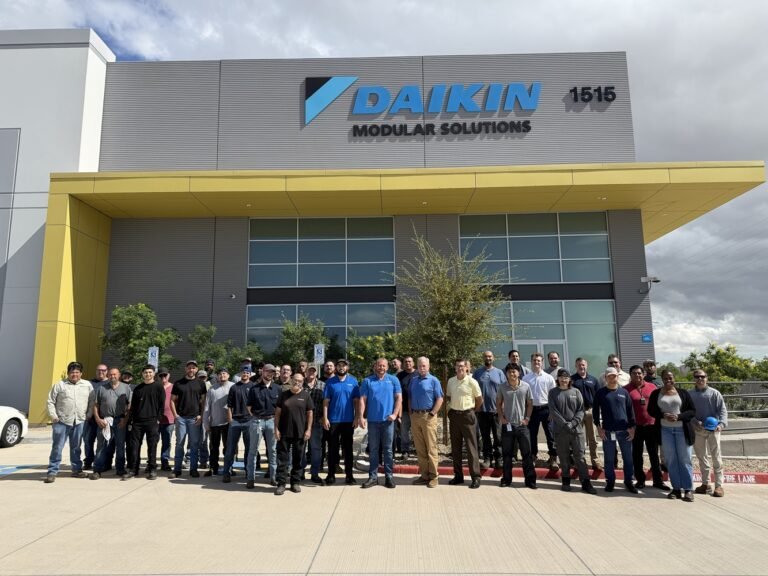
Daikin Applied Expands US Modular Cooling Facility, Boosts Capacity 150%
The Phoenix plant assembles and tests custom hydronic and electric systems before delivery, reducing onsite work and schedule risks.

Eurovent Market Intelligence to Host HVACR Forum 2026 in Spain
Sessions will cover F-Gas rules, low-GWP refrigerants, ventilation, data centre cooling and HVACR investment trends.

UL Solutions Expands HVACR Testing Capacity in Texas, US
New chambers support safety, performance and certification testing of systems with capacities up to 30 refrigeration tons.