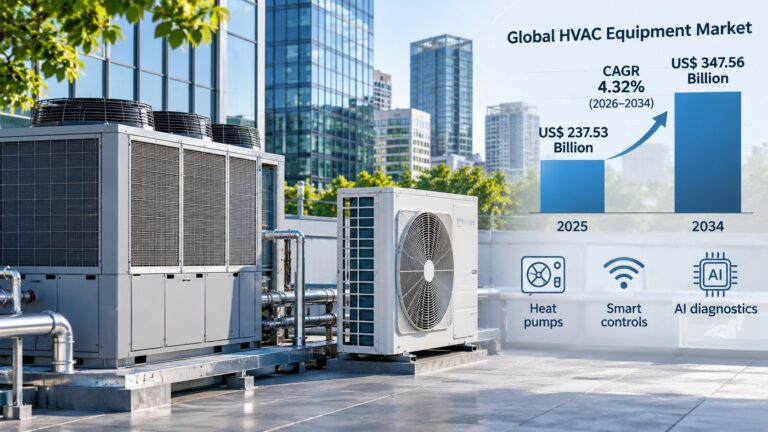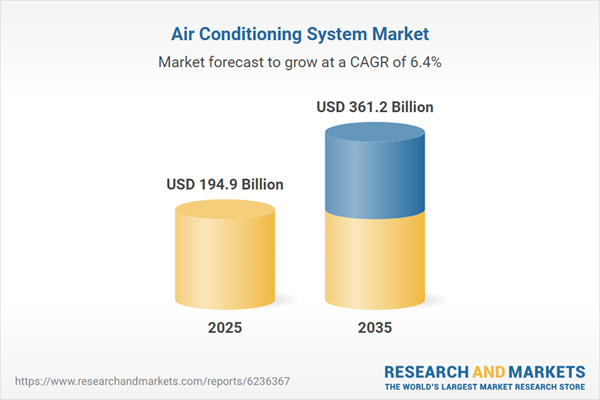
Research and Markets has released a report forecasting that the global air conditioning system market will grow from USD 194.9 billion in 2025 to USD 361.2 billion by 2035, representing a compound annual growth rate (CAGR) of 6.4%. The forecast identifies rising temperatures, longer cooling seasons, urbanization, and demand for energy-efficient systems as key growth drivers.
Central air conditioning systems generated USD 118.2 billion in 2025 and are projected to grow at a CAGR of 6.5% between 2026 and 2035. Demand is supported by construction and infrastructure investments involving hospitals, airports, hotels, commercial complexes, residential buildings, and data processing facilities. The report highlights advanced chillers, variable-speed technologies, automated controls, and smart building management systems as technologies supporting energy optimization.
Indirect distribution channels accounted for 68.6% of the global market in 2025, with a projected CAGR of 6.3% through 2035. Dealer networks, distributors, retail outlets, and e-commerce platforms support equipment availability and access to installation and maintenance services, particularly in residential and light commercial applications.
The U.S. air conditioning market was valued at USD 43.4 billion in 2025 and is forecast to grow at a CAGR of 6.5% through 2035. Rising temperatures, equipment replacement, energy efficiency requirements, and sustainability objectives are influencing demand. Manufacturers are investing in inverter-based technologies, intelligent HVAC controls, predictive maintenance, and AI-driven climate management.
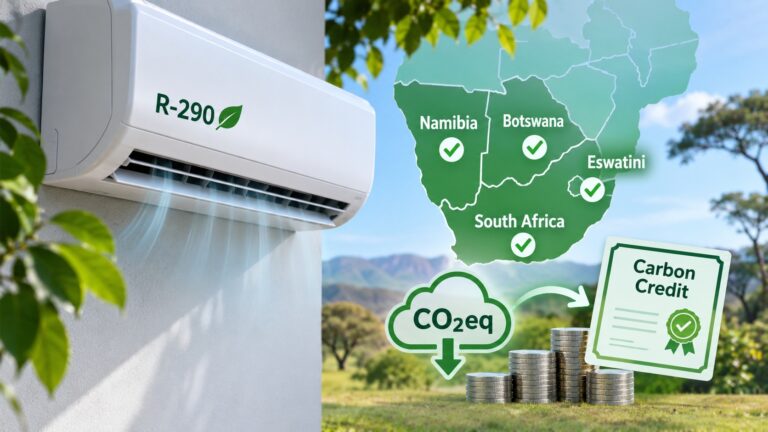
The 240-page report examines market developments by system type, cooling capacity, refrigerant, energy efficiency class, application, distribution channel, and region. Its refrigerant coverage includes R-410A, R-32, R-290, and next-generation low-GWP refrigerants. Companies profiled include Daikin Industries, Carrier Global, Midea Group, Mitsubishi Electric, Johnson Controls, and other major HVAC manufacturers.