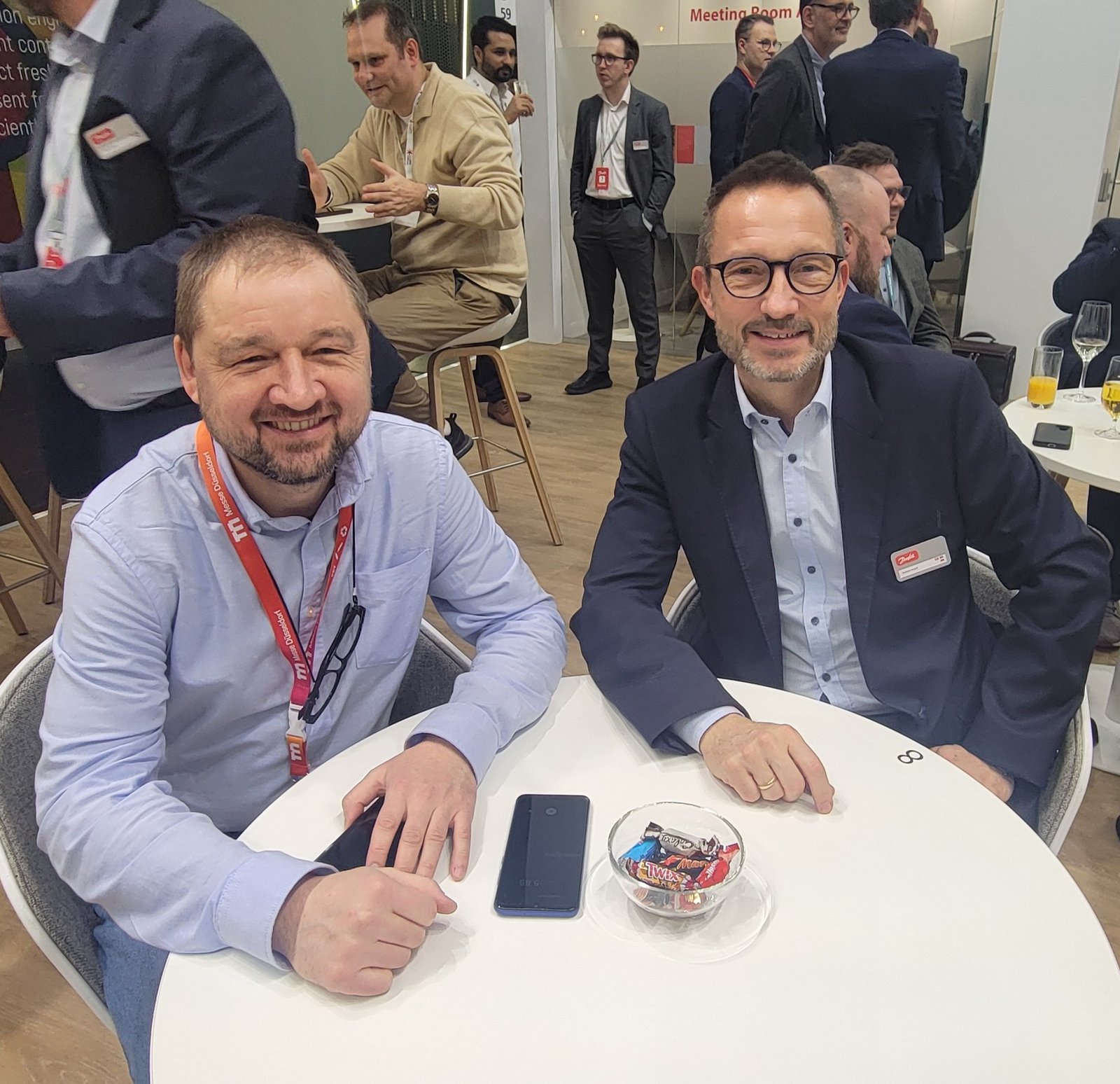
At EuroShop 2026, Sergei Mukminov, Editor-in-Chief of Refindustry.com, spoke with Kristian Strand, President of Danfoss Climate Solutions. Building on their previous conversation at Chillventa 2024—when Strand led Danfoss Commercial Compressors—the interview explores his first year in the new role, Danfoss’ priorities for the next five years, and how the company integrates acquisitions while keeping customer impact in focus. Strand also shares how fast-growing segments such as data centres, high-temperature heat pumps, and AI-driven operations are shaping Danfoss’ roadmap across refrigeration, heating, and decarbonization.
Sergei Mukminov: Our last meeting was at Chillventa 2024 when you were President of Danfoss Commercial Compressors. You are now President of Danfoss Climate Solutions. Could you share your experience after nearly a year in the role? How do you feel, and what have been the biggest challenges?
Kristian Strand: I feel good. I think we’re in a good place at Danfoss—we’re growing, with a lot of exciting opportunities coming up and developments across the business. There have been many challenges in the past years; global market dynamics have shifted significantly, so we’ve had to adapt quickly and find ways forward. We’re a global company, so we can find ways to manoeuvre in this type of environment.
Another challenge has been the rapid growth in certain businesses like data centres. It’s a positive challenge, but it’s new to our industry to suddenly have one vertical market grow so fast and be entirely new. Overall, it’s been a good period. We’re in a good place. We’re doing well with the acquisitions we have done. We are adding to the portfolio, bringing in new products, and developing our organisation. It’s a solid foundation for the future.
Sergei Mukminov: Could you share two to three key priorities for Danfoss Climate Solutions this year?
Kristian Strand: We have launched our new five-year strategy, and a clear priority is to execute on that. It’s a growth strategy, so we’re focused on continuing our momentum and building on our success..
For me, it’s also very much about people—developing the people we have, attracting new talents, and continuing to develop the organisation with new skills. With everything happening with AI, new technologies, and the rapid development in the market, that is a key priority. I believe the companies that manage the people part best will also be the ones that win. So: growth and executing on our strategy, and developing our people and attracting new talent.
Sergei Mukminov: Danfoss continues to expand its portfolio through mergers and the integration of new companies. What is your integration framework in the first 100 days to protect product quality, speed to market, and customer service?
Kristian Strand: That’s a very good point. In Danfoss—both in Climate Solutions and also in general—we’ve made a number of acquisitions over the past years, some big ones and some smaller ones, and we are continuously learning how to integrate them in the most efficient way. We want the companies to become part of the Danfoss family, but without disturbing the business and the relationships that they have built.
We have also acquired smaller companies, and there you need to be especially mindful—how you keep the core of the company intact and maintain the motivation of the people, while at the same time making sure they gain the benefits of the larger Danfoss organization. It’s a fine balance between making sure people continue the good work they’re doing, but also developing them over time. You have to be mindful of how you do it.
One strength that helps us in integration is our roots. We are a family-owned company, and being family-owned—with long-term partnerships with our customers and a constant customer focus—is something we work hard to keep when we integrate companies. We always look at the impact on the customer. Especially in times like these, where things are changing so fast, you need to keep the customer at the centre of everything you do.
Sergei Mukminov: In our last interview at Chillventa, you mentioned screw compressors as an important element for larger systems and high-temperature heat pumps. Now that Danfoss has added screw technology to its portfolio, do you feel the portfolio is complete? What’s next?
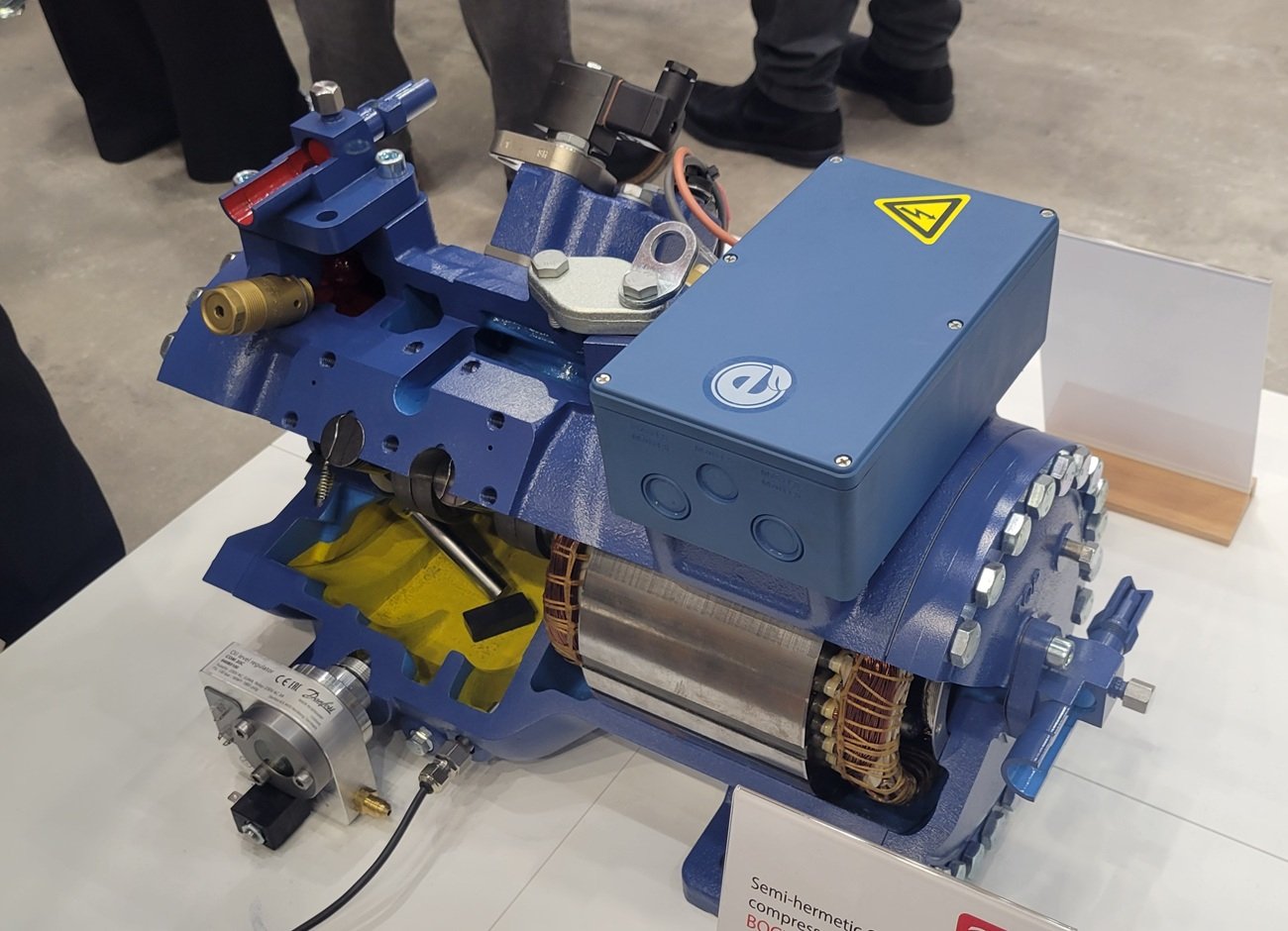
Kristian Strand: We’re pretty happy with the portfolio we have today, and we play in the larger capacity size of the market. We have a very good portfolio in scroll and oil-free technologies, and we’ve done a good job there. With semi-hermetic compressors we’re also growing, with Bock now introducing an eight-cylinder model. And as you say, we were missing screw technology, and we now have that in the portfolio.
So we are now rapidly developing the industrial heat pump area with a special focus on high-temperature heat pumps— also looking at low-GWP natural refrigerants like isobutane and propane, for example. Overall, we have a strong portfolio. There’s still a lot of opportunities in each of these portfolios. The market is developing rapidly, with new refrigerants and changing requirements, so we’ll keep pushing forward. And we will of course continue to look into whether there are other technologies or new technologies we could use to complement the portfolio we have today.
Sergei Mukminov: Finally, could you share more details about the new strategy and your vision for the next three to five years?
Kristian Strand: The strategy is clearly to grow the business both organically and also inorganically. We are actively looking for opportunities in the market to consolidate, and that could be in refrigeration, air conditioning, and also in the heating part of the business.
Part of it is strengthening our position where we’re already strong, but going even stronger into some of these big verticals. Data centres are a fast-growing one. We see the next big opportunity in industrial process decarbonization – utilizing heat pumps, including commercial and bigger industrial heat pumps—so we have a clear focus on that.
We also focus on what AI means for the future and how to benefit from it and operate in a world that is going to be increasingly driven by AI. Another part of the strategy is distribution, service, and aftermarket—how can we strengthen our position there, and how we can serve that part of the market effectively.
So it’s a whole set of different levers that we’re going to pull to make sure we can continue to grow and remain a strong partner for our customers. At the end of the day, the most important for us is to enable our customers to be energy efficient, to have the best solutions, and to decarbonize and compete successfully in the industry. That’s what drives us every day.
Sergei Mukminov: Thank you, Kristian, for sharing your insights!
Related reading: Danfoss posts record EUR 734m cash flow in 2025.