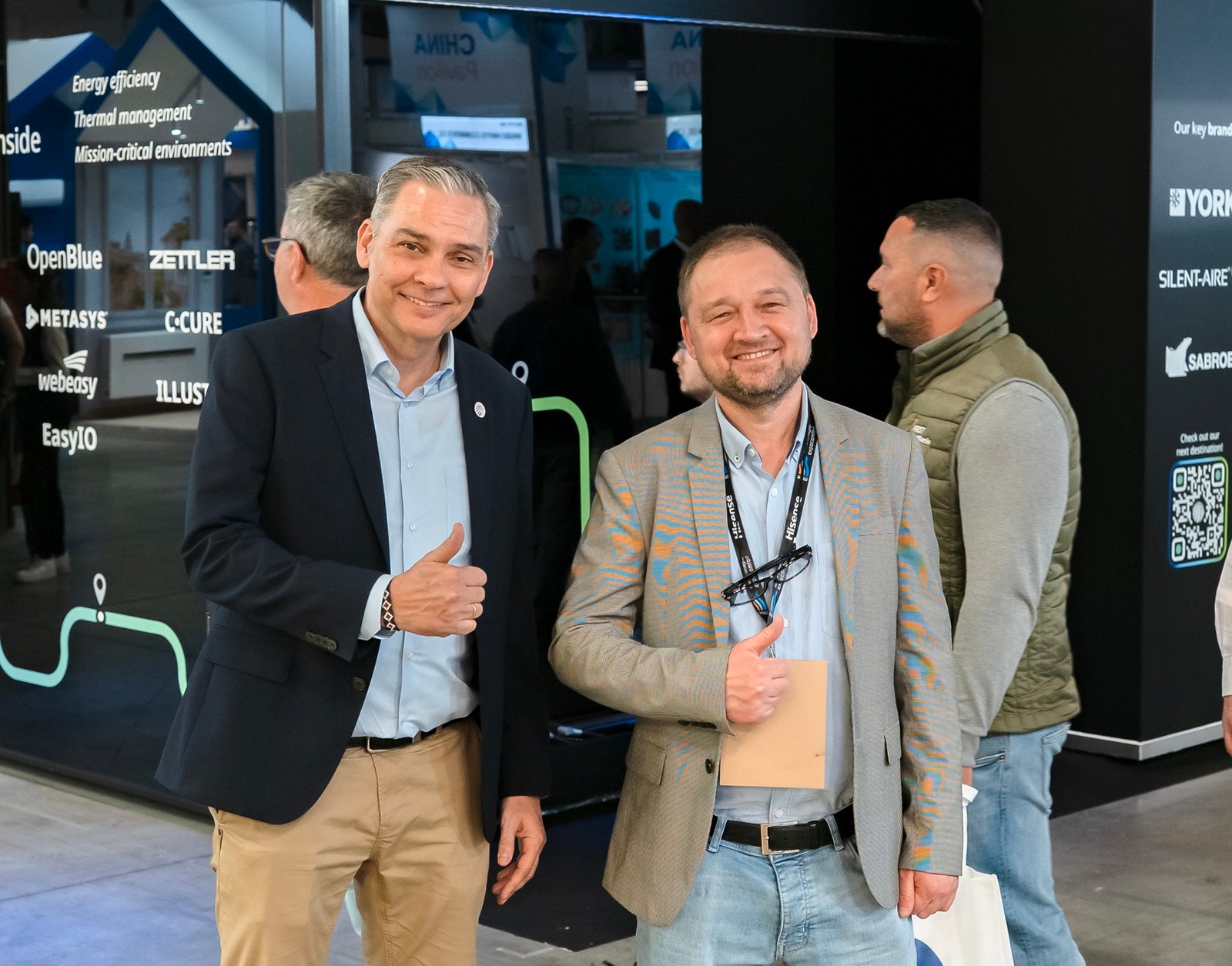
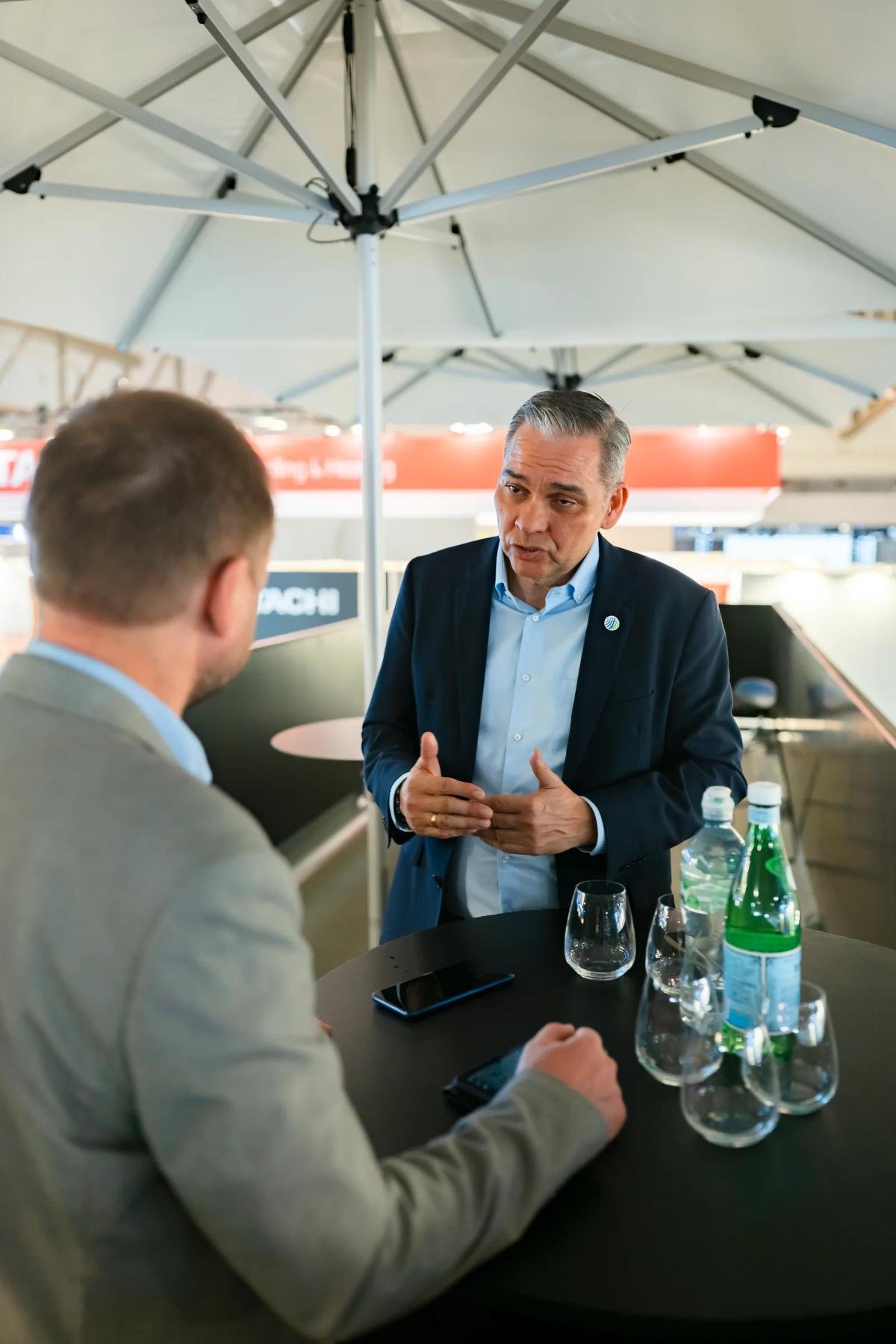
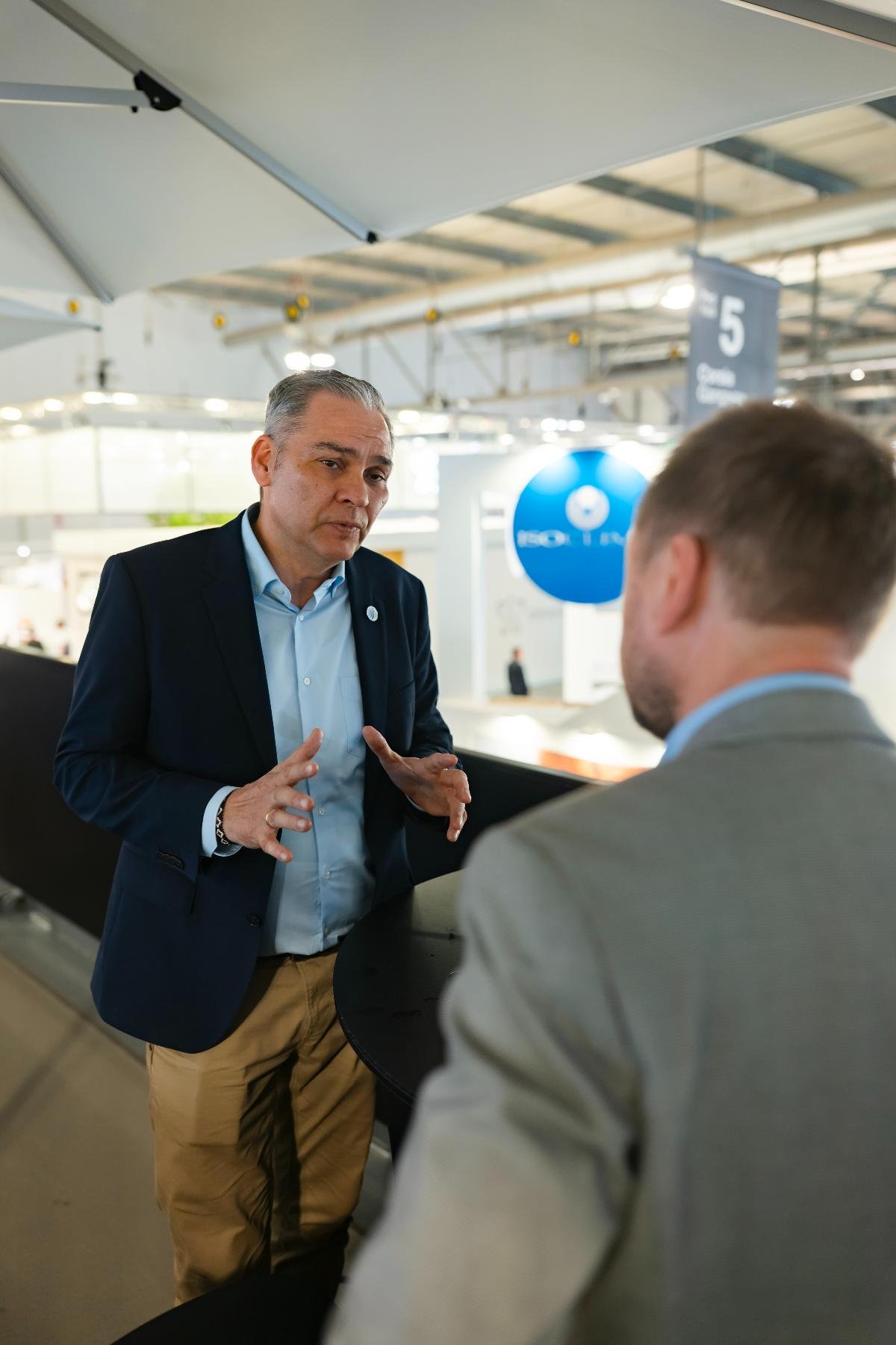
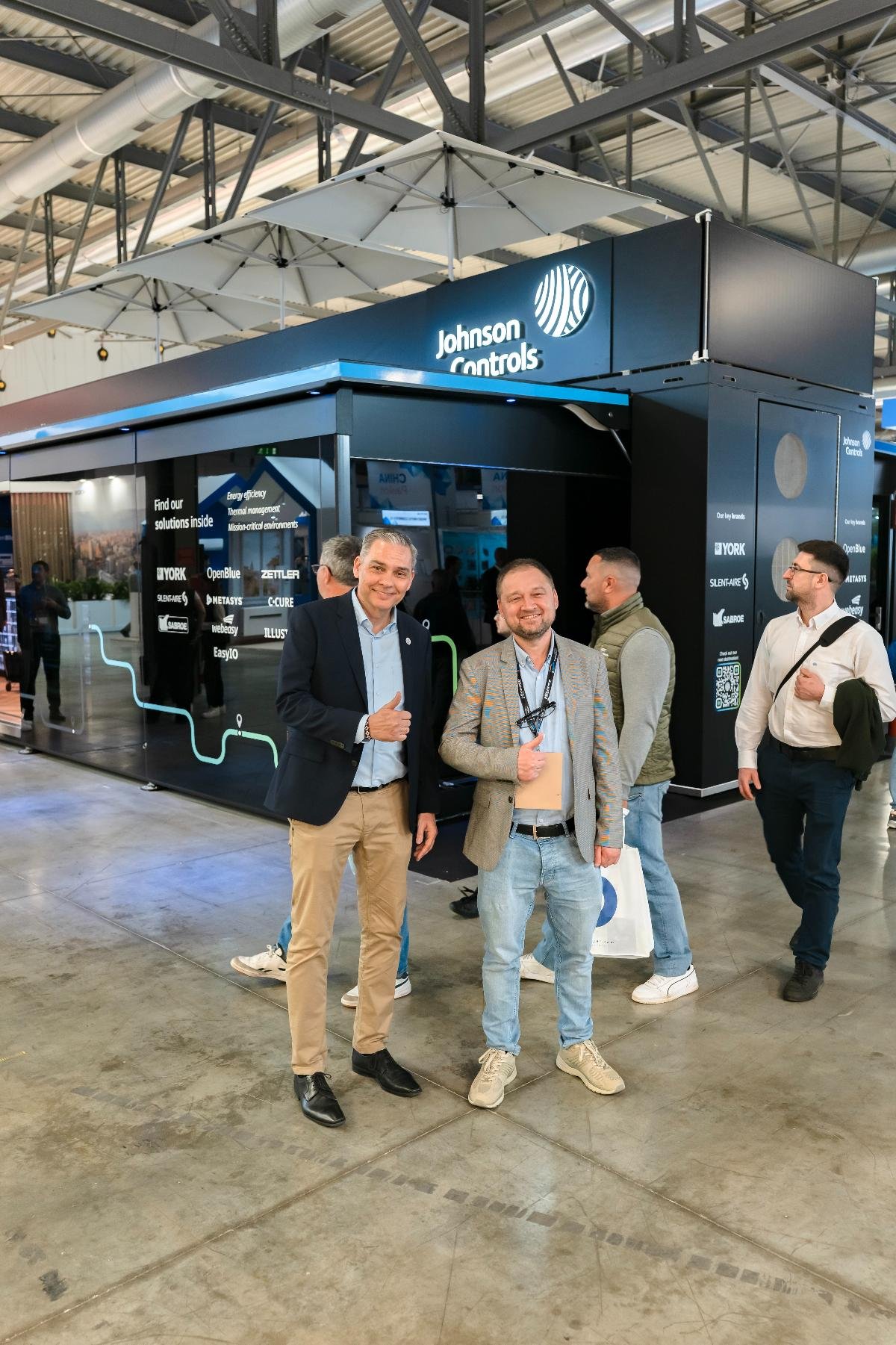
At MCE 2026 in Milan, Sergei Mukminov, Editor-in-Chief of Refindustry.com, spoke with Jens von Ebbe, General Manager HVAC Equipment EMEA at Johnson Controls. The conversation covers three years of market shifts under his leadership — from the accelerating move to natural refrigerants and the explosive growth of data centre cooling, to the 41-city Innovation Studio tour across Europe. Von Ebbe also discusses the new YVAM magnetic bearing chiller, readiness gaps in the F-gas transition, and what the outside world underestimates about HVAC’s role in decarbonisation.
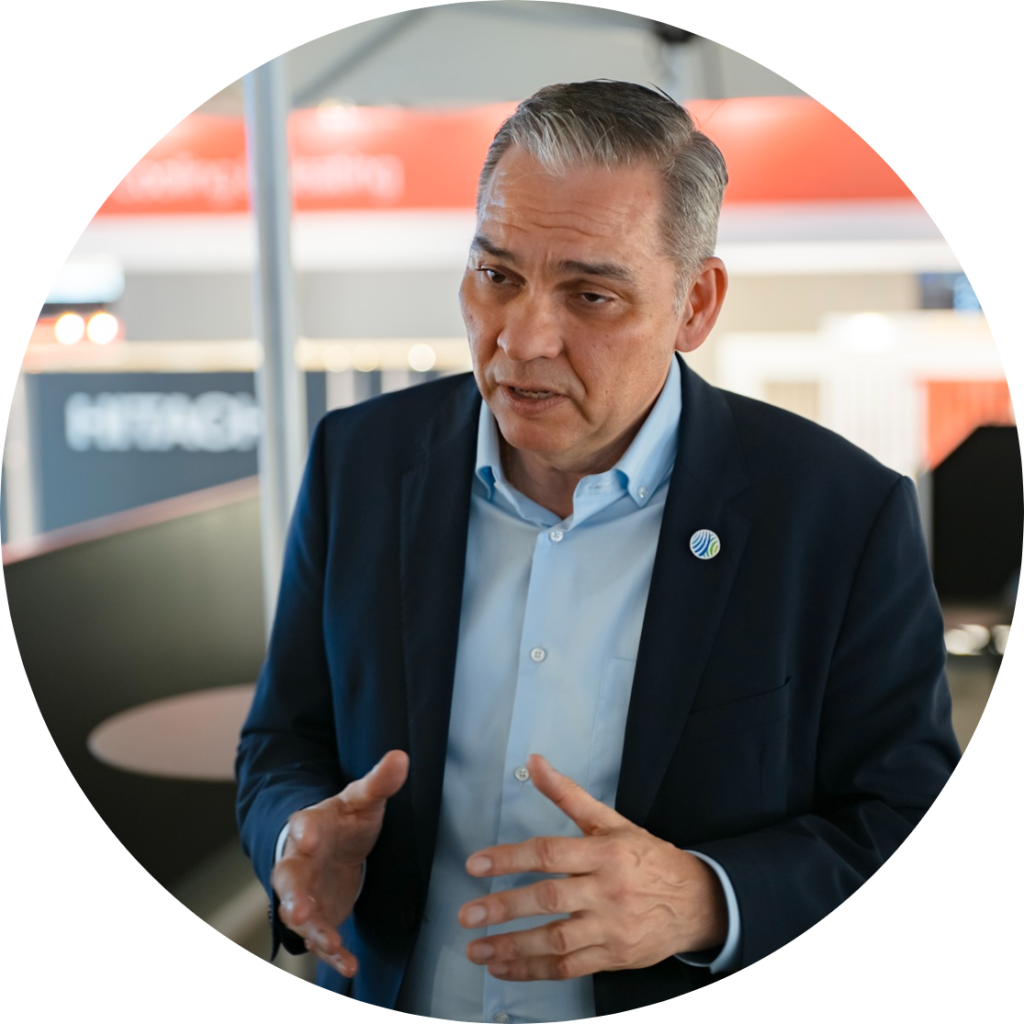
You have been leading HVAC Equipment for EMEA since 2022. How has the market changed in these three years, and what has surprised you most?
The market has significantly developed just over the last three years. Some of the changes that surprised us most are the speed of evolution in key segments — particularly critical infrastructure: data centres, information technology facilities, but also the pharmaceutical space.
The move towards natural refrigerants and ultra-low GWP refrigerants is accelerating exponentially — and that has been a surprise compared to other regions globally. At the same time, the explosion in energy costs has sharpened customer focus on efficiency. In sectors like data centres, where a large portion of total energy consumption goes toward cooling the chips and technologies inside, thermal management has become a primary engineering concern — not a secondary one.
The key requirements we are hearing consistently: increased demand for energy efficiency, decarbonisation, and support in meeting our customers’ ESG commitments across the region.
Yesterday I had a personal tour of the Innovation Studio, and today Refindustry published a story about the launch of the 41-city tour across Europe. What is the idea behind it, and what do you want customers to take away from that experience?
This tour is about bringing our innovation to where customers are — rather than expecting them to come to us. Over the last three years, Johnson Controls has invested significantly in technologies that help customers improve energy efficiency, meet decarbonisation goals, and manage the full thermal chain. The Innovation Studio is how we make those investments tangible.
The focus is on mission critical environments: hospitals, pharmaceutical and biochemical plants, and data centres — what many customers are now calling AI factories. These are segments where HVAC and controls technology can have a direct, measurable impact on operational performance and energy spend.
Johnson Controls covers a broad portfolio — chillers, controls, building management systems. Where is the real growth in EMEA right now, and where are you putting the most focus?
We are focusing on three areas.
The first area is advancing energy efficiency to achieve decarbonization. Representing around 40% of global CO2 emissions, buildings represent one of the largest and most complex decarbonization opportunities.
The second is data centres and information technology. This segment has been growing rapidly in other parts of the world and is now accelerating in Europe, the Middle East, and Africa. Thermal management — the full chain from cooling the chips to heat recovery — is the central technology challenge here.
The third is mission critical environments: healthcare, life sciences, pharmaceuticals, for example. This is where HVAC and controls work together to manage the environment where people work — and where equipment failure may have consequences.
Data centres are driving enormous demand for cooling across Europe. How is Johnson Controls approaching this segment — and how is it different from serving a traditional commercial building customer?
The requirements are significantly more demanding. The rate of technology advancement in data centres is growing exponentially, and so is the requirement for cooling — which accounts for between 30 to 40% of a data centre’s electricity consumption. These customers need to reduce costs per unit of compute, and cooling is one of the largest variables in that equation.
One innovation we are showcasing here at MCE is our new YVAM — a centrifugal air-cooled chiller with magnetic bearing technology. It allows customers to reduce energy consumption by 30% or more, with a very wide operating envelope: from -15°C to +30°C ambient. That operating range matters for hyper-scale customers who need to maintain performance across variable outdoor conditions throughout the year.
Heat recovery is also a growing priority in this space — recapturing the heat generated inside a data centre and reusing it for cooling or other energy purposes.
The refrigerant transition is accelerating across Europe, with F-gas regulations tightening. Where do you see the biggest readiness gap — on the manufacturer side, the installer side, or the customer side?
Honestly, I think it is across all three.
On the manufacturer side, there is a real challenge in ensuring that equipment can function efficiently with both natural refrigerants and ultra-low GWP synthetic alternatives. The range is wide: propane, CO2, ammonia — each brings different engineering requirements, safety considerations, and infrastructure needs.
For installers — particularly those who have been working primarily with systems based on fossil fuel energy sources and are now transitioning to heat pumps — the challenge is adapting to new technology, new infrastructure, and new service requirements. That is a significant skills and tooling shift.
And from the customer perspective, there is now a wide range of choices to evaluate — each with different implications for energy consumption, decarbonisation targets, and total cost. The EED and EPBD regulations will accelerate decisions across all three groups, but the readiness is uneven.
A more personal question to close: what is the one thing about the HVAC industry that the outside world completely misunderstands?
I think the outside world underestimates the scale of the opportunity — and the responsibility. Buildings account for roughly 40% of total energy consumption, and heating and cooling represent a significant share of that. The HVAC industry is not just a technical service sector. It has a direct and measurable contribution to make toward decarbonisation, toward reducing energy costs, and toward enabling the critical infrastructure — hospitals, data centres, laboratories — where the quality of the environment directly affects how people work and how productive they can be.
That connection between the systems we build and the human environments they support — that is what I think gets underestimated.
Thank you, Jens, for sharing your insights!