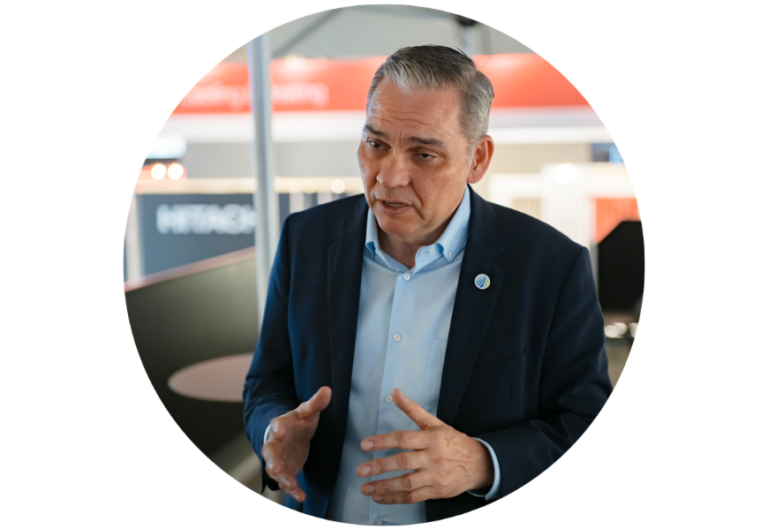
The International Institute of Refrigeration (IIR) has elected Dr Yosr Allouche (39) as its new Director General. With 13 years of experience, Dr Allouche will take up her new role on October 1, 2024, succeeding Didier Coulomb, who held the position for two decades.
Dr Allouche, a Norwegian-Tunisian world-renowned refrigeration scientist, hails from academia and is excited to apply her extensive theory in practice, finding ways to address the various challenges the refrigeration industry faces.
In this exclusive interview, Refrigeration Industry speaks to Dr Allouche about her journey to the top, the challenges the industry faces, and the role of the IIR in addressing these. Why is the refrigeration industry so important and how can it adapt for the future?
Refrigeration Industry (Ri): Can you briefly share your journey in the field of refrigeration and how it led you to this prestigious role at the IIR?
Dr Yosr Allouche (YA): I am a refrigeration scientist and an energy engineer, so I originally came from academia. To be honest, I did not choose the field, the field chose me. When reviewing PhD proposals, I came across one on solar-driven ejector cooling systems, which really appealed to me. I was curious about the idea of achieving cooling effects through solar and decided to explore this area. That is how I found the refrigeration world.
I then did my PhD in Portugal on this topic, after which I moved to Norway for my research work in the Energy Process Technologies Department at the Norwegian University of Science and Technology (NTNU). Here, I mainly focused on natural refrigerants, working with Professor Armin Hafner, and gaining a lot of knowledge in the field. I greatly enjoyed my time here.
Then, I moved to France for personal reasons and had the opportunity to integrate into the IIR. I had been serving as the institute’s Head of Projects for three years already when the Norwegian delegation proposed me as a candidate for the direction of the IIR and I was elected during Congress last August.
After 15 years in research and academia, I now enjoy looking at things from a different perspective. My academic background is complementary to the work I am doing in the field. I am still a researcher but I now also look at the real-world implementation part. Things like what are the main challenges; what are the difficulties in terms of how technology is related to policy; and how to link different parameters and elements that are connected.
Before I focused only on my small ejector, trying to model it for years, but I was not as aware of the total landscape. Now, I am zooming out and looking at things from a different perspective, which I think is very informative and important.
Ri: You have been a lifelong scholar in the refrigeration industry, what would you consider your most important work?
YA: I believe all the work I have been doing until now is relevant and very important. With research, you cannot move to the next step if the previous step has not been completed. As such, I believe that in research, and life also, all the steps and work are very important.
My tenure with Prof Hafner has been very important to me because I was able to build a very strong background, and I could see the potential of natural refrigerants to contribute to the transition of the sector. The speed at which natural refrigerant challenges are being solved and the advancements made are very impressive. With the third revision of the F-Gas Regulation, the message is clear – it is better to get ahead and adapt than to try and escape reality. You cannot escape.
Ri: What important research do you think is missing in the refrigeration industry still? Where should scientists and researchers be focusing and why?
YA: I believe there are three goals we need to strive for in this sector – low GWP (Global Warming Potential) refrigerant type, energy efficiency, and reducing the cooling demand. Before even looking at the refrigerant selection and energy efficiency, it is important to deep dive into how we can reduce the cooling demand. There are various passive opportunities available to reduce this demand with more appearing every day. All tools and knowledge to support the deployment of new energy-efficient equipment and the selection of the appropriate refrigerant already exist.
But we need to be careful to look at the whole picture because “low-GWP” does not mean it is energy efficient, and vice versa. Energy efficiency and type of refrigerant are linked. For instance, if you select a low-GWP refrigerant and thus reduce the direct emissions from refrigerant leakage, but your system is not energy efficient, leading to increased indirect emissions, it does not make sense. It is important to consider all these factors at the same time.
We need to focus on finding a compromise between these three goals to find the best solution to achieve sustainability.
Ri: What are some of the biggest challenges the refrigeration industry faces currently and what can (and should) be done to address these?
YA: One of the key challenges is implementing the three goals mentioned in the previous question simultaneously. In the context of the new F-Gas Regulation, the big challenge is also how to efficiently implement the actions and goals to align with the regulation. The message of this regulation is very clear: we need to adapt; we need to take some concrete actions to transition the sector. This may be challenging for other industries outside of Europe to keep up as Europe is moving at a great speed with high ambitions. Ensuring market continuity and alignment of all regulations will be challenging but not impossible.
Training technicians and operators on how to maintain a system safely and efficiently also remains a big challenge. The refrigeration equipment is another challenge and we need to make sure that a well-trained workforce is in place.
The means to overcome these challenges are there, so it is about changing the mindset to say “yes, we can do it.”
Ri: What do you see as the key role the IIR can (and should) play in the global refrigeration industry?
YA: For those who do not know, the IIR is an independent intergovernmental organization. We are globally known as the world-leading organization promoting and publishing verified, unbiased, peer-reviewed scientific information. This is very important. We do not have any agenda. Our Bible is science.
We bring together different key stakeholders in the sector under the same umbrella. I believe our key role is to support innovation – an area that makes us unique. We are also bringing scientists together with the industry players to facilitate the uptake of innovation and the latest knowledge at an industry level.#
Ri: What impact do you think the refrigeration industry can have on climate change and sustainability goals? Why is this sector so important? Do people realize how important it is?
YA: The refrigeration sector, which includes everything from cryogenics to heat pumps, consumes 20% of global electricity demand, according to the latest numbers. We forecast this number to double by 2050 under a business-as-usual scenario where no action is taken.
Few people outside of our small network are aware of the challenges this industry faces and the great potential it has to mitigate climate change. Although the industry contributes greatly to climate change, it also has the potential to make a big difference in addressing the issue.
There are several important global initiatives to address this issue and the number has been increasing greatly as of late. At COP27, we saw very little representation of refrigeration, whereas, at COP28, there was a lot of activity and even an entire thematic day dedicated to this sector. This clearly shows that the sector is gaining more awareness.
During COP28, the Global Cooling Pledge was also signed, a global call for a collaborative effort to reduce cooling-related emissions by 68% by 2050, compared to 2022 levels. It has been signed by more than 60 countries and the IIR was one of the main authors of the report associated with the pledge.
Ri: As much as you should be celebrated for your achievements regardless of gender, it is clear that there is a big deal being made about you being the first female-presenting person to head up the IIR. Is this significant to you? Or do you wish people would stop bringing this up?
YA: Honestly, in the beginning, it was probably exciting but I would prefer to just stop bringing it up. Of course, it is a big achievement for women and we need more women in leadership (and in the refrigeration sector). But we need to remember that I was elected by the majority of the IIR’s member countries. If I was elected by the majority, I do not believe it is because I am a woman, but rather because of my background, and my vision and future mission for the IIR.
But of course, I am very happy that I am the first woman to be elected as the head of the institute over its 116 years. The IIR has been around since 1908, always piloted by men. So, I am very happy that the first woman. But I am here because of my strong background first and foremost.
Although I am proud of my background, I will never stop learning. I believe I have the opportunity through my network to access information and learn a lot every day. So, despite having a strong technical background, I am developing my knowledge more every day.
There is so much to learn, for instance about things like reducing food waste in the cold chain. Despite working on the technology for all these years, I was not aware of the massive impact of cold chains. At the IIR, we do not just look at the technology but the application, and the novel application, of the technology, also looking at how this relates to the policy landscape.
Ri: Do you feel there is adequate representation of women and young people in the refrigeration industry and what can (and should) be done to attract more diversity? Why is diversity important?
YA: Diversity, equity, and inclusion is probably a new concept for many organizations and industries, but it needs to be included in their strategic plan. Diversity is definitely needed. We need to recognize that refrigeration, as probably the majority of other industries, is a male-dominated sector. I am not in favor of one of the genders but I do believe that all genders are necessary; they complement each other.
So, definitely, we need to bring more women into the field. I believe this change needs to start from the very top. If the top managers believe in this vision, believe in this necessity, then others will follow. To encourage more women to join the industry, we need to actually listen to them, understand their daily challenges, and show how the industry is supporting them. A collaborative effort is needed.
In terms of attracting more young people, we are struggling at postgraduate level to bring in more young people. Interestingly, at my university, the majority of new candidates were women. But we need to find new ways of attracting (and keeping) young people into the industry.
I am very proud that the IIR is ahead on this step. We are active in the INWIC (International Network of Women in Cooling), a UNEP (United Nations Environmental Programme) initiative, looking at how to empower more women in the cooling sector. The IIR will take the INWIC Presidency from 2025. We are also very active in CaRe (Careers in Refrigeration) where talk to young people about the opportunities in the sector and how they can efficiently contribute to the transition of the sector.
Most young people simply do not even know our industry exists. Not just young people either. Our small community makes a big impact but it is not known in wider circles. We need to raise more awareness of the importance of refrigeration. And speak to more policymakers in a way that they can understand the technology and its importance. That is something we are working on at the IIR now – how to translate technological knowledge and documents into a format that is understandable by everyone.
The first step in raising awareness is for everyone to understand the challenges and importance of the sector. Policymakers need concise, meaningful, trusted information and that is where the industry can support them. How to efficiently do so is the challenge.
Ri: Are there any changes you want to implement? What will be your key priorities/ focus areas when taking over the reins at IIR?
YA: There will be changes, supported by our management committee at the IIR. Everyone at the IIR, including the current director, is convinced that we need to adapt to the changing landscape, as every organization should do to keep its mission and vision updated.
The changes will be an evolution, not a revolution. A new strategic plan for the IIR is currently in progress and will soon be published once it is validated by the executive committee.
Thanks a lot for the interview!