Data Center Cooling: The Site Decides the System, the Operator Decides the Refrigerant
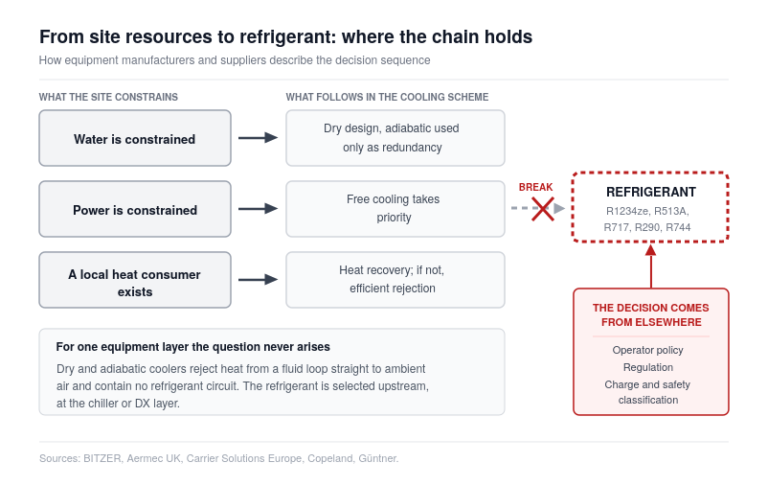
The first part of this series traced a chain of decisions from public data and disclosed projects: what a site can supply in power, water, and demand for waste heat sets the cooling architecture, and the architecture narrows the refrigerant. This part puts that chain to six people who build and supply the equipment. The
Power, Water, and Heat: How Site Resources Now Decide the Refrigerant in a Data Center
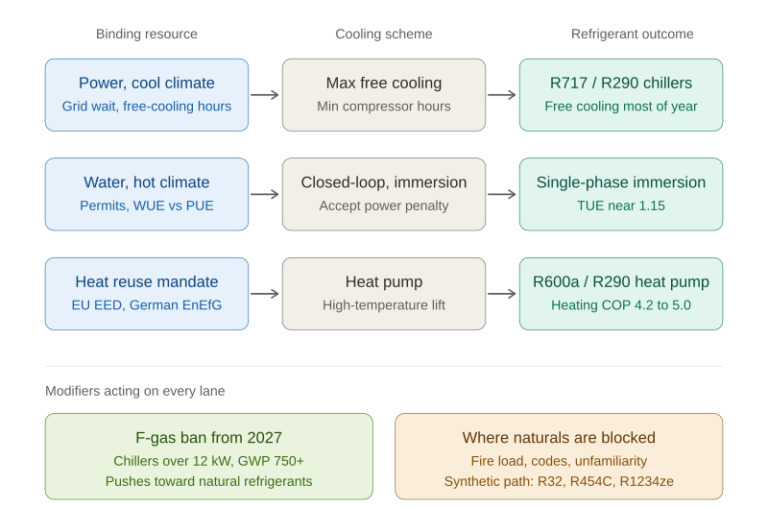
For an engineer reading a data center brief in 2026, the first constraint is rarely the heat load. It is whether the site has the electricity, the water, and a use for the rejected heat to run a given cooling scheme at all. The cooling technology, and with it the refrigerant, follows from what the

Beyond Refrigeration: How CO₂ Systems Are Becoming the Energy Hub of Modern Food Retail
The Danfoss Smart Store ADC in Nordborg. Source: Danfoss A/S. A Danish convenience store covered 100 percent of its heating demand from refrigeration waste heat through the coldest winter in more than a decade. Over two years of operation, the same site exported 36 MWh of surplus heat to its city's district network and saved close

EPA Delays Low-GWP Refrigerant Deadlines, Splitting the US Cooling Industry
The deadline that supermarkets faced to install new refrigeration systems running on low-GWP refrigerants was January 1, 2027. It is now January 1, 2032. On May 21, 2026, alongside President Trump in the Oval Office, EPA Administrator Lee Zeldin announced final revisions to the 2023 Technology Transitions Rule and a proposed technical fix to the

Greenwashing in HVACR: When Sustainability Claims Outrun Technical Reality
As decarbonization becomes a sales language, the industry needs better proof—not louder slogans. Sustainability is no longer a side note in HVACR. It sits at the center of tenders, boardroom strategy, product launches, and customer messaging. That shift is understandable. Manufacturers face pressure from regulations, ESG expectations, and rising customer scrutiny. Contractors and consultants are

2025 in Refrigeration — What Changed, What Mattered, What’s Next
Refindustry has released its 2025 year-in-review, compiled from the most-read and most impactful updates published on https://refindustry.com/. The review captures how the industry moved from “refrigerant choice” discussions to real-world transition execution—where compliance pathways, safety engineering, component readiness, service capacity, and digital monitoring determine outcomes on projects and in day-to-day operations. What shaped 2025 in
European Heat Pump Summit 2025: Accelerating Innovation and Industrial Transformation
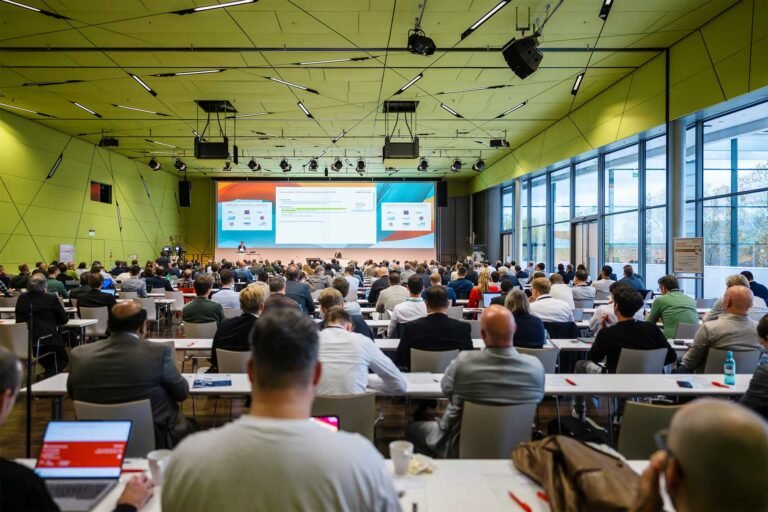
The European Heat Pump Summit 2025 brought together international experts from industry, research, and academia in Nuremberg. With a varied conference programme and an accompanying foyer exhibition, the event provided valuable inspiration and opportunities for personal encounters within the heat pump industry. Attracting around 424 participants from 38 countries, the European Heat Pump Summit once

Integrated Thinking Drives Industrial Heat Pump Adoption
By: Ilana Koegelenberg Industrial heat pumps are emerging as a critical technology for decarbonizing process heat and district heating networks. With manufacturers now pushing temperature limits beyond 120°C and growing recognition that heating and cooling systems should work as integrated solutions rather than isolated pieces of equipment, heat pumps are also transitioning from niche

Ammonia Refrigeration Evolves Amid Growing Competition
By: Ilana Koegelenberg Ammonia (NH3/ R717) refrigeration continues to dominate industrial applications across the United States and European Union, but the sector is undergoing significant transformation as operators balance traditional advantages with evolving safety requirements, workforce challenges, and competition from alternative refrigerants. While ammonia maintains its stronghold in large-scale facilities, new technologies and regulatory
Commercial Refrigeration Market Forecast: Reaching USD 62.73 Billion by 2028
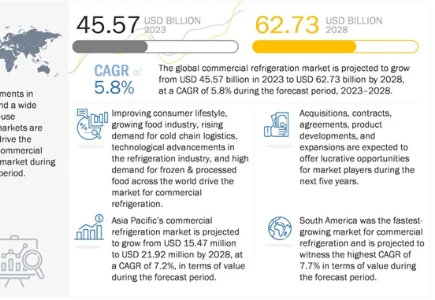
Commercial refrigeration refers to specialized cooling systems and equipment designed to store, transport, and display perishable goods and maintain them at specific temperature conditions. It is an essential component of various industries, particularly the food & beverage sector, pharmaceuticals, and healthcare. The end uses of commercial refrigeration systems include supermarkets & hypermarkets, convenience stores, bakeries,
The CO2 Revolution: Commercial Refrigeration Trends Reshaping EU and US Markets
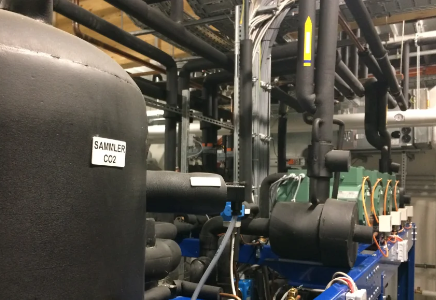
By: Ilana Koegelenberg Carbon dioxide (CO2, R744) is transforming commercial refrigeration across major markets, emerging as a future-proof solution for retailers navigating tightening regulations and mounting environmental pressures. With the EU setting aggressive phase-out timelines and individual US states implementing stringent requirements, momentum behind CO2 adoption has reached a critical tipping point. What is

The Role of Refrigeration in the Global Economy, Detailed Review, 3rd Edition
The International Institute of Refrigeration (IIR) has published the updated 3rd edition of the "Technical Brief on Refrigeration Technologies," authored by Monique Baha, Souhir Hammami, and Jean-Luc Dupont. This extensive report thoroughly examines refrigeration's indispensable role in the global economy, climate resilience, and human health. Foreword by Dr. Yosr Allouche Dr. Yosr Allouche, General Director