Esta página solo está disponible en inglés. Ir a la portada en español

×

Questa pagina è disponibile solo in inglese. Home page in italiano

×

Diese Seite ist nur auf Englisch verfügbar. Zur deutschen Startseite

×

Cette page est disponible uniquement en anglais. Aller à la page d'accueil en français

×

Air France KLM Martinair Cargo and Envirotainer are intensifying their partnership

Air France KLM Martinair Cargo and Envirotainer are intensifying their partnership

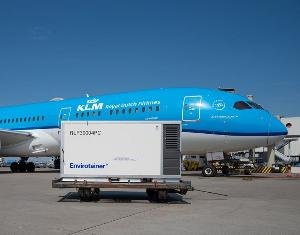
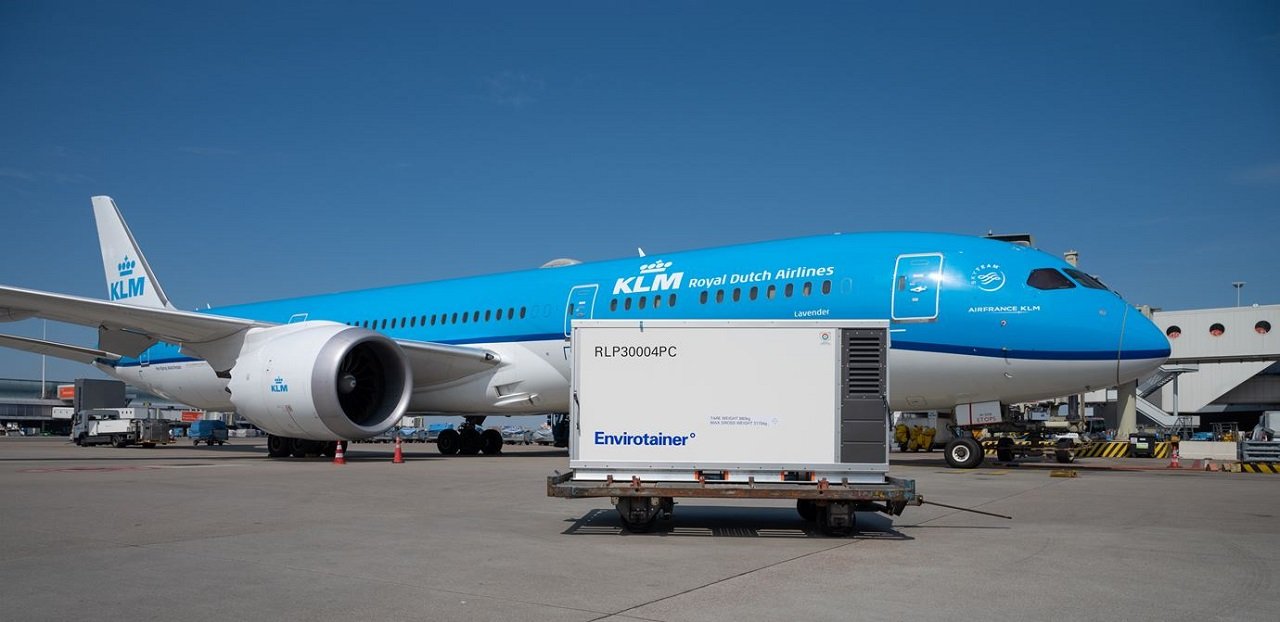
Envirotainer, the global market leader in secure cold chain solutions for air transportation of pharmaceuticals and Air France KLM Martinair Cargo (AFKLMP Cargo), the leading airline in pharmaceutical logistics, announced their collaboration on Sustainability.

Envirotainer and Air France KLM Martinair Cargo each have a strong focus on sustainability and are pursuing multiple initiatives with a view to achieving more sustainable operations. Being long-term close partners, both organisations sought to strengthen the initiatives by collaboration.

Air France KLM Martinair Cargo has approved the newly introduced Envirotainer Releye container and is in the process of implementing it in its booking system as part of its product portfolio. The Releye provides outstanding environmental performance, delivering up to 90% reduction in CO2 emissions compared to available passive solutions, based on life-cycle analysis.

Envirotainer will reduce the impact of the use of its containers on the environment by investing in Sustainable Aviation Fuel (SAF). SAF offers a cleaner alternative for conventional jet fuel. SAF is produced from sustainable feedstock, such as cooking oil, animal waste or solid waste from homes and businesses. It reduces CO2 emissions by up to 85%, when compared to conventional jet fuel. The reduction occurs throughout the entire lifecycle of producing and using sustainable aviation fuel compared to that of fossil fuel.

“We are very happy that a close partner of ours since many years keeps delivering top quality service and secures that the pharmaceutical industry, together with us, provides further capacity of latest technology”, comments Don Harrison, Head of Global Key Accounts, Airlines at Envirotainer.

Marcel Kuijn, Global Head of Pharmaceutical Logistics at AFKLMP Cargo says: “We really appreciate our long-term partnership with Envirotainer. Sustainability and Pharmaceuticals are among our strategic focus areas. That is why this initiative is of such great importance to us.”

Get the daily refrigeration briefing

One email a day. Trusted by 3,000+ RACHP professionals.

Related news

Most read this month

All news →

Related insights

Article

Secop’s Solar Direct Drive (SDD) System Earns WHO PQS Approval – The Team Behind It

Partner's material In March 2026, Secop’s Solar Direct Drive Power Management Module was granted WHO PQS prequalification and officially listed in the WHO Catalogue of Prequalified Immunization Devices. The WHO IMD-PQS (Immunization Devices Performance, Quality and Safety programme) is the global benchmark for cold chain equipment used in immunisation. Being listed in its catalogue is

22 Jun 2026
Tech Guide

Case Study – Effect of Louvers or diffusers on air flow distribution and cooling time on a meat log during Chill cycle

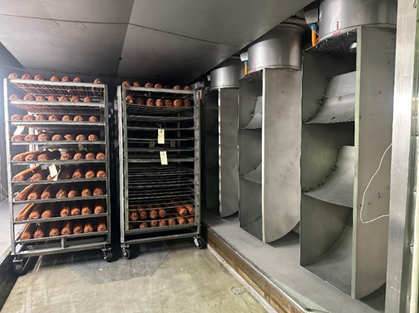
By Kushal Aurangabadkar An experimental analysis was conducted on a cooler space measuring 3.66 m × 6.096 m (12.0 ft × 20.0 ft), equipped with an ammonia refrigeration coil, five 30 cm (12 in.) fans, and five diffusers. The study measured airflow patterns, cooling rates, and heat transfer efficiency in meat storage by testing two configurations:

Kushal Aurangabadkar · 21 Jan 2026
Tech Guide

Total Cost of Ownership (TCO) for Modular Refrigeration Systems in Life Sciences Distribution Centers

by Ramez Naguib, P.E. Introduction Life sciences distribution centers are under immense pressure to deliver consistent temperature control, comply with increasingly stringent regulations, and optimize operational efficiency. Traditional built-up refrigeration systems often prove cumbersome, costly, and slow to implement. In contrast, modular, factory-assembled refrigeration systems have emerged as a compelling alternative. Drawing on lessons from

14 Jan 2026