The Environmental Investigation Agency (EIA) has published a report, “Financing the Supermarket Cooling Transition”, calling for increased investment in secure, energy-efficient refrigeration systems using natural refrigerants. Released on 24 November 2026, the report highlights the vulnerability of supermarket cooling infrastructure following cyberattacks across Europe, alongside growing risks associated with extreme temperatures and rising energy and refrigerant costs.
Analysis of data from Ahold Delhaize, Carrefour and Jerónimo Martins shows that annual energy savings average approximately 24% of annual investment in natural refrigerant systems. When avoided F-gas refrigerant costs are included, estimated annual savings increase to 32–38% for two retailers. Carrefour and Jerónimo Martins reported payback periods of approximately 4–10 years for natural refrigerant systems, compared with equipment lifetimes of around 15 years.
The report also highlights the performance of CO2 refrigeration systems under extreme weather conditions. METRO AG reported successful operation at temperatures above 40°C (104°F), while Ahold Delhaize reported that CO2 systems in Greece and Romania operated successfully at temperatures of up to 45°C (113°F).
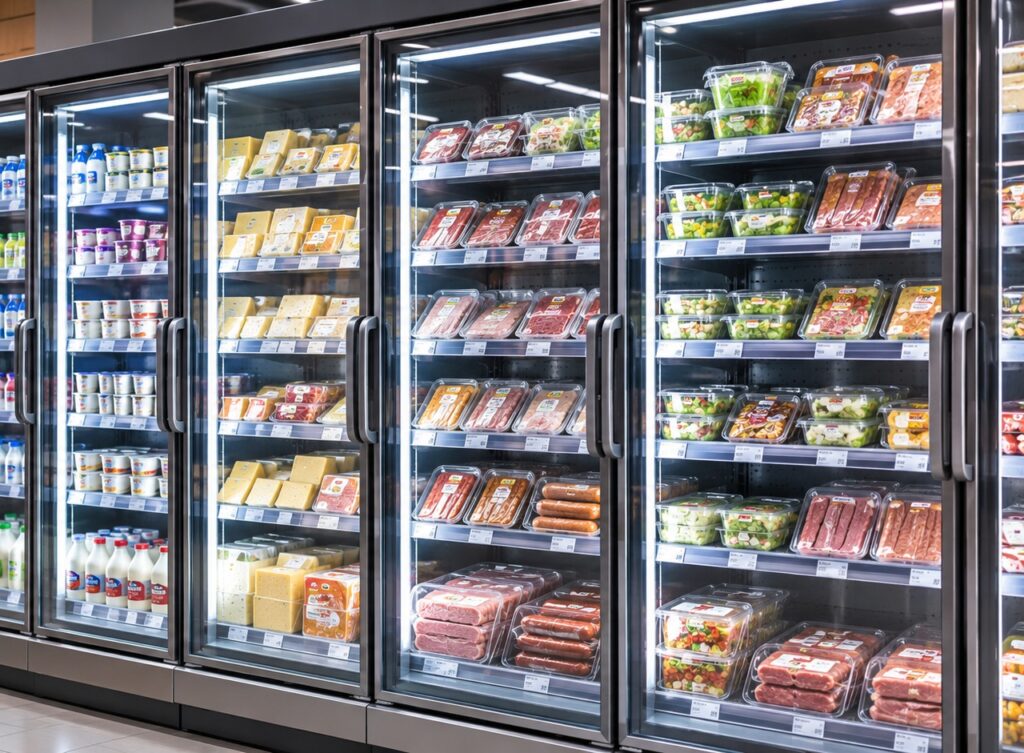
Despite these benefits, upfront capital expenditure remains a major barrier to refrigeration modernisation. EIA identifies Refrigeration-as-a-Service as a potential solution, under which third-party providers finance, install, operate and maintain refrigeration equipment while retailers pay for cooling through ongoing service agreements. Case studies from Aneo Retail show annual energy savings equivalent to 27–45% of annual service costs, including savings from upgraded refrigeration systems and doors on refrigerated cabinets.
EIA recommends that retailers accelerate the replacement of ageing HFC-based systems, financiers recognise sustainable refrigeration as an infrastructure investment opportunity, and governments introduce supportive financial incentives and regulatory measures. The report emphasises that the transition extends beyond Europe, particularly as supermarket networks expand in emerging markets.
“Supermarket refrigeration needs to be recognised as critical infrastructure. The good news is that investing in modern, sustainable systems can deliver significant operational savings as well as strengthen resilience. The challenge is finding ways to finance that investment at both the scale and speed required,” said Fionnuala Walravens, Campaign Lead at EIA UK’s Climate Programme.