HVAC Equipment Market Outlook 2031
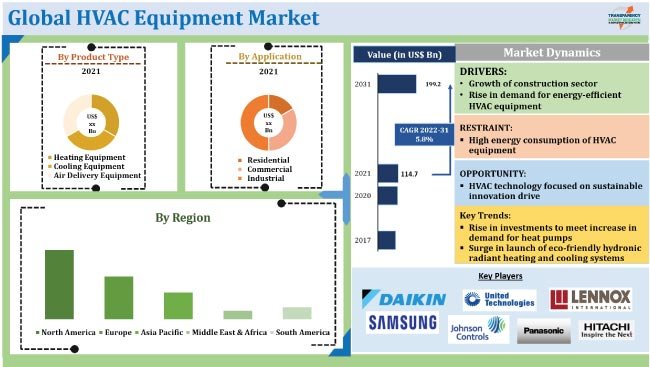
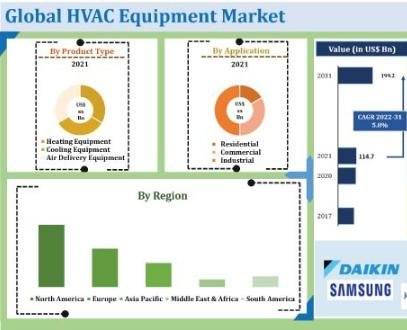
- The global HVAC equipment market was valued at US$ 114.7 Bn in 2021
- It is estimated to grow at a CAGR of 5.8% from 2022 to 2031
- The global HVAC equipment market is expected to reach US$ 199.2 Bn by the end of 2031
HVAC Equipment Market Introduction
Heating, ventilation, and cooling (HVAC) systems control the temperature, humidity, and purity of the air in an enclosed space. They include heating equipment such as heat pumps, furnaces, unitary pumps, and boilers; cooling equipment such as chillers, air conditioners, and water cooling towers; and air delivery equipment such as ventilation fans and humidifiers/dehumidifiers. HVAC systems are deployed in industrial, commercial, residential, and institutional buildings. Central air conditioning; ductless, mini-split air conditioners; multi-split system air conditioning; variable refrigerant volume and variable refrigerant flow systems; and chillers are various types of HVAC systems used in commercial settings. HVAC system’s working principle is based on thermodynamics, fluid mechanics, and heat transfer. It uses three basic methods of heating: conduction, convection, and radiation. The system adjusts and changes the air conditions of a building to maintain thermal comfort.
Expansion of Construction Sector Augmenting Global HVAC Equipment Market
Rapid urbanization has led to the expansion of residential and commercial infrastructure. Majority of air-handling systems such as heat pumps, furnaces, boilers, and air-cooled chillers are used in residential and commercial buildings. Many commercial structures, including retail complexes, multiplexes, hospitals, clinics, hotels, and restaurants, are built with ventilation ducts and fans to ensure optimal ventilation and sufficient airflow. The commercial sector is likely to grow significantly in the next few years. According to the Construction Products Association, the U.K.-based construction industry trade association, the commercial sector is expected to grow by 9.7% in 2022. According to the report ‘Future of Construction’ published by Oxford Economics and Marsh and GuyCarpenter, a cumulative total of US$ 135 Trn in construction output is forecast in the decade to 2030.
Rise in Demand for Energy-efficient HVAC Equipment Across Globe
Implementation of laws and regulations that require commercial and residential buildings to meet safety standards and energy consumption targets has led to a surge in demand for energy-efficient HVAC equipment. Climate change is driving the traction of new technologies in the renewable energy market such as solar-powered HVAC systems and geothermal heat pumps.
HVAC equipment accounts for 40% to 60% of the total energy consumption of a building, depending on climate and other factors. This is driving the need for efficient HVAC systems, which can meet the changing climatic variations, while lowering energy consumption. Innovative HVAC technologies have changed the way of heating and cooling residential and commercial interiors. They offer significant energy savings and reduced carbon emissions. Recent developments in the HVAC equipment market include the launch of thermally-driven air conditioners and ice-powered air-conditioning to reduce energy usage and the overall environmental impact of HVAC equipment.
Integration of Smart Technologies in HVAC Systems
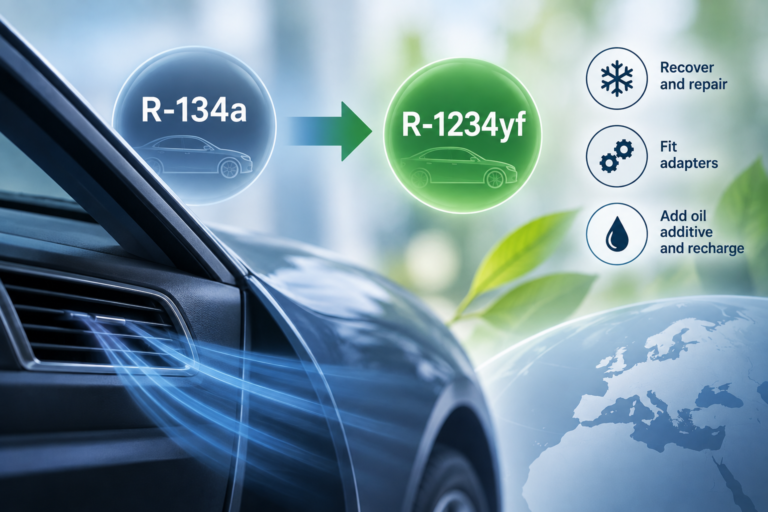
Increase in adoption of home automation and rise in construction of green buildings have prompted HVAC equipment manufacturers to develop sustainable products integrated with smart technologies. Recent developments in the HVAC sensors market have led to a rise in demand for products with intelligent features and functions that offer smooth operation and higher energy savings. Manufacturers are providing remote control of equipment using mobile applications, intelligent sensors, and automated control systems. They are also introducing eco-friendly equipment by phasing out chlorofluorocarbons, hydrochlorofluorocarbons, and other harmful refrigerants.
Increase in Standard of Living Fueling Cooling Equipment Segment
In terms of product type, the global HVAC equipment market has been segmented into heating equipment, cooling equipment, and air delivery equipment. The cooling equipment segment held major share of the global market in 2021. Improvement in standard of living in hot climates and focus on reducing food waste are expected to drive the segment during the forecast period. Chillers and air conditioning equipment significantly contribute to the rise in demand for cooling equipment. However, demand for water cooling towers has been declining due to high costs.
Regional Outlook of HVAC Equipment Market
Asia Pacific is the fastest-growing market for HVAC equipment, followed by North America. The region accounted for 52.9% revenue of the HVAC equipment market worldwide in 2021, and is projected to retain its leading position by 2031. Growth of the market can be ascribed to robust economic development in countries such as China and India. China is one of the largest producers of HVAC equipment and a key supplier to the European market. Expansion of the air conditioning system market and rise in export of low-priced products to Africa and South America are also driving the market in Asia Pacific.
Analysis of Key Players in Global HVAC Equipment Market
Detailed profiles of players in the HVAC equipment market are provided in the report to evaluate their financials, key product offerings, recent developments, and strategies. Majority of companies are investing significantly in comprehensive R&D activities, primarily to launch eco-friendly products. Expansion of product portfolios and mergers & acquisitions are key strategies adopted by manufacturers.
Key players operating in the global HVAC equipment market include Daikin Industries, Ltd., Fujitsu General Ltd., Gree Electric Appliances, Inc. of Zhuhai, Hitachi Ltd., Hubei Donper Electromechanical Group Co., Ltd., Ingersoll-Rand, Mitsubishi Electric Corporation, Moon Environment Technology Co., Ltd., Panasonic Corporation, and Sanden Holdings Corp.