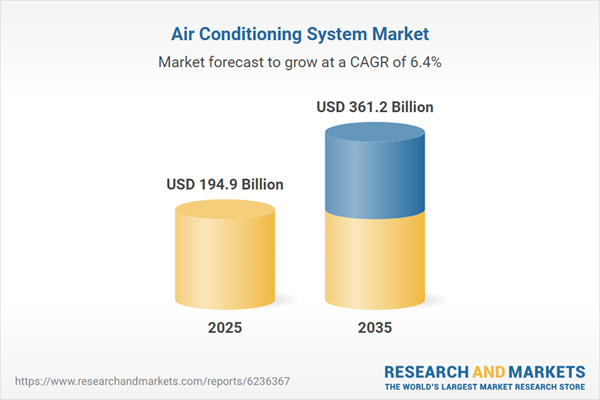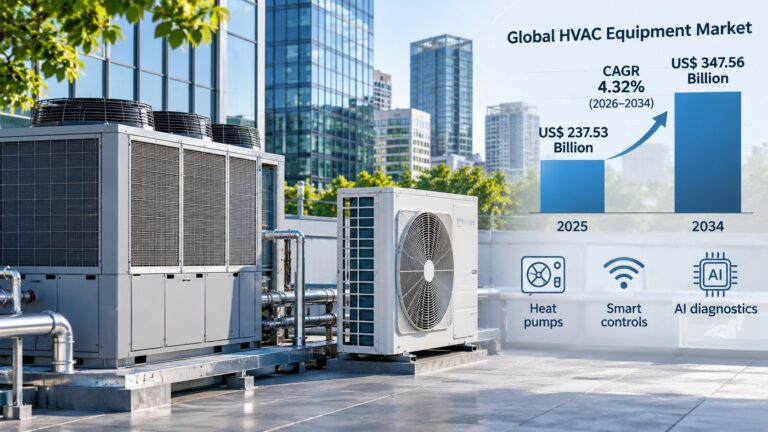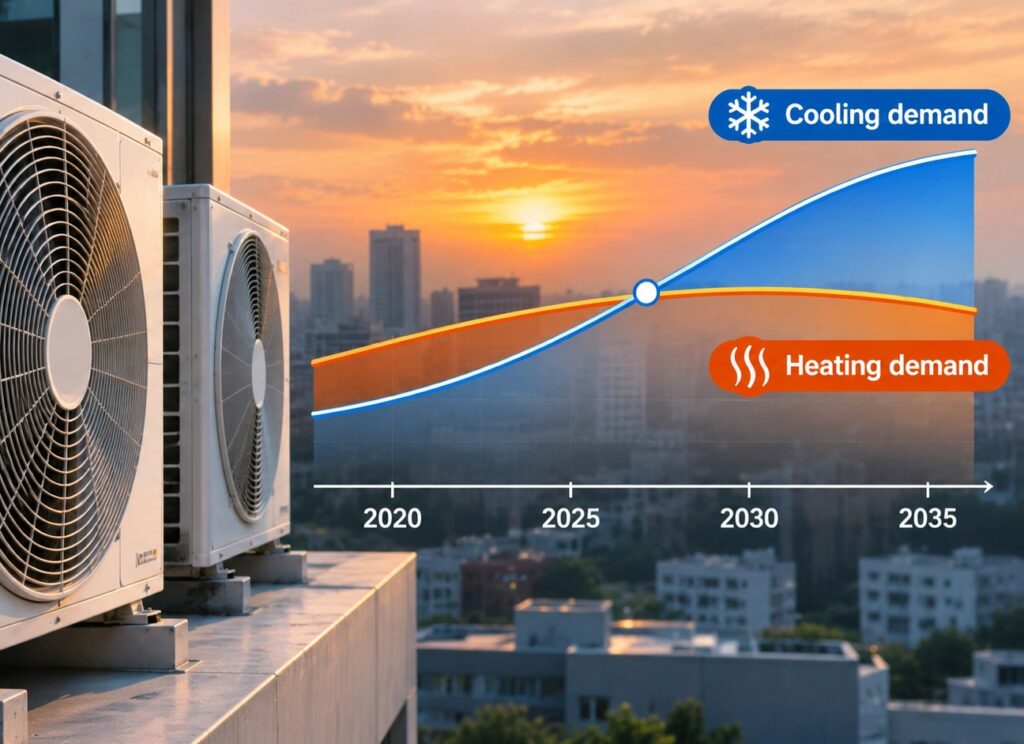
Global cooling needs are overtaking heating needs for the first time in energy history, according to the International Energy Agency (IEA) in its World Energy Outlook 2026. Rising temperatures, population growth and increasing household incomes are driving demand for cooling equipment and electricity.
In emerging market and developing economies outside China, 85% of households are exposed to high temperatures, but fewer than 20% of these households currently have an air conditioner.
Under the IEA’s Stated Policies Scenario (STEPS), electricity demand for cooling increases by 1,700 TWh by 2035. In an alternative scenario involving stronger, more frequent and longer heatwaves, this increase is 40% higher, adding a further 700 TWh and placing additional pressure on peak electricity demand.
Energy efficiency is also highlighted as a factor in reducing electricity consumption. Over the past decade, efficiency improvements in residential refrigeration, lighting, televisions and other household appliances have delivered electricity savings of 600 TWh. Aligning minimum energy performance standards across all countries with the most stringent standards currently in force could unlock an additional 800 TWh of savings by 2035.
The IEA also identifies significant potential for heating electrification. Based on 2025 energy prices, cost-competitive electrification could replace around half of global fossil fuel-based space heating demand and nearly 40% of fuel-based demand for low- and medium-temperature industrial heat.