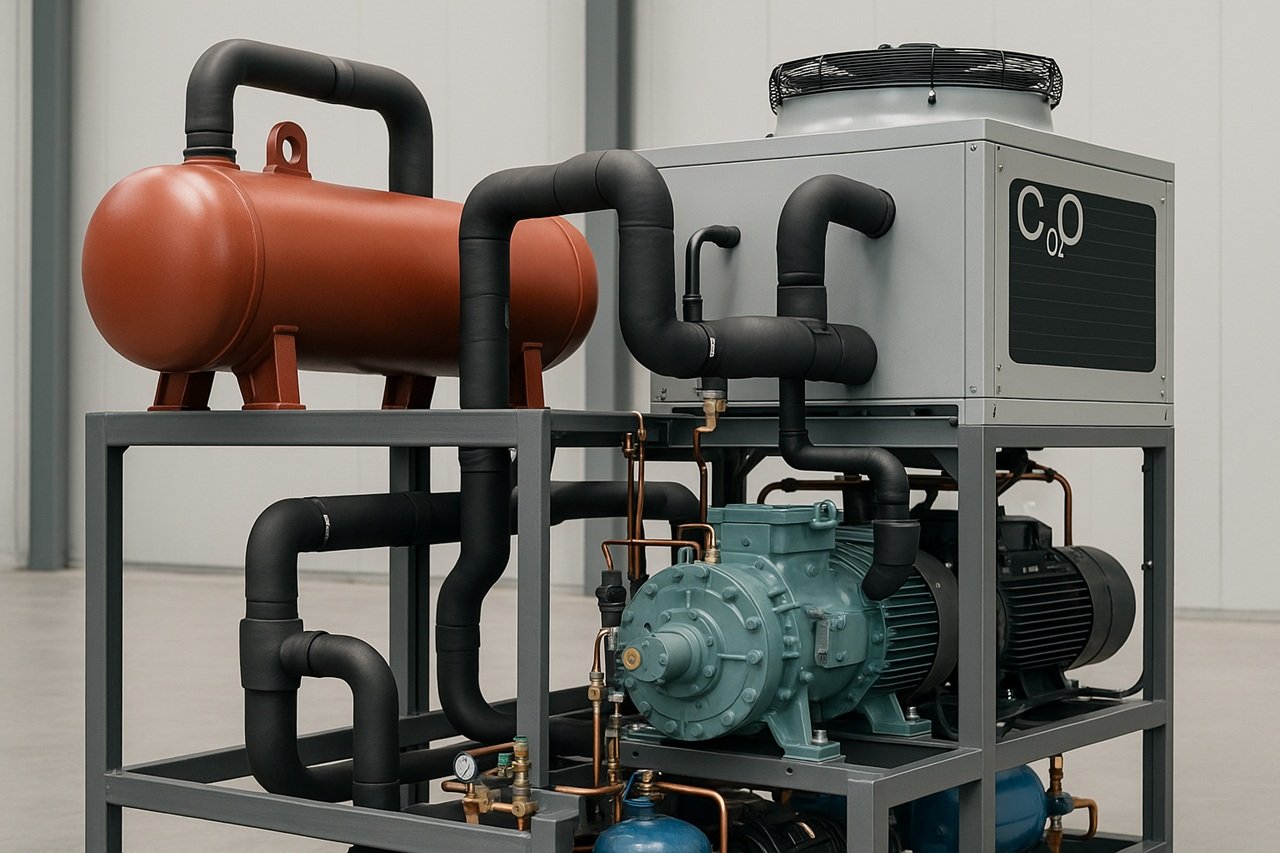
The Multilateral Fund of the Montreal Protocol has approved a pilot project to introduce transcritical CO₂-based heat pumps in Chile’s industrial refrigeration sector. The initiative aims to reduce hydrofluorocarbon (HFC) use, improve energy efficiency, and support cleaner refrigeration practices.
The project will be implemented by the Ozone Unit of the Ministry of the Environment, with the United Nations Development Programme (UNDP) serving as the implementing agency. Over a three-year period, funding will be allocated through a public call for applications, open to interested companies. Details of the application process will be announced by the Ozone Unit.
This pilot forms part of Chile’s efforts to phase down HFCs, which are potent greenhouse gases. The proposed technology — transcritical CO₂ (R-744) heat pumps — offers a low global warming potential alternative with high energy performance. “With this approval, we are moving toward cleaner technologies in the industrial refrigeration sector,” said Dolores González Puchi, project lead and official at the Ozone Unit of the Ministry of the Environment. “Using CO₂ as a natural refrigerant helps reduce emissions, improve energy efficiency, and strengthen our commitment to the Montreal Protocol and the Kigali Amendment.”
By the end of the project, scheduled for May 2028, Chile will submit a detailed report to the Executive Committee of the Multilateral Fund. This will include a description of the activities undertaken, outcomes of the technology demonstration, and steps taken to promote its adoption. In addition, the country will develop energy efficiency guidelines to support technology selection and performance improvement in the sector.
The Montreal Protocol and its Kigali Amendment aim to protect the ozone layer and address climate change by phasing out ozone-depleting substances and reducing the use of HFCs. Through this initiative, Chile reinforces its commitment to a fair and inclusive ecological transition.