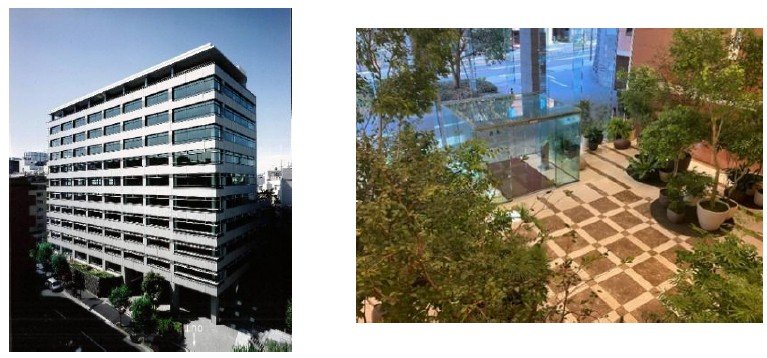
Daikin Industries and Osaka University said a year-long demonstration of “switchless air conditioning” at an office area used by ITFOR in the Ichibancho Tokyu Building in Japan reduced electricity consumption for air conditioning and ventilation by 24.6% year on year while maintaining comfort. The project was carried out with Tokyu Land, which operates the building, and covered part of the tenant space measuring about 500 m2 (approx. 5,382 sq ft) from January to December 2025.
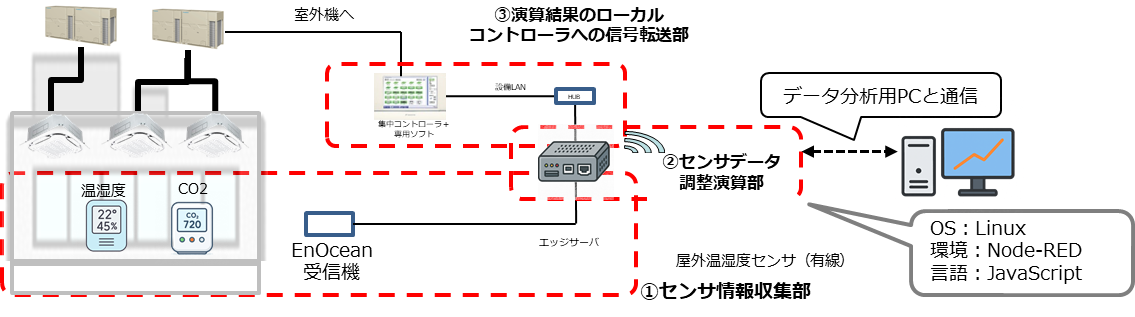
The system automatically controls air conditioning using sensor data on temperature, humidity, CO2 concentration and outdoor weather conditions, without occupants operating remote controls. Data from external sensors are analyzed by an edge server, which then sends commands to existing building multi air conditioners as well as ventilation and humidity-control equipment.
According to the companies, the installed control functions included energy-saving pre-cooling and pre-heating, indoor unit fan power reduction, CO2-based ventilation control linked with Daikin’s DESICA unit, and optimized low-load operation. Daikin said these functions helped prevent unnecessary night-time operation, reduce excessive pre-cooling and pre-heating, and curb unnecessary ventilation.
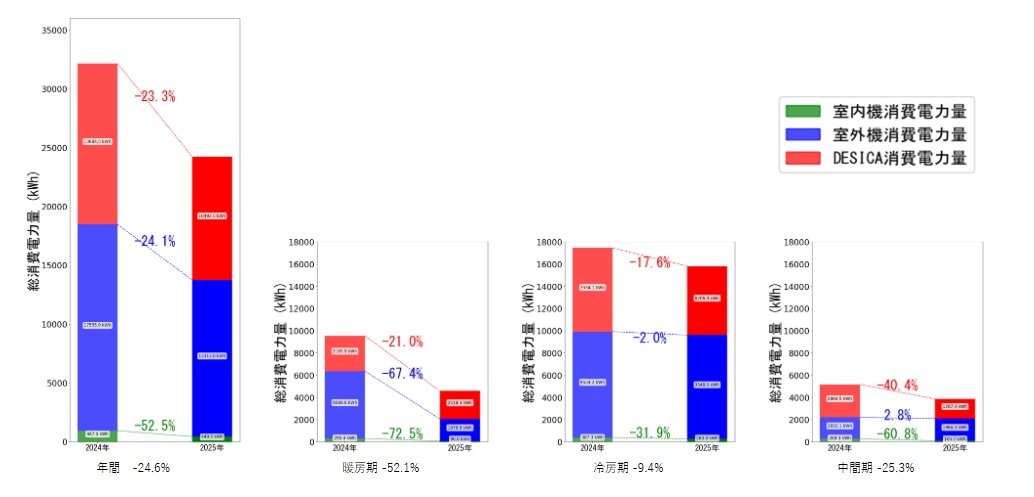
The companies said electricity consumption fell by 4,969 kWh, or 52.1%, during the heating season, by 1,637 kWh, or 9.4%, during the cooling season, and by 1,306 kWh, or 25.3%, during intermediate periods, for a total reduction of 7,912 kWh over the year. Sensor data and a post-trial survey at ITFOR indicated that indoor comfort was maintained during the test.
The building obtained the “ZEB Oriented” rating in 2023 after renovation work, and the demonstration confirmed that further energy savings can be achieved through operational efficiency even in a building designed for energy performance. Daikin said it plans to use the trial results as it considers introducing the system as an additional option in its solution services.