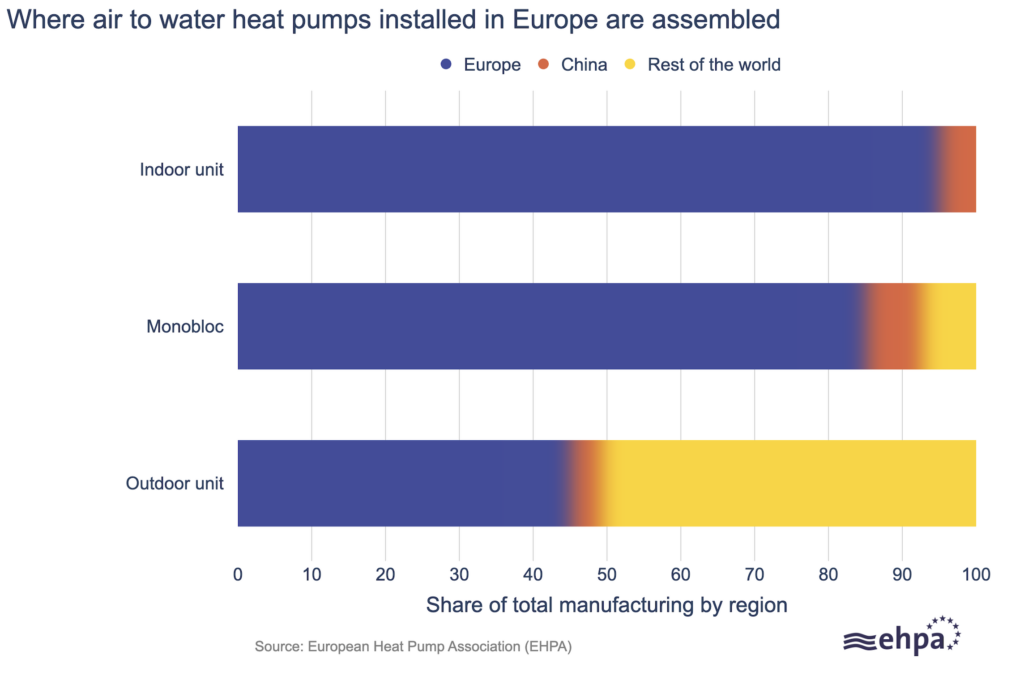
More than 80% of heat pumps installed in Europe are assembled in Europe, while around 10% are produced in China, according to new data from the European Heat Pump Association (EHPA). The figures were released as the European Commission introduced its Industrial Accelerator Act, which aims to strengthen clean-technology manufacturing in Europe, including heat pumps.
The Act states that hydronic heat pumps must originate in the EU three years after it enters into force. EHPA said its data shows the sector already has a strong manufacturing base in Europe. The association surveyed its members about where the heat pumps they sold in Europe were manufactured.
For air-to-water heat pumps, over 80% of monobloc units were assembled in Europe, compared with less than 10% in China. More than 90% of indoor units were assembled in Europe and about 5% in China. These types of units represent the highest value-added stages in the heat pump supply chain. For outdoor units, around half were assembled in Europe, while under 10% were assembled in China.
According to EHPA, Europe currently has the capacity to produce 8 million heat pumps per year, compared with about 2.5 million today. The association said expanding production could reduce exposure to volatile gas price spikes that contribute to inflation. The inclusion of heat pumps in the Industrial Accelerator Act highlights their role in European energy independence and strategic autonomy.
“Want products ‘made in Europe’? The heat pump sector’s already delivering. But its 300 factories could produce over three times more heat pumps if the demand was there,” said Paul Kenny, director general of the European Heat Pump Association. “Governments must be encouraged to remove taxes from the electricity bill and put in place clear support for heat pump consumers – measures we know are crucial for spurring demand.”
EHPA also reported that heat pump sales across 16 countries increased by 11% in 2025. The association linked the growth to government measures addressing electricity tax levels and providing longer-term support for heat pump adoption.