Subscribe to the daily news Sign in
En
06 July 2018

Emerson: Additional EPA Refrigerant Leak Detection Guidelines

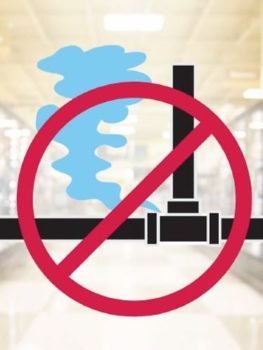
Refrigerant leaks have significant economic and environmental impacts. The average supermarket has two to four refrig­eration racks charged with approximately 3,500 pounds of refrigerant. According to the Environmental Protection Agency (EPA)’s GreenChill research, about 25 percent, or 875 pounds, of refrigerant is lost each year to leaks.

<img class="alignnone size-medium wp-image-13460" src="https://refindustry.com/wp-content/uploads/2018/07/leak-detection-263x350.jpg" alt="" width="263" height="350" />

Even in a more moderate scenario with a lower leak rate of 20 percent, the economic costs are still significant. For an individual store, the loss of 700 pounds of R-404A (among the most common refrigerants in use today) at $7 per pound equates to an annual expense of nearly $5,000. But that’s only one store. The cost swells exponentially when you factor in the multiple stores that a supermarket chain operates. Across a chain of 100 stores, refrigerant leaks can cost retailers nearly $500,000 annually.This doesn’t include the associated labor costs, food waste, or the potential loss of business due to service disruptions resulting from a leak.

A supermarket’s bottom line isn’t the only thing affected by refrigerant leaks. The environment may also suffer a signifi­cant impact as well. In the previous 100-store example, nearly 70,000 pounds of refrigerant are leaked into the atmosphere. That’s equivalent to 124,500 metric tons of CO2, the emissions of 24,000 cars or 10,600 homes. This environmental impact doesn’t account for the potential additional energy required to power refrigeration equipment experiencing a leak, as this equipment must run harder to compensate for its declining refrigerant levels.

<a href="https://www.emerson.com/en-us/news/commercial-residential/additional-epa-refrigerant-leak-detection-guidelines" target="_blank" rel="noopener">Read more</a>
Share
Subscribe to the Refindustry Daily Newsletter
Trusted by 3,000+ refrigeration professionals worldwide
or sign up with
Google
LinkedIn
Facebook
No spam. Only industry-relevant news.
Unsubscribe anytime.

Related news

JULABO USA adds LiDAR room scans to app for lab refrigerant safety
JULABO USA said it has updated its smartphone application to integrate LiDAR technology aimed at helping laboratories assess room volume for the safe deployment of liquid temperature control units ...
27 Feb 2026
Top-down model compares food chain emissions across 10 EEA countries
A new study published in the Journal of Cleaner Production presents a harmonised top-down method for calculating greenhouse gas (GHG) emissions from the food chain in ten European Economic Area (EE...
30 Dec 2025
BOCK CO2 compressors cut vibration in US supermarket retrofit
Danfoss has published a whitepaper highlighting the vibration reduction capabilities of BOCK HGX CO₂ compressors in a transcritical booster refrigeration system at a supermarket in Ohio, USA. The
10 Feb 2026
Eurovent Certification white paper reports CO2 gas coolers underper...
Eurovent Certification has published a white paper examining how refrigeration heat rejection equipment can perform differently across climate zones and why region-relevant, independently verified ...
24 Feb 2026
LG expands air-conditioning services and installer training in Brazil
LG Electronics announced an expanded strategy for the Brazilian air-conditioning market focused on services, technical training, and the consumer experience across purchase and post-sales. The ...
06 Mar 2026
SBTi approves Danfoss updated science-based climate targets to 2050
The Science Based Targets initiative (SBTi) has approved Danfoss’ updated science-based targets for reducing greenhouse gas (GHG) emissions, including near-term targets through 2035 and a long-term...
09 Mar 2026