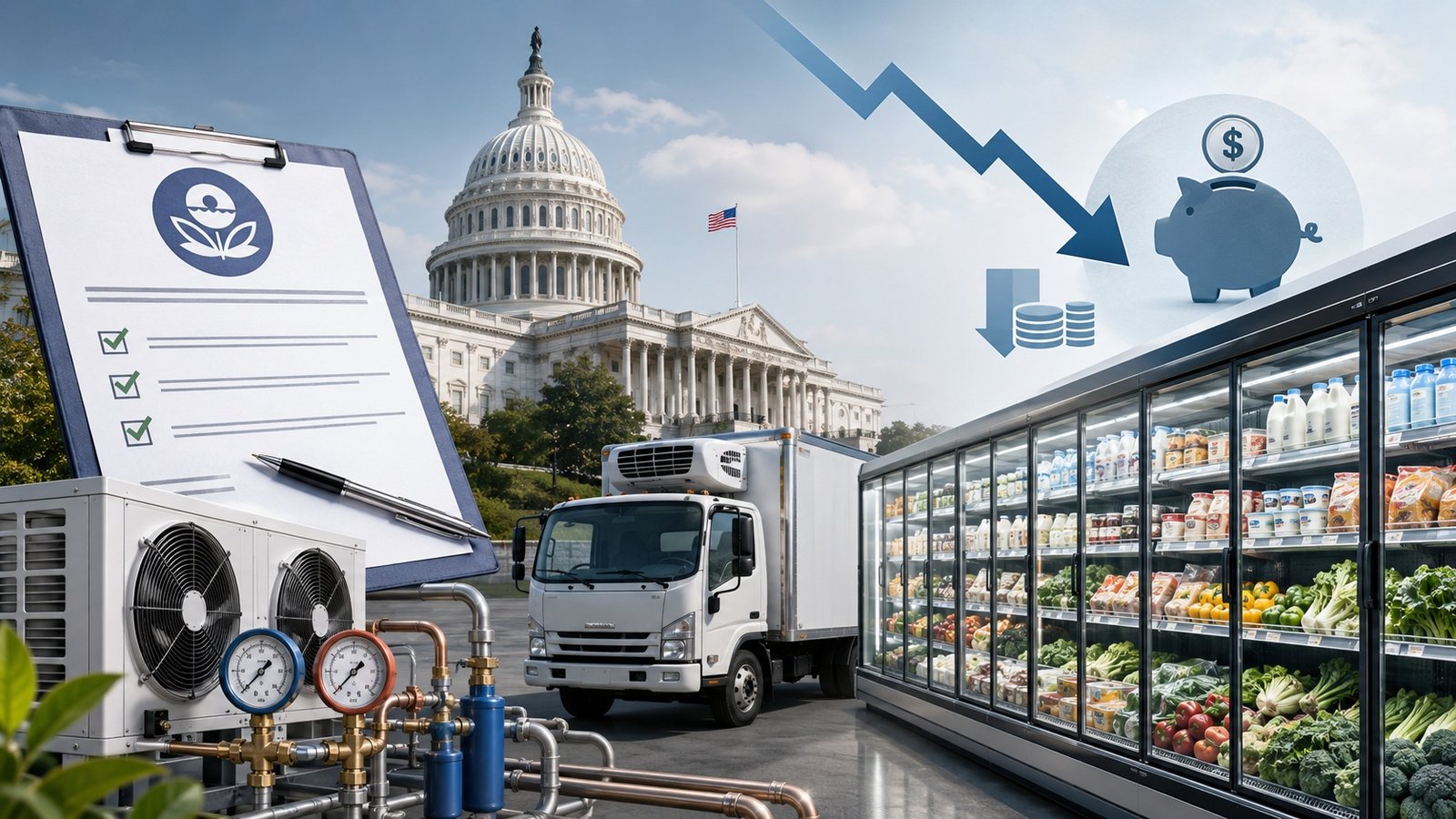
The U.S. Environmental Protection Agency has announced two actions on refrigerant regulations: a final rule revising the 2023 Technology Transitions Rule and a proposed technical fix to the 2024 Emissions Reduction and Reclamation Rule. EPA said the actions are estimated to save American families and businesses more than $2.4 billion.
The final revisions to the 2023 Technology Transitions Rule extend compliance deadlines for the use of hydrofluorocarbons, or HFCs. EPA said the changes make a wider variety of refrigerants available to businesses while meeting statutory requirements under the American Innovation and Manufacturing Act.
According to EPA, the added flexibility affects supermarkets, home AC systems, semiconductor chip manufacturing, and the transportation of medical supplies. The agency said savings include over $900 million from revisions to the 2023 rule, including more than $800 million at supermarkets.
EPA is also proposing to exempt all road refrigerant transport appliances from HFC leak repair requirements established in the 2024 ER&R Rule. The agency said the proposed technical fix could provide up to $1.5 billion in projected savings for transporters of refrigerated goods if finalized.
The 2024 ER&R Rule established leak repair requirements for appliances that contain at least 15 pounds (approx. 6.8 kg) of HFC refrigerants used to transport perishable goods. EPA said it will also reconsider the rest of the 2024 ER&R Rule in the future.
“Americans were right to be frustrated with the Biden-era refrigerant rules. They didn’t protect human health or the environment and instead piled on costly, unattainable restrictions beyond what the law requires,” said EPA Administrator Lee Zeldin. “Today, the Trump EPA is fulfilling President Trump’s promise to lower costs and is fixing every problem we can under the authority Congress gave us. Our actions allow businesses to choose the refrigeration systems that work best for them, saving them billions of dollars. This will be felt directly by American families in lower grocery prices.”