11 April 2019
New Generation of Design Software Automates Refrigerant Compliance and Capacity Calculations
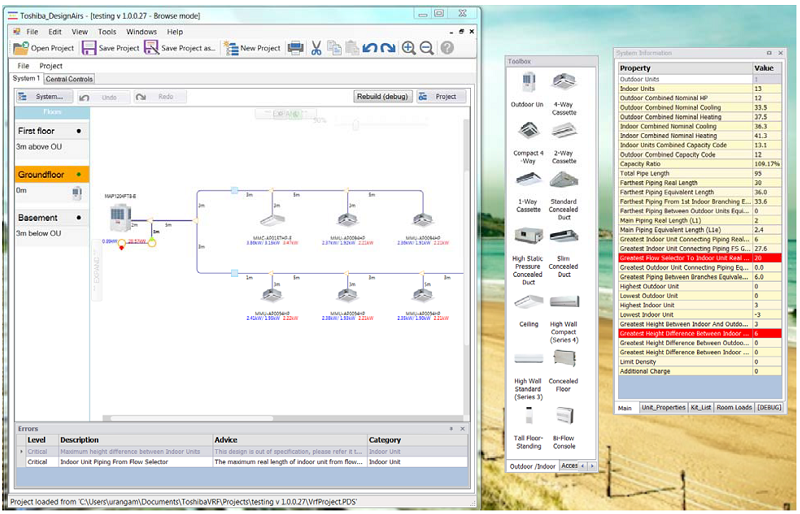
Toshiba has released a new generation of its air conditioning system design softwarewhichfor the first time enables contractors to carry out both split and VRF system selections and automated EN378F-Gas compliance checks.
DesignAIRS was originally developed by Toshiba in Europe, andthe company recently adopted the system as its global air conditioning design platform, developing and rolling out a completely updated version of the software.While the first generation of DesignAIRS covered only VRF systems, the latest version enables a range of technologies to be added to designs, including split systems, heat recovery, hot water modules and DX-based air handling units, dramatically expanding its application.
In addition to automatically evaluating compliance with mandatory refrigerant safety standards, the new programme simulates true system capacity for designs.This assures clients and end usersthat a proposed solution will meet both statutory and project performance requirements.
Oliver Sanders, TCUK’s pre-sales manager who leads digital project design support, said: “The majority of projects today include a variety of air conditioning technologies rather than being reliant on a single approach. The new package enables contractors and consultants to design systems that take account of the complex requirements of real buildings and how they are used, and optimise performance and efficiency across the piece, taking into account all the equipment involved.”
In addition to creating detailed project drawings for a variety of building types, including pipework and equipment specifications, the new versionincludes a seasonal performance calculator that allows designers to simulate the actual performance and running costs of a system using local seasonal temperatures and operating conditions.
Different tarrifs can be used for the calculationsto estimate running costs under alternative supply contracts. Designers can simulate the anticipated running costs of a system for end users, and how much CO2 it will produce in a year.
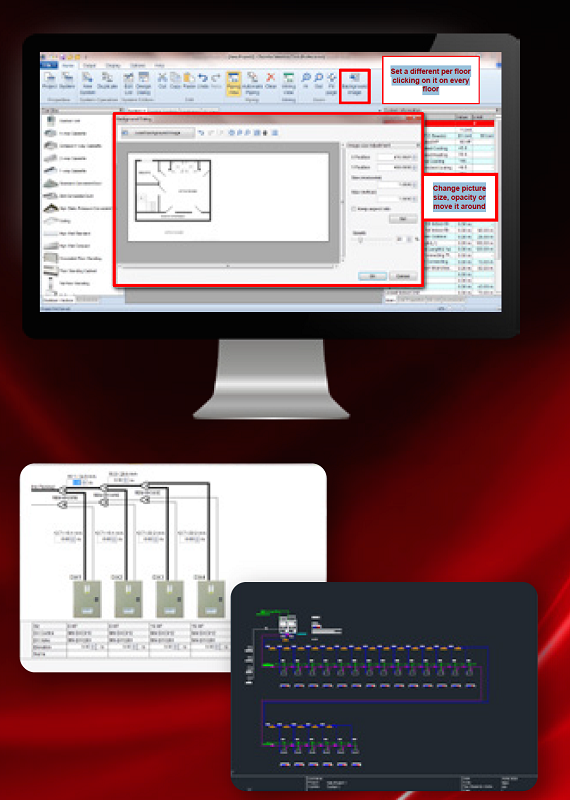
Air conditioning designers can now also import building floorplansand use them as background layouts, assisting clients and installers to visualise the completed system as installed within the building.
The software can be downloaded here: http://www.toshiba-calc.co.uk/vrf_design.zip
DesignAIRS was originally developed by Toshiba in Europe, andthe company recently adopted the system as its global air conditioning design platform, developing and rolling out a completely updated version of the software.While the first generation of DesignAIRS covered only VRF systems, the latest version enables a range of technologies to be added to designs, including split systems, heat recovery, hot water modules and DX-based air handling units, dramatically expanding its application.
In addition to automatically evaluating compliance with mandatory refrigerant safety standards, the new programme simulates true system capacity for designs.This assures clients and end usersthat a proposed solution will meet both statutory and project performance requirements.
Oliver Sanders, TCUK’s pre-sales manager who leads digital project design support, said: “The majority of projects today include a variety of air conditioning technologies rather than being reliant on a single approach. The new package enables contractors and consultants to design systems that take account of the complex requirements of real buildings and how they are used, and optimise performance and efficiency across the piece, taking into account all the equipment involved.”
In addition to creating detailed project drawings for a variety of building types, including pipework and equipment specifications, the new versionincludes a seasonal performance calculator that allows designers to simulate the actual performance and running costs of a system using local seasonal temperatures and operating conditions.
Different tarrifs can be used for the calculationsto estimate running costs under alternative supply contracts. Designers can simulate the anticipated running costs of a system for end users, and how much CO2 it will produce in a year.
Air conditioning designers can now also import building floorplansand use them as background layouts, assisting clients and installers to visualise the completed system as installed within the building.
The software can be downloaded here: http://www.toshiba-calc.co.uk/vrf_design.zip