Market news, 23 July 2024

The World Bank announced today a new program to accelerate the uptake of sustainable cooling solutions, including air conditioning, refrigeration and cold chain in developing countries. The program will provide technical assistance to ensure that efficient cooling is included in new World Bank Group investment projects and mobilize further financing.
Globally, demand for cooling is increasing, mainly driven by growing populations, urbanization and rising income levels in developing countries.Further exacerbating the issue, rising temperatures will increase demand for cooling appliances, which not only use large amounts of energy, but also leak refrigerants that contribute to global warming.
By 2050, energy use for cooling is projected to triple. Also by 2050, estimates show that demand for cooling in countries in the tropics and subtropics such as India, China, Brazil, and Indonesia will grow fivefold, which will put pressure on already strained energy systems and hamper efforts to curb climate change.
“Sustainable cooling is a fundamental part of the energy transition. Meeting the growing demand for cooling services without compromising climate change goals will require substantial investments in energy efficient cooling solutions that are affordable and accessible to developing countries. This is exactly what the new program is set to do and as such, it will underpin the World Bank’s longer-term strategy on sustainable cooling”, said Rohit Khanna, Manager of the Energy Sector Management Assistance Program at the World Bank.
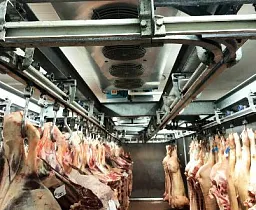
Already today, more than 1 billion people lack access to sustainable cooling solutions with the potential to impact health, food security, productivity and growth. The lack of cold storage and refrigerated transport contributes to 1.5 million vaccine-preventable deaths and the waste of about a third of the total food produced annually. By 2050, work hours lost due to excessive heat could result in 6 percent of lost GDP annually in the worst affected regions of South Asia and West Africa.
“A sustainable approach to cooling is central to addressing climate change for both adaptation and mitigation. This program is a way to accelerate collaborative solutions and raise finance to meet the demand for cooling through the World Bank Group’s country engagements, lending and investments,” said Marc Sadler, Practice Manager of the World Bank’s Climate Funds Management Unit.
Led by the World Bank’s Energy Sector Management Assistance Program (ESMAP) and the World Bank’s Climate Change Group, the new Efficient, Clean Cooling Program is being established thanks to a $3 million grant to ESMAP from the Kigali Cooling Efficiency Program (K-CEP), a philanthropic program established to help countries increase the energy efficiency of cooling.
“Efficient, clean cooling can contribute significantly to a stable climate and cut energy costs at the same time. However, financing is needed to cover the capital costs of cooling technology, especially in developing countries. That is why K-CEP is excited to partner with the World Bank to mobilize the investments required to make cooling for all a reality,” said Dan Hamza-Goodacre, K-CEP Executive Director.
The program will help countries develop the necessary market infrastructure, financing mechanisms, and policies and regulations to deploy sustainable cooling at scale, focusing on air conditioning, refrigeration and cold chain, cool surfaces such as reflective roofs, walls and pavements, and mitigation of urban heat island effects. Another area of focus will be working with public and private sector partners to raise awareness around efficient, clean cooling opportunities in emerging markets.
Through the program, the World Bank will mobilize its expertise across sectors such as transport, energy, agriculture and urban, as well as with the International Finance Corporation (IFC) to lay the groundwork for a pipeline of new projects that could be supported by the World Bank Group or other sources of financing. These efforts will be complemented by the development of a series of technical studies and knowledge exchanges.