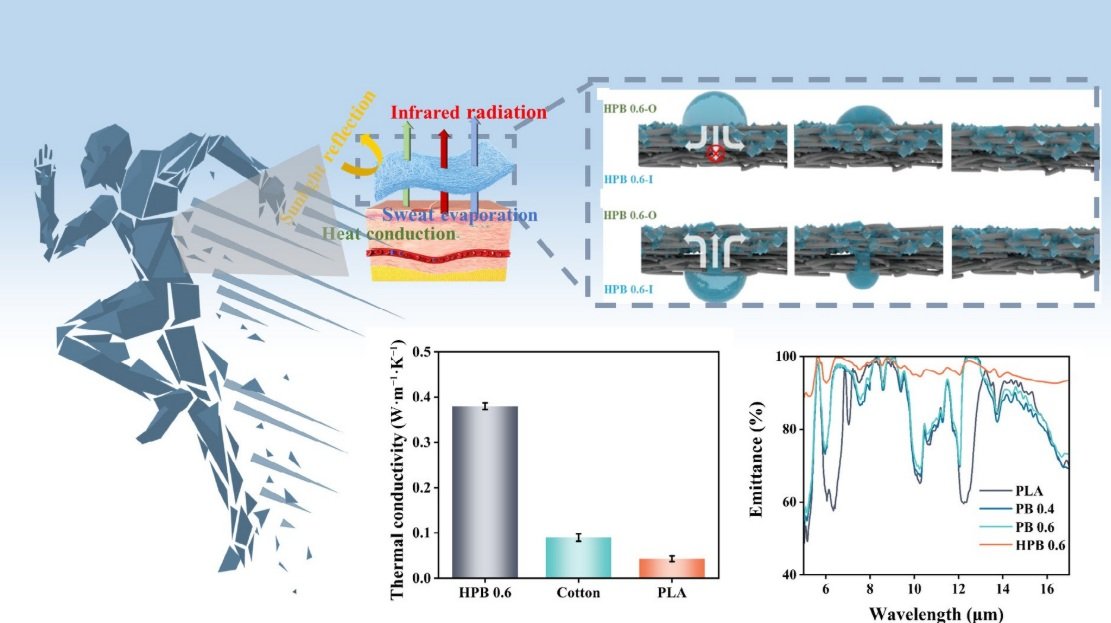
Researchers in China have developed a composite fabric integrating passive radiative cooling, high thermal conductivity, and directional moisture transport to improve thermal comfort in outdoor environments. The fabric is made from polylactic acid (PLA) and boron nitride nanosheets (BNNS), produced via electrospinning and modified to achieve asymmetric wettability.
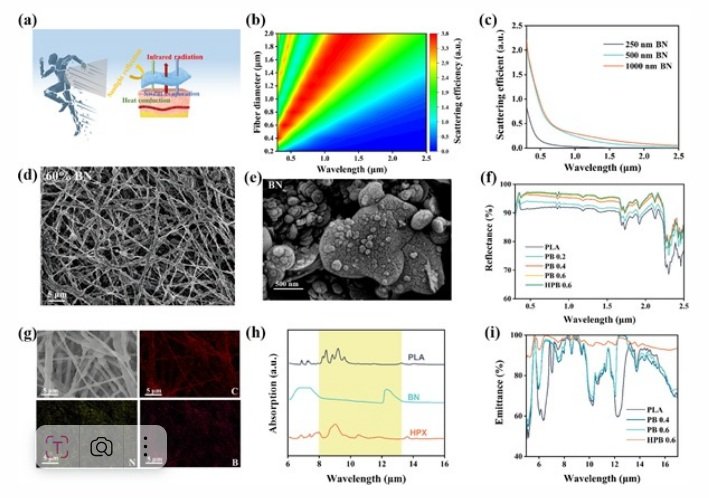
The PLA/BNNS fabric achieves solar reflectance of 96%, infrared emissivity of 93%, and thermal conductivity of 0.38 W·m⁻¹·K⁻¹. In outdoor tests under direct sunlight, it reduced skin temperature by 2.0 °C during the day and 3.8 °C at night compared to bare skin. The composite structure enables effective heat dissipation by reflecting sunlight, radiating heat in the mid-infrared range, and conducting internal body heat away from the skin.
Directional sweat wicking is achieved through a dual-layer structure: a hydrophilic outer layer and a hydrophobic inner layer. This promotes rapid moisture absorption, transport, and evaporation, enhancing user comfort. The fabric demonstrated a sweat evaporation rate of 1.67 g·h⁻¹, outperforming traditional cotton fabrics, which showed lower evaporation efficiency and thermal conductivity.
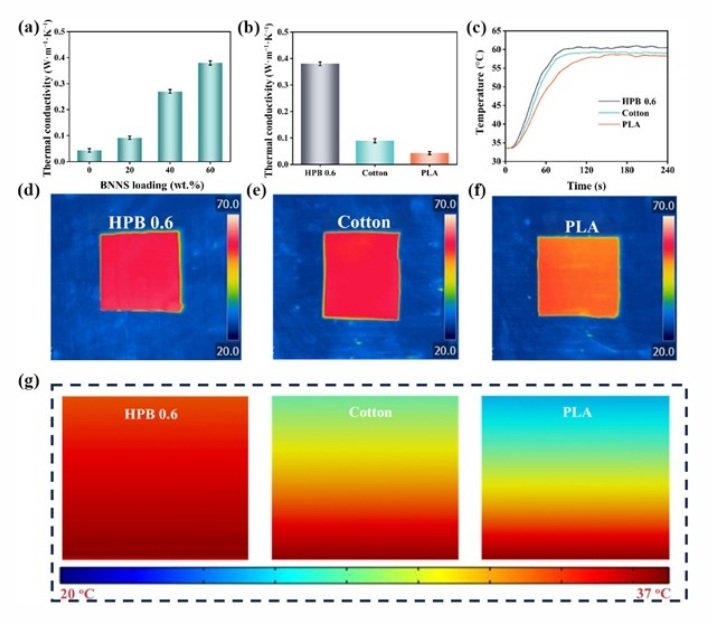
Laboratory and outdoor experiments confirmed the superior cooling performance of the composite. Compared with cotton and PLA-only fabrics, the PLA/BNNS material reached thermal equilibrium faster under heat and maintained a cooler surface when exposed to sunlight. Its thermal conductivity was approximately five times greater than cotton and nine times greater than pure PLA.
“The PLA/BNNS composite fabric effectively integrates radiative cooling, high thermal conductivity, and unidirectional moisture transport to manage human heat dissipation under high-temperature conditions,” the authors stated.
Read More