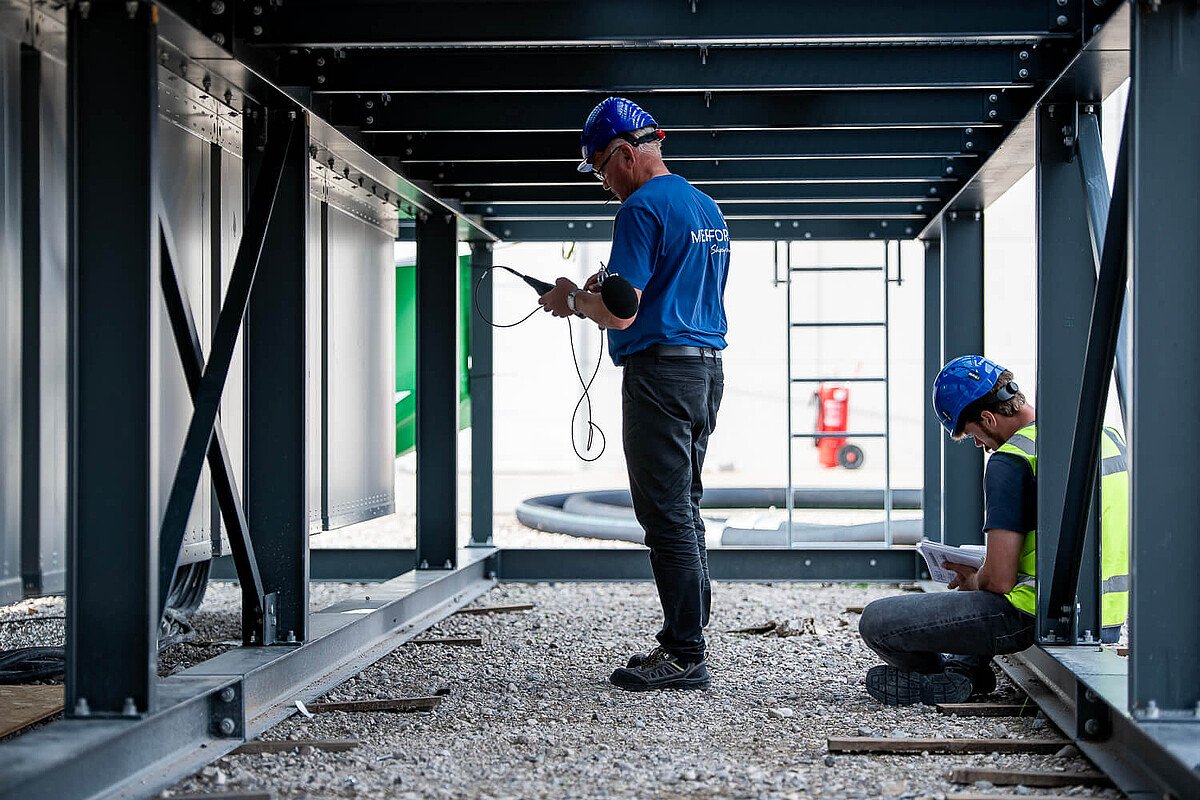
STULZ and Merford have completed an acoustic test on a newly developed chiller for a current data center project in Italy. The companies said the measurements were carried out under realistic operating conditions using a validated methodology to verify compliance with strict noise requirements while maintaining cooling performance, efficiency and operational reliability.
According to the source, data centers are increasingly subject to daytime, evening and nighttime noise limits, and for this project the maximum nighttime level is up to 80.2 dB(A). STULZ worked with Merford, which specializes in noise control, doors and custom acoustic solutions, to develop an integrated noise-attenuation system for the chiller.
The measurements were performed in accordance with EN ISO 9614-2:1997, using sound intensity measurements to determine sound power by scanning the full measurement surface around the chiller. STULZ said a prior environmental analysis and a 3D acoustic model in SoundPLAN, based on ISO 9613-2, were used to optimize the setup and ensure background noise remained at least 10 dB below the measured source sound power. Supporting equipment including a transformer, boiler and pump skid was positioned so that it did not affect the results.
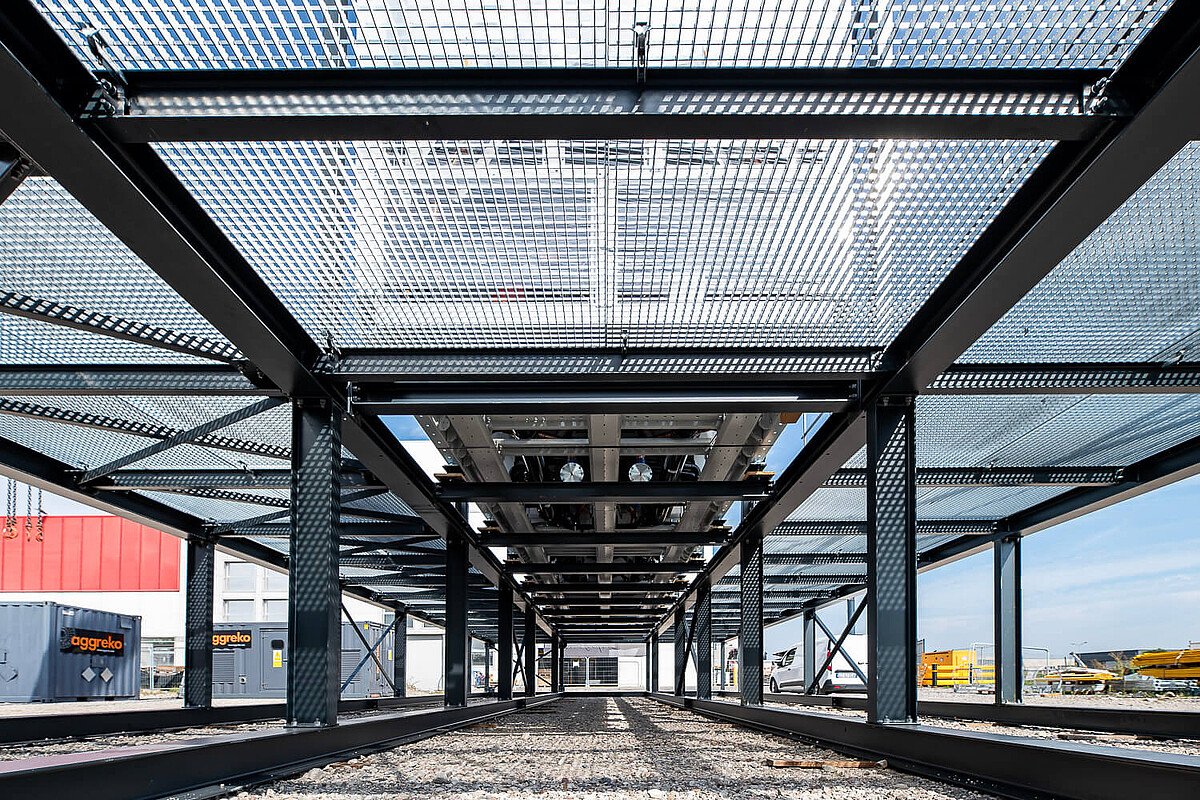
Two attenuation concepts were tested, both based on a steel-frame construction with integrated attenuators around the chiller to reduce airborne and structure-borne noise. STULZ said the more extensive version, which added further acoustic optimization and source-control measures, achieved higher noise reduction at the cost of greater weight and structural complexity. The companies said the final results confirmed that the chiller with the developed noise-attenuation system met the specified noise requirements.
“As Davide Mazzi, Head of the STULZ Application Team at STULZ S.p.A., said: ‘To demonstrate the effectiveness of our solution, we recreated the actual installation situation. We built a steel structure to simulate the rooftop installation and conducted two measurements: one without attenuators and one with the full noise attenuation system in operation. This shows that it is not a solution on paper, but a technology that works in practice.’”