Regulation (EU) 2020/852 on the establishment of a framework to facilitate sustainable investment (the so-called Taxonomy Regulation) was officially published. The aim of the Taxonomy Regulation is to boost investment in green projects by setting common definitions across the EU for what investments may be considered ‘green’. Select projects in the HVACR and building sectors will qualify if they meet the technical screening criteria, which are to be defined in delegated acts.
Taxonomy Regulation
Under the Taxonomy Regulation, financial products which claim to be sustainable will have to prove it following strict EU criteria. The following environmental objectives are considered when evaluating how sustainable an economic activity is:
- Climate change mitigation and adaptation
- Sustainable use and protection of water and marine resources
- Transition to a circular economy, including waste prevention and increasing the uptake of secondary raw materials
- Pollution prevention and control
- Protection and restoration of biodiversity and ecosystems
An economic activity should contribute towards one or more of the above objectives and not significantly harm any of them to qualify as sustainable.
Technical screening criteria
The Commission will adopt delegated acts with so-called technical screening criteria which specify what economic activities qualify for the environmental objectives under what conditions. The criteria for climate change mitigation and adaptation will be adopted by the end of this year. The criteria on the other four environmental objectives will be adopted by the end of next year.
The Commission will set up a Platform on Sustainable Finance composed of experts from the private and public sector, which will assist the Commission in the preparation of these technical screening criteria.
The Platform on Sustainable Finance will take over from the Technical Expert Group, which was gathered by the European Commission to suggest preliminary screening criteria. The preliminary criteria include select projects in the HVACR and building sector, as outlined below.
Storage of thermal energy
All thermal energy storage would be eligible under the Taxonomy.
District heating or cooling distribution
Construction and operation of pipelines and associated infrastructure for distributing heating and cooling would be eligible, if the system meets the definition of efficient district heating or cooling systems in the EU Energy Efficiency Directive.
The EU Energy Efficiency Directive defines ‘efficient district heating and cooling’ as a district heating or cooling system using at least 50% renewable energy or 50% waste heat or 75% cogenerated heat or 50% of a combination of such energy and heat.
In additional, the following activities would always be eligible:
- Modifications to lower temperature regimes
- Advanced pilot systems (control and energy management systems, Internet of Things)
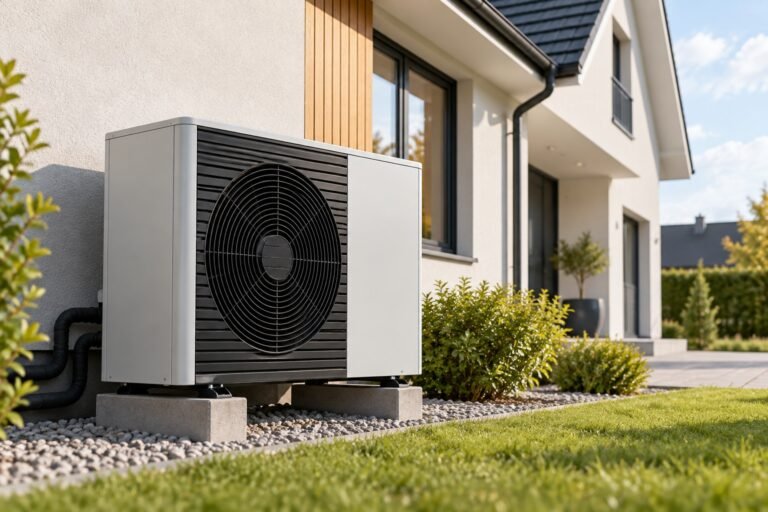
Installation and operation of electric heat pumps
The installation and operation of electric heat pumps would be eligible, if:
- Refrigerant threshold: GWP ≤ 675; and
- Must meet energy efficiency requirements stipulated in the relevant Ecodesign regulations
Production of heat or cool using waste heat
All recovery of waste heat would be eligible.
Building construction
Building construction would be eligible if the net primary energy demand of the new construction is at least 20% lower than the primary energy demand resulting from the relevant NZEB requirements in the national EPBD implementing regulation.
Building renovation
Building renovation would be eligible if it qualifies as a ‘major renovation’ defined in the national EPBD implementing regulation, or if it achieves savings in net primary energy demand of at least 30% compared to the baseline performance before the renovation.
Individual building renovation measures
The following notable individual measures would be eligible if compliant with requirements set in the national EPBD implementing regulation, and the relevant Ecodesign requirements:
- Installation and replacement of HVAC and domestic hot water systems, including equipment related to district heating service
- Replacement of inefficient gas boiler with highly efficient condensing boiler
The following notable individual measures would always be eligible:
- Installation of zoned thermostats, smart thermostat systems and sensoring equipment
- Installation of Building Management Systems (BMS) and Energy Management Systems (EMS)
The following notable individual measures would be eligible if installed on-site as building services:
- Installation of solar hot water panels (and the ancillary technical equipment)
- Installation and upgrade of heat pumps contributing to the targets for renewable energy in heating and cooling in accordance with Directive 2018/2001/EU (and the ancillary technical equipment)
- Installation of thermal or electric energy storage units (and the ancillary technical equipment)
- Installation of High Efficiency Micro CHP (combined heat and power) plant
- Installation of heat exchanger/recovery systems
The following professional services would be eligible:
- Technical consultations (energy consultants, energy simulation, project management, production of EPC, dedicated training, etc.) linked to the individual measures mentioned above
- Accredited energy audits and building performance assessments
- Energy Management Services
- Energy Performance Contracts
- Energy Service Companies (ESCOs)
Recommended actions
Members are recommended to follow the adoption of the delegated acts which will contain the technical screening criteria. It is expected that Taxonomy Regulation would increase access to funding for economic activities that qualify according to these technical screening criteria. Funds made available through the EU budget, including the COVID-19 recovery funds, would be targeted at activities eligible under the Taxonomy.