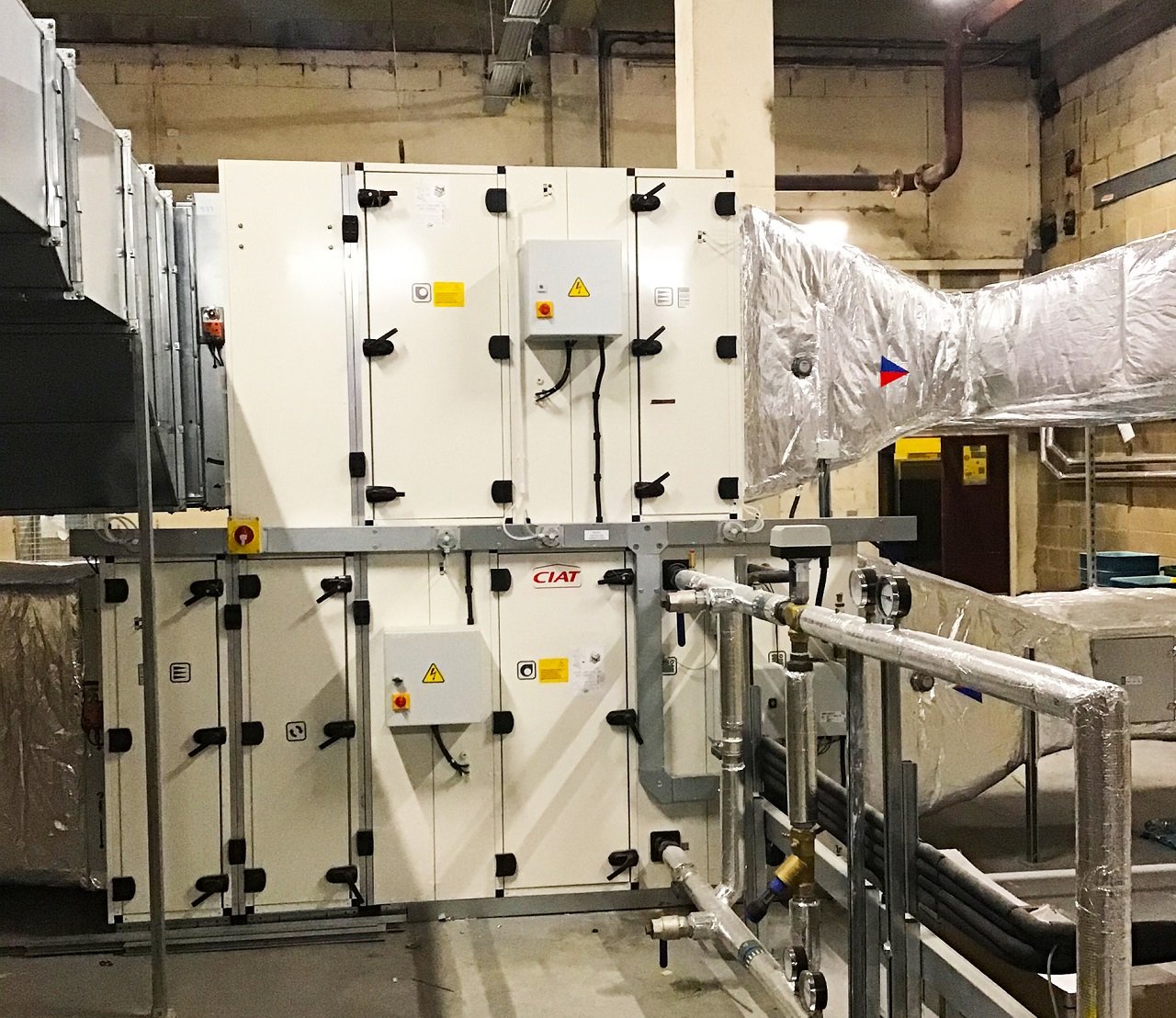
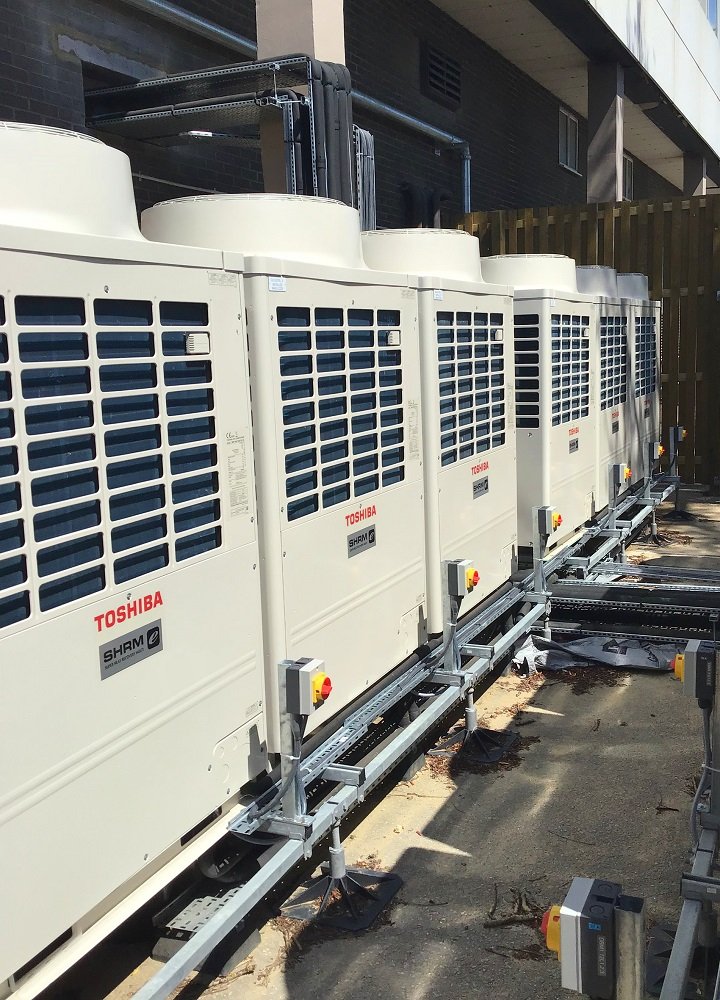
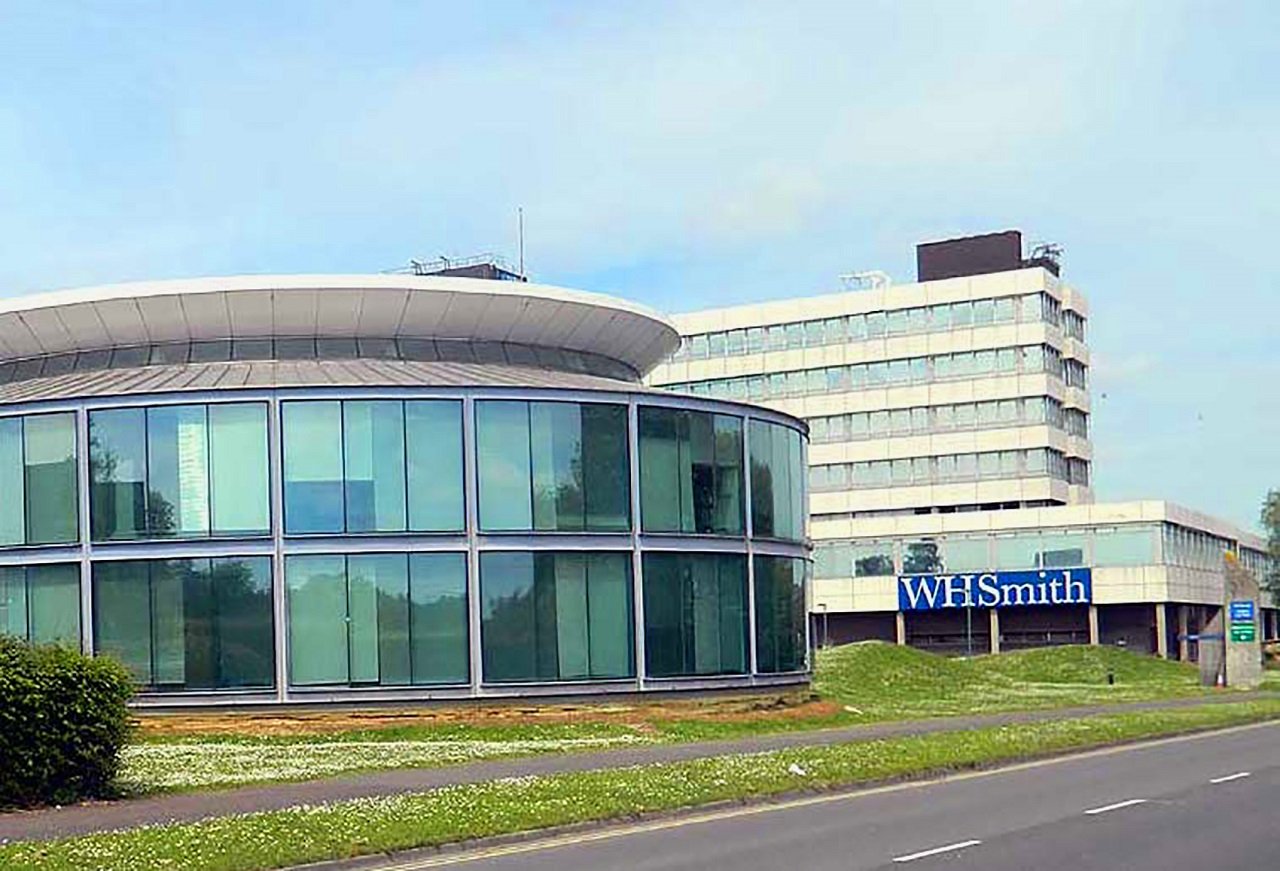
Staff and visitors to the Swindon headquarters of WHSmith, one of the UK’s leading retail groups, will benefit from installation of a top-of-the-range Toshiba variable refrigerant flow (VRF) air conditioning and CIAT ventilation system.
The upgrade of the 7-storey landmark building, headed by main contractor UC Build, has transformed offices, meeting rooms and open-plan communal work areas at the Swindon site. The new air conditioning system includes a combination of Toshiba’s premium three-pipe, Super Heat Recovery Multi Enhanced (SHRM-e) VRF units and CLIMACIAT Airaccess 70 air handling unit, installed by contractor Woodward & Co.
The Toshiba system is linked to high performance ceiling-suspended cassettes and wall-mounted indoor units. All Toshiba and CIAT equipment is connected to a high-level Building Management System (BMS), which provides estate-wide oversight and performance optimisation to ensure energy consumption is further minimised.
“The project made good use of the Toshiba VRF’s long pipe runs to deliver a superb result,” said Louis Badham, who led the air conditioning project for Woodward & Co. “I was extremely impressed by the support provided by Toshiba Carrier UK, and have passed on contact details to colleagues in relation to other projects.”
Toshiba’s SHRM-e VRF air conditioning system set a new industry benchmark for energy efficiency performance and continuous heating, achieving a world-first of 8 ESEER (European Seasonal Energy Efficiency Ratio) in most capacities.
The SHRM-e VRF air conditioning system is based on an advanced rotary compressor, developed and manufactured by Toshiba, which uses a two-stage compression process for improved efficiency and performance. Wear surfaces on compression vanes are treated with a high-tech Diamond-Like Carbon (DLC) coating, giving outstanding hardness, wear resistance and reliability.
The coating enables a significant increase in compressor rotation speed, resulting in a higher displacement volume – up to 50% greater than for the previous generation of VRF systems – to enable a higher duty to be obtained from a smaller compressor, with less power.