Subscribe to the daily news Sign in
En
Cold Hard Facts Australia 2021Cold Hard Facts Australia 2021
24 February 2022

Cold Hard Facts Australia 2021

Cold Hard Facts 2021 analyses data from 2020 to identify key developments and emerging trends in the refrigeration and air conditioning industry in Australia.

These assessments assist industry and policy makers with management of ozone depleting substances as they are phased out, and management of synthetic greenhouse gases.

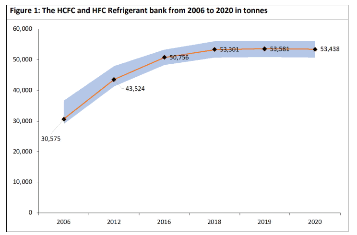
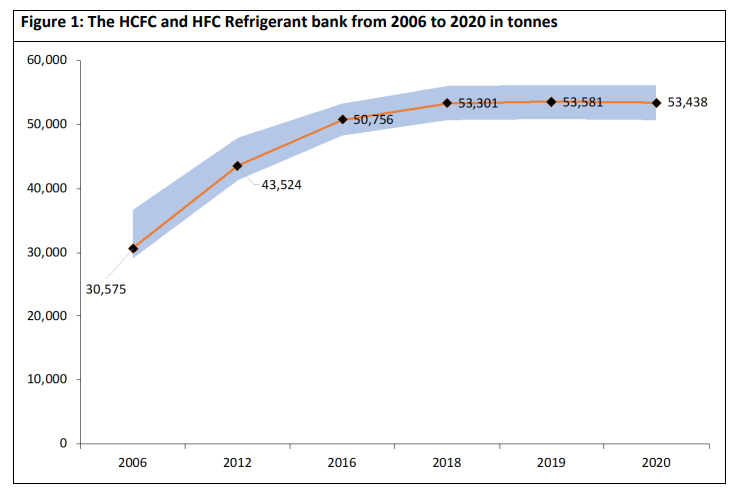
A significant slowing trend in the rate of growth of the regulated bank of refrigerants in Australia for the period from 2016 to 2019 to just 1.8% compound annual growth in metric tonnes, as reported in Cold Hard Facts 2019, has been confirmed in 2020 with no significant growth in the bank at all in the period, despite surprisingly strong equipment sales.

The confirmation of this trend flattening combined with increasing use of lower global warming potential (GWP) refrigerants, indicates that the GWP value of the Australian bank of refrigerants reached its peak in 2019-20. Current modelling projects a steady decline in the years ahead as the combination of several trends in the refrigeration and air conditioning (RAC) industry accelerates a reduction in the average GWP of the bank.

Zero growth of the refrigerant bank has been driven in part by a softening of RAC equipment sales in 2018 and 2019 across nearly all major equipment segments, in line with softer economic conditions. Growth in the bank of refrigerants has also been curtailed by new equipment designs and new generations of lower GWP refrigerants that require smaller charge sizes to deliver equivalent refrigeration services.

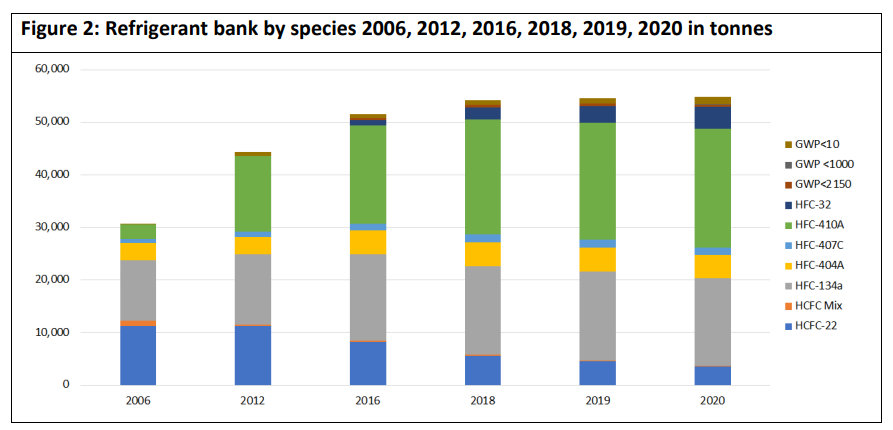
Adoption of natural refrigerants in some segments, particularly in self-contained commercial refrigeration, is displacing traditional hydrochlorofluorocarbons (HCFCs) and hydrofluorocarbon (HFCs) applications - even while the stock of equipment is growing.

A leading example of this trend to reducing the GWP of the refrigerant bank is HFC 32, which has now overtaken HFC-410A in pre-charged equipment imports for the first time and which has grown by 30% in 2020 based on metric tonnes, compared to the previous year.
Read full the report.

Share
Get the daily refrigeration briefing
Trusted by 3,000+ refrigeration professionals worldwide
By subscribing, you create a free Refindustry account and agree to our Terms of Service and Privacy Policy.
No spam. Only industry-relevant news.
Unsubscribe anytime.

Related news

EU households double energy use for space cooling in six years
Energy consumption for space cooling in EU households reached 80.4 thousand TJ (approximately 76.2 trillion BTU) in 2024, double the 40.5 thousand TJ (approximately 38.4 trillion BTU) recorded in 2...
16 Jul 2026
U.S. HVACR mechanic employment projected to grow 8% through 2034
Employment of heating, air conditioning and refrigeration mechanics and installers in the United States is projected to grow 8% from 2024 to 2034, much faster than the average for all occupations. ...
14 Jul 2026
Cold Chain Market Projected to Reach $455.0 Billion by 2031
MarketsandMarkets estimates the global cold chain market at USD 276.5 billion in 2026 and projects it to reach USD 455.0 billion by 2031, with a CAGR of 10.5% from 2026 to 2031. The report says...
20 Jul 2026
German HVACR Association Reports Refrigerant Leak Rate at 1.0%
The German Association of Refrigeration and Air Conditioning Contractors (VDKF) reported that the average refrigerant leak rate in refrigeration and air conditioning systems fell to 1.0% in 2025. T...
19 Jun 2026
MarketsandMarkets forecasts refrigeration coolers market at $6.85 b...
The global refrigeration coolers market is projected to grow from USD 4.72 billion in 2026 to USD 6.85 billion by 2032, according to MarketsandMarkets. The research firm forecasts a compound an...
21 Jul 2026
Danfoss reports 2026 climate plan and emissions progress
Danfoss has published its 2026 Climate Transition Plan, setting out its approach to decarbonizing its operations by 2030 and achieving net-zero greenhouse gas emissions across the value chain...
16 Jul 2026