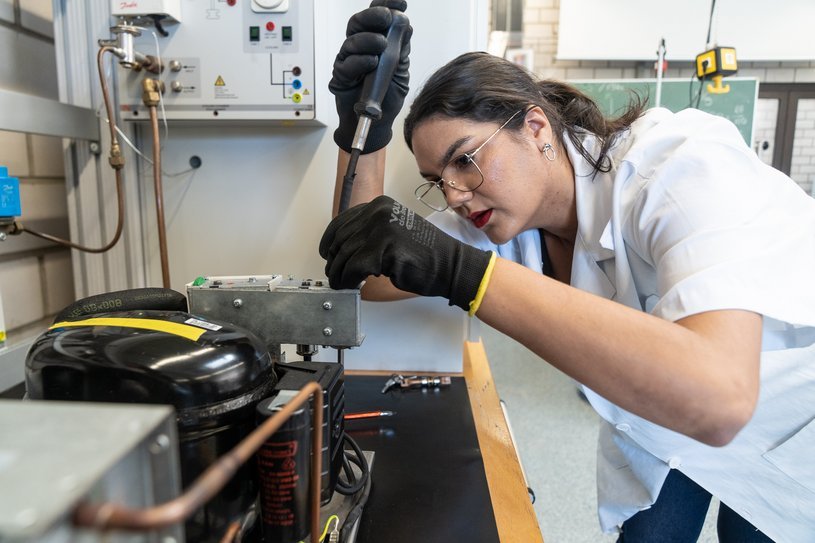
A recent study has revealed the low participation of women in Costa Rica’s refrigeration and air conditioning (RAC) sector, identifying significant barriers to inclusion and recommending strategies for change. The Gender Diagnosis – Costa Rica report, commissioned by the Department of Environmental Quality Management (DIGECA) under the Kigali Implementation Plan (Project No. 130738), was authored by Rebeca Esquivel and published in January 2025.
According to the report, between 2019 and 2023, women made up only 9.4% of graduates from RAC training programs and just 2.5% of the sector's workforce. The findings show that gender stereotypes, lack of support structures, and workplace discrimination contribute to the underrepresentation of women in technical roles. Challenges range from gendered career expectations and isolation in training environments to difficulties with workplace equipment and limited opportunities for advancement.
The study cites experiences from other countries, including Bangladesh, Colombia, and Kenya, presented in the Females for Future: Women in the Cooling Sector publication. These comparisons underline that many of the barriers identified in Costa Rica are part of a global trend in technical fields.
Some institutions and companies in Costa Rica have begun to address these issues. For example, the Instituto Nacional de Aprendizaje (INA) has introduced flexible schedules and nursing rooms. Recruitment efforts featuring women in technical roles are also increasing. The report recommends several measures, including gender-sensitive training, improved workplace conditions, transparent hiring, equal pay, and awareness campaigns to counteract stereotypes.
Projects like Greener Reefers aim to build on the Gender Diagnosis by promoting both environmental sustainability and gender equality in the cold chain sector. Through training and community engagement, the initiative supports greater inclusion of women in RAC.
“We don’t want special treatment, just the same opportunities to prove what we can do,” said one participant, reflecting the central message of the report.
Source