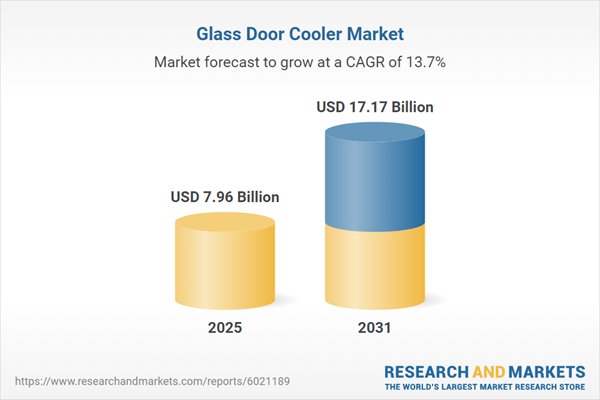
The global glass door cooler market is expected to grow significantly, with projections indicating an increase from USD 7.96 billion in 2025 to USD 17.17 billion by 2031, reflecting a compound annual growth rate (CAGR) of 13.67%, according to a report from Research and Markets published on January 22, 2026.
Glass door coolers—commercial refrigeration units featuring transparent front panels—are widely used in supermarkets, convenience stores, and foodservice outlets to store perishable goods while enhancing product visibility. Market growth is being driven by the expansion of organized retail, rising demand for energy-efficient equipment, and integration of Internet of Things (IoT) technologies for remote monitoring and predictive maintenance.
Key growth factors include increasing global consumption of ready-to-drink beverages and frozen foods, as well as stricter food safety regulations requiring reliable cold storage. The National Association of Convenience Stores reported that inside sales at U.S. convenience stores reached USD 327.6 billion in 2023, highlighting the critical role of high-visibility refrigeration in supporting perishable product turnover.
Adoption of eco-friendly technologies is also accelerating, with manufacturers introducing units using hydrocarbon refrigerants and variable-speed compressors. Carrier Global Corporation plans to invest over USD 4 billion by 2030 to develop sustainable climate solutions, according to its 2024 Sustainability and Impact Report.
However, the industry faces challenges from regulations phasing out high-global warming potential refrigerants. Compliance with environmental standards requires costly redesigns, disproportionately affecting small retailers and slowing equipment replacement rates. The North American Association of Food Equipment Manufacturers estimated in 2024 that proposed efficiency standards could result in payback periods of up to 93.7 years, raising concerns over economic feasibility.
Digitalization and sustainable manufacturing are emerging trends. IoT devices are enabling real-time monitoring of cooler performance, while manufacturers are redesigning units using bio-based foams and recyclable materials. AoFrio shipped 682,000 IoT devices in fiscal 2024, while Epta Group reported a €27.7 million investment in innovation, with 95.2% of its manufacturing waste recycled, according to their respective 2024 annual reports.
Major companies profiled in the report include Arneg S.p.A., Everest Refrigeration, Blue Star Limited, True Manufacturing Co., Inc., Frigoglass Services Single Member S.A., Anthony, Inc., Western Refrigeration Private Limited, Cookman Cooking Equipments Pvt. Ltd., Hussmann Corporation, and Hoshizaki Corporation.
Source