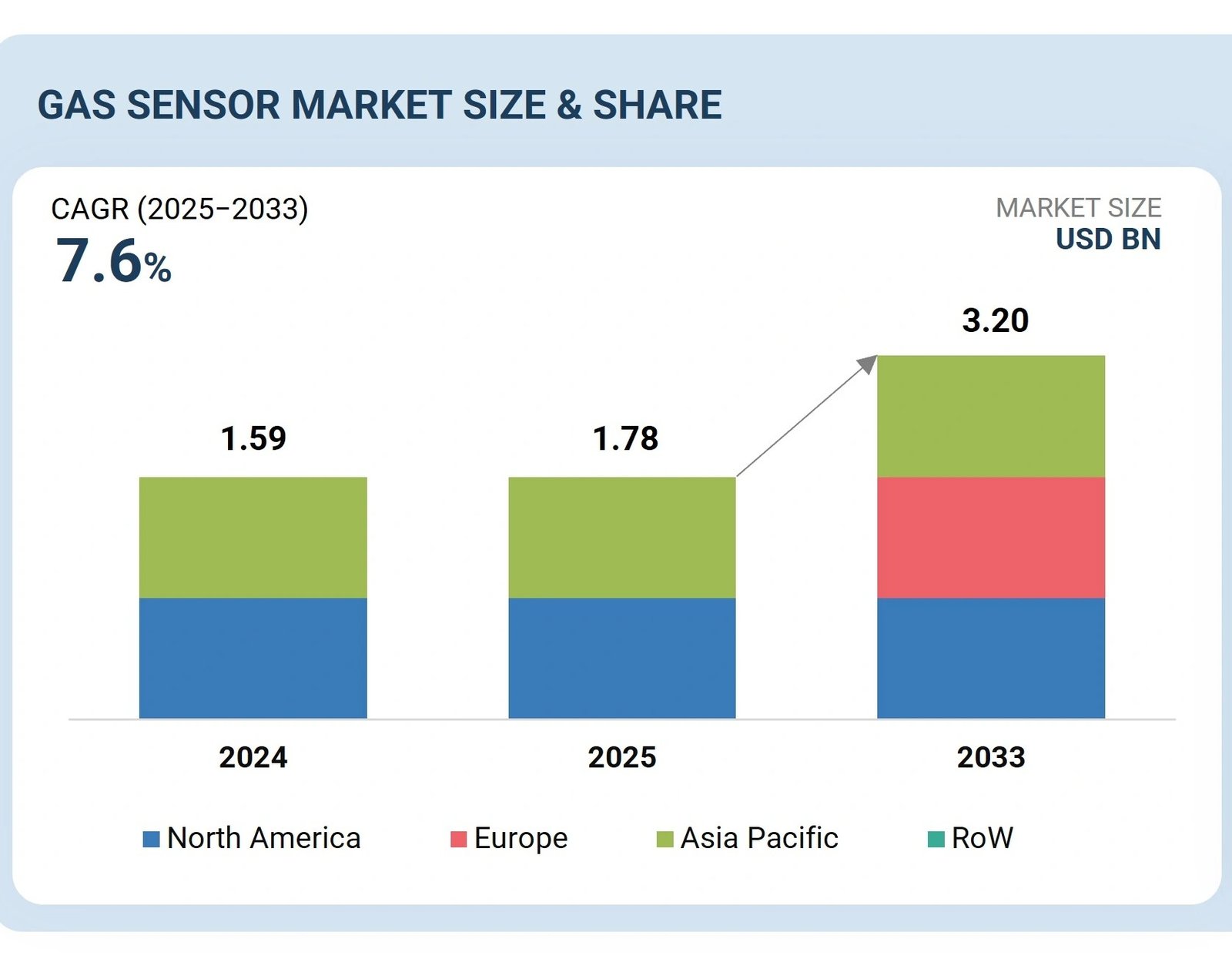
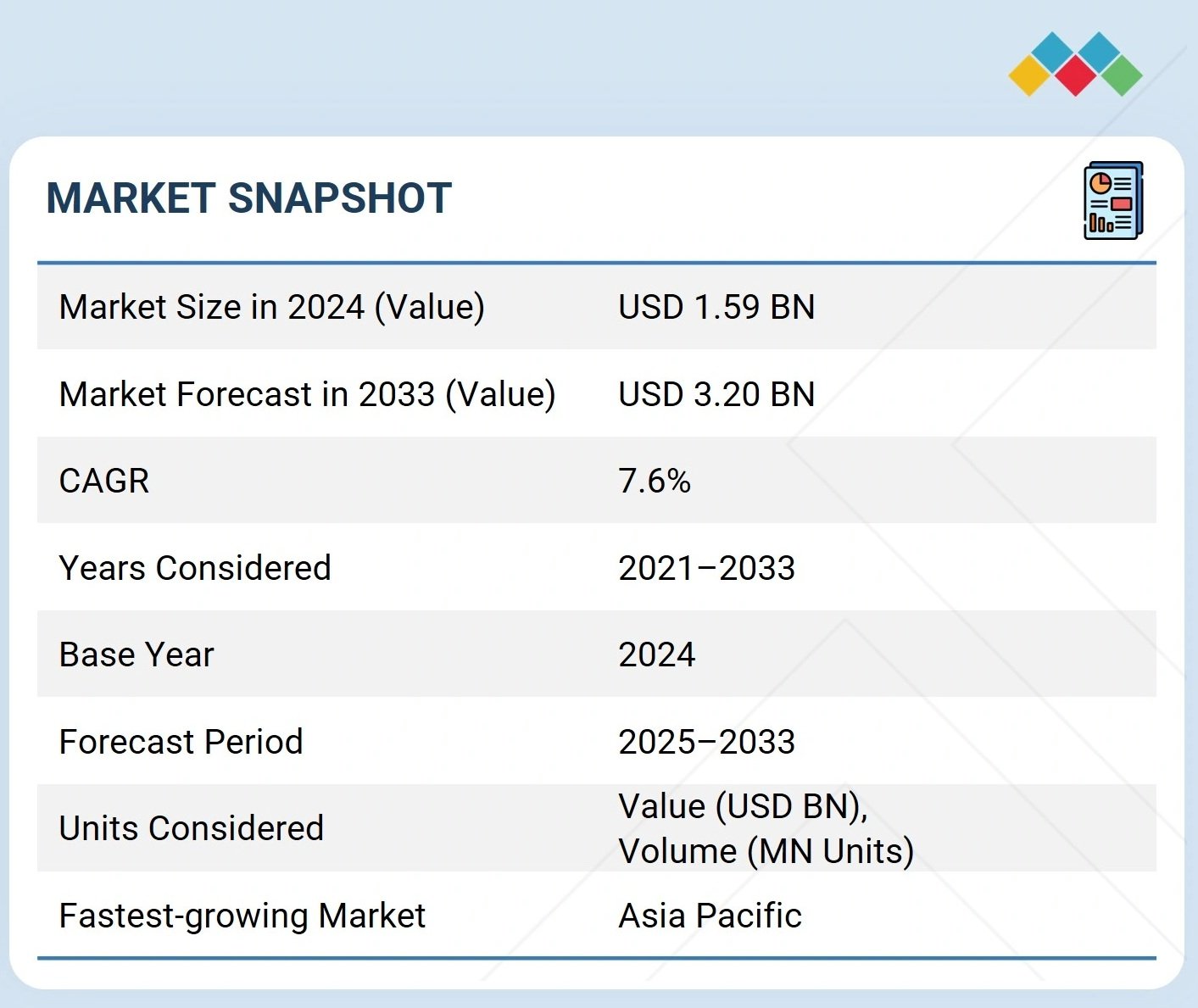
The global gas sensor market is projected to grow from USD 1.78 billion in 2025 to USD 3.20 billion by 2033, according to a new report by MarketsandMarkets, representing a compound annual growth rate (CAGR) of 7.6%.
Growth is driven by increasing demand for accurate gas detection in applications such as HVAC systems, air quality monitors, and industrial safety systems. Regulatory requirements and the rising focus on occupational health and environmental monitoring are also contributing factors.
By product, the air quality monitors segment is expected to register the highest CAGR of 10.4%. In terms of gas type, volatile organic compounds (VOCs) are anticipated to show the fastest growth, supported by adoption in consumer electronics, automotive, HVAC, and building automation. The holographic technology segment is forecast to grow at a CAGR of 13.0%, the highest among technologies.
The Asia Pacific region held a 35.6% share of global gas sensor revenue in 2024. North America is projected to post the second-highest CAGR during the forecast period, led by companies such as MSA Safety Inc., Amphenol Corporation, and SPEC Sensors. Regional market growth is supported by activity in sectors including oil and gas, automotive, and infrastructure, along with government-led pollution control initiatives.
The smart cities and building automation segment is also expected to experience significant growth. Gas sensors are increasingly integrated into intelligent systems for real-time air quality monitoring, automated ventilation, and emission reduction in urban environments.
Key market players include Honeywell International Inc. (US), MSA Safety Incorporated (US), Amphenol Corporation (US), Figaro Engineering Inc. (Japan), Alphasense (UK), Sensirion AG (Switzerland), Process Sensing Technologies (UK), ams-OSRAM AG (Austria), MEMBRAPOR (Switzerland), and Senseair AB (US).
Read More