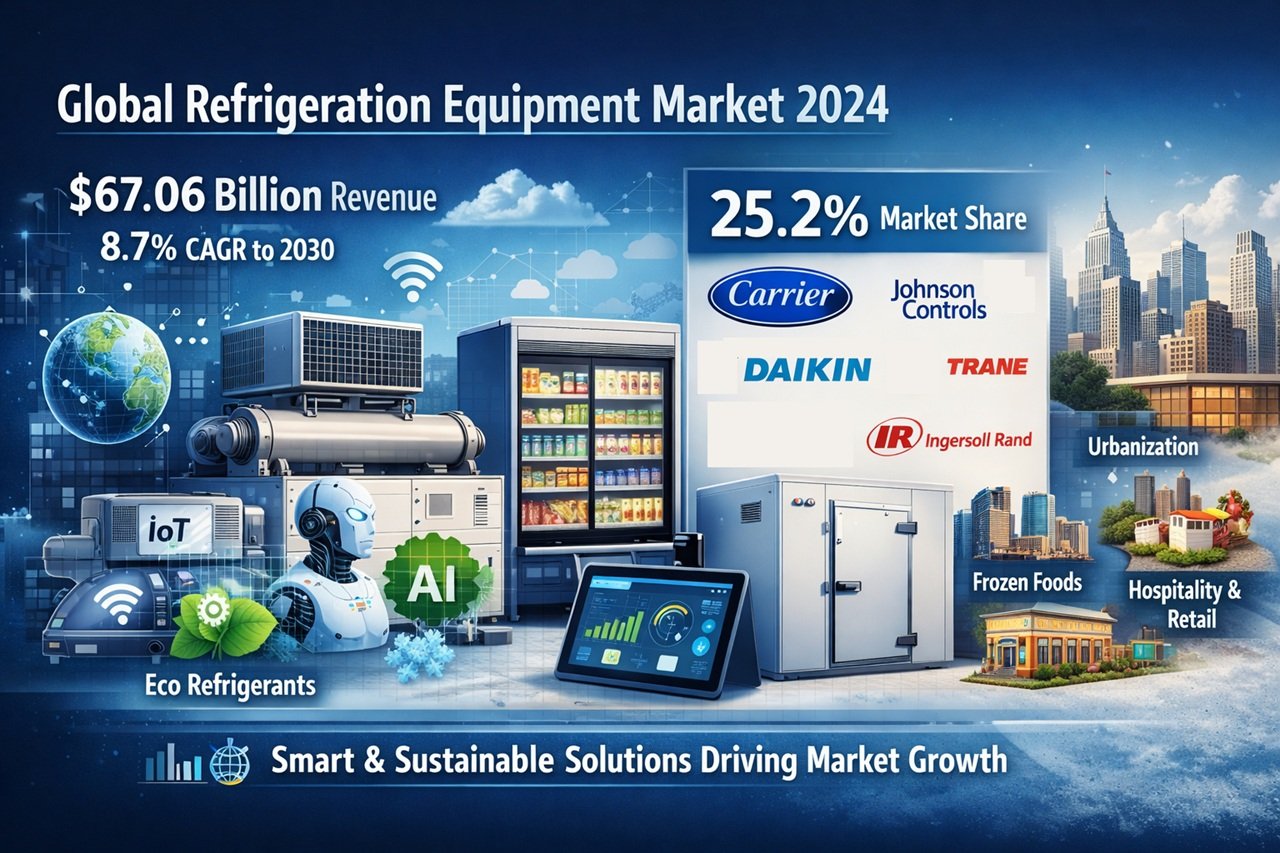
The global refrigeration equipment market reached a revenue of $67.06 billion in 2024 and is projected to grow at a compound annual growth rate (CAGR) of 8.7% through 2030, according to the latest report by Research and Markets.
The report highlights how evolving regulations, sustainability demands, and technological advancements are reshaping the industry. Adoption of Internet of Things (IoT), artificial intelligence (AI), and cloud-based systems is driving innovation in predictive maintenance, remote monitoring, and energy optimization. These trends align with broader goals of energy crisis management and environmental compliance.
Key growth drivers include rising urbanization, increased consumption of frozen and chilled food, and expansion in hospitality and retail sectors. Regulatory pressures such as the Kigali Amendment and F-gas rules are also pushing manufacturers and end users toward low-global warming potential (GWP) refrigerants and energy-efficient systems.
The study focuses on equipment from original equipment manufacturers (OEMs) such as walk-in freezers and coolers, refrigerated vending machines, display cases, industrial process chillers, reach-in refrigerators, and cold rooms. Residential and transportation systems are excluded. Distribution channels are mainly indirect (80%), with direct sales accounting for 20%.
Carrier Global, Johnson Controls, Daikin Industries, Trane Technologies, and Ingersoll Rand collectively held a 25.2% revenue share in 2024. Other notable companies include Dover Corporation, Lennox International, GEA Group, and Honeywell. The competitive landscape is shaped by over 100 participants, with key differentiators being product energy efficiency, refrigerant compliance, automation features, and global service reach.
In May 2024, Samsung and Lennox announced a joint venture, Samsung Lennox HVAC North America, targeting the U.S. and Canadian markets for ductless mini-split, heat pump, air conditioning, and VRF systems.
"Instead of focusing on refrigeration functions and features only, companies are now investing in smart and connected solutions, regional offerings, and innovative after-sales services," the report states.
Source