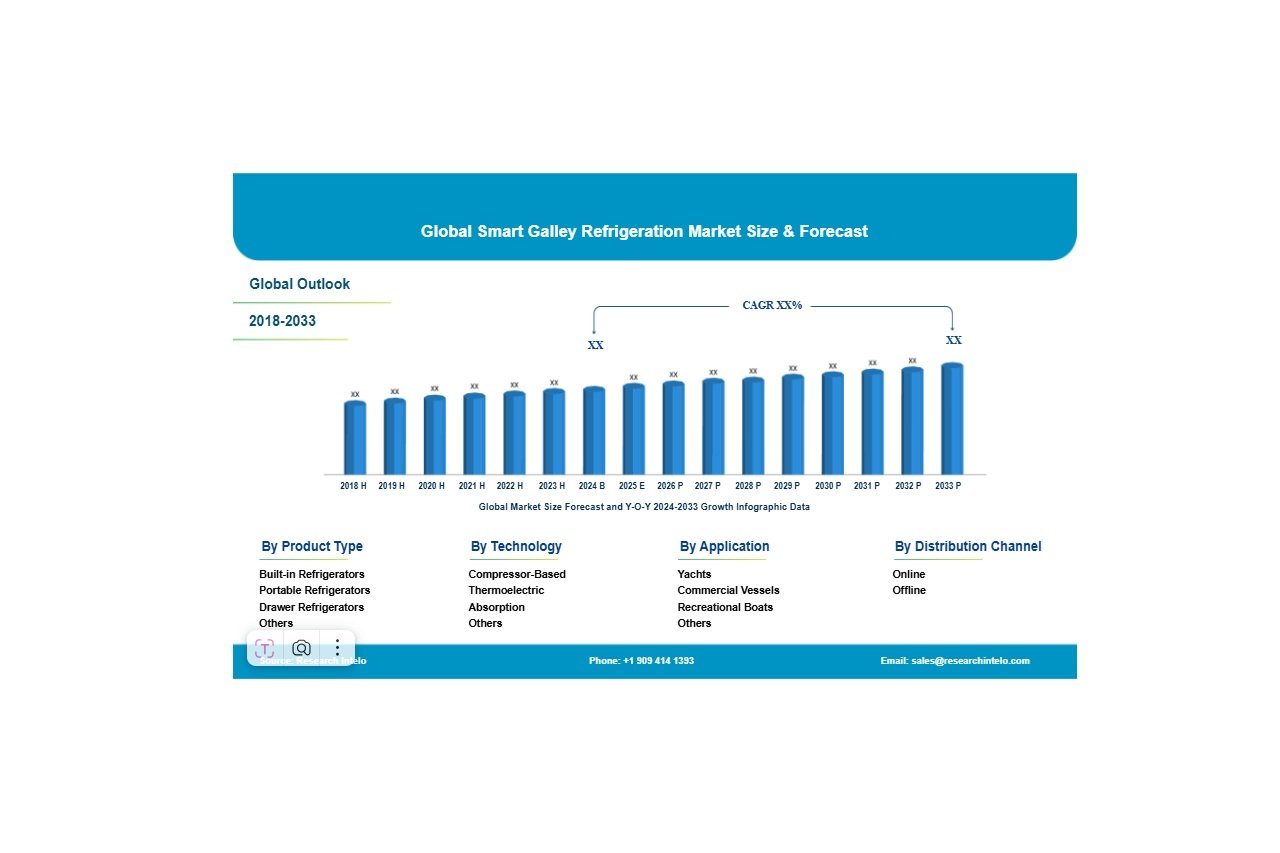
The global smart galley refrigeration market is projected to grow from $1.15 billion in 2024 to $2.37 billion by 2033, according to a forecast by Research Intelo. The report attributes this growth to rising demand for advanced, energy-efficient refrigeration systems in the marine and aviation sectors, driven by passenger expectations for comfort, convenience, and high-quality onboard catering.
Smart galley refrigeration units are being adopted across ships, yachts, and airplanes, integrating features such as IoT connectivity, remote diagnostics, and energy optimization. These systems use advanced sensors, efficient compressors, and digital control interfaces to support precise temperature regulation and sustainability goals.
The market is benefiting from several trends, including increased pressure on aviation and maritime operators to reduce carbon emissions. Features like energy-saving modes and compressor modulation help minimize power consumption. The growth of cruise tourism and long-haul air travel is also accelerating adoption of smart galley technologies, especially in new and retrofitted fleets.
Key innovations include digital temperature control with ±1°C accuracy, embedded diagnostics for performance tracking, modular designs for flexible installation, and eco-friendly refrigerants such as R-600a and R-1234yf. Some systems now support cloud-based fleet management for real-time performance monitoring across multiple vessels or aircraft.
Despite strong growth, the market faces challenges such as high initial costs, integration complexity with legacy systems, cybersecurity risks, and the need for technician training.
Major players in the smart galley refrigeration market include Honeywell International Inc., Collins Aerospace, Diehl Stiftung & Co. KG, Safran Group, JBT Corporation, Loipart AB, Meiko Maschinenbau GmbH & Co. KG, Klinge Corporation, and Dometic Group AB.
Read More