The second phase of Brazil’s HCFC Phase-out Management Plan (PBH) is concluding in December 2025 with the successful training of 700 professionals in the “Safe Use of Flammable Refrigerants in Split-Type Air Conditioning Systems.” The course was conducted in five Brazilian states — Goiás, Paraná, Rio Grande do Norte, Rondônia, and São Paulo — through local partner institutions.
Frank Amorim, Environmental Analyst at the Ministry of Environment and Climate Change (MMA), which coordinates the PBH, confirmed the milestone: “Thanks to the excellent work by our partner schools and instructors, we will meet our goal of training 700 professionals in this phase.” He also noted that Phase III of the PBH will begin next year and aims to train an additional 5,000 technicians.
The course is implemented by PBH’s bilateral partner agency, the German Cooperation for Sustainable Development through GIZ (Deutsche Gesellschaft für Internationale Zusammenarbeit) GmbH. GIZ oversaw the procurement of equipment, preparation of teaching materials, and instructor training. Stefanie von Heinemann, GIZ-Proklima project manager, highlighted the efforts made by the schools to set up laboratories and recruit students, calling the results safe and effective.
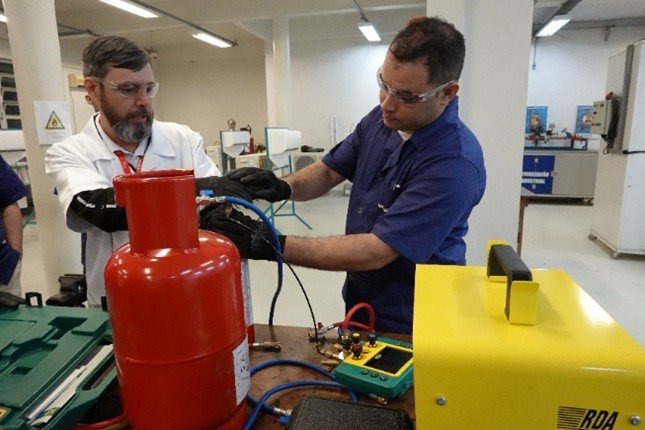
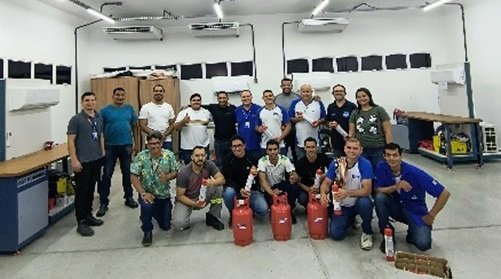
At SENAI Goiás, the school in Goiânia trained students in groups of up to 16, using new equipment and practical lessons. Instructor Gleibson Gonzaga noted that even seasoned technicians appreciated the course: “They were surprised by the level of knowledge and safety procedures required, especially when working with refrigerants like R-32 and propane.”
In Porto Velho, SENAI Rondônia implemented the course under the leadership of instructor Arnaldo Dantas de Moura, who handled all stages of setup and training. “The students realized that although flammable refrigerants require caution, following safety protocols makes the work manageable and secure,” he said.
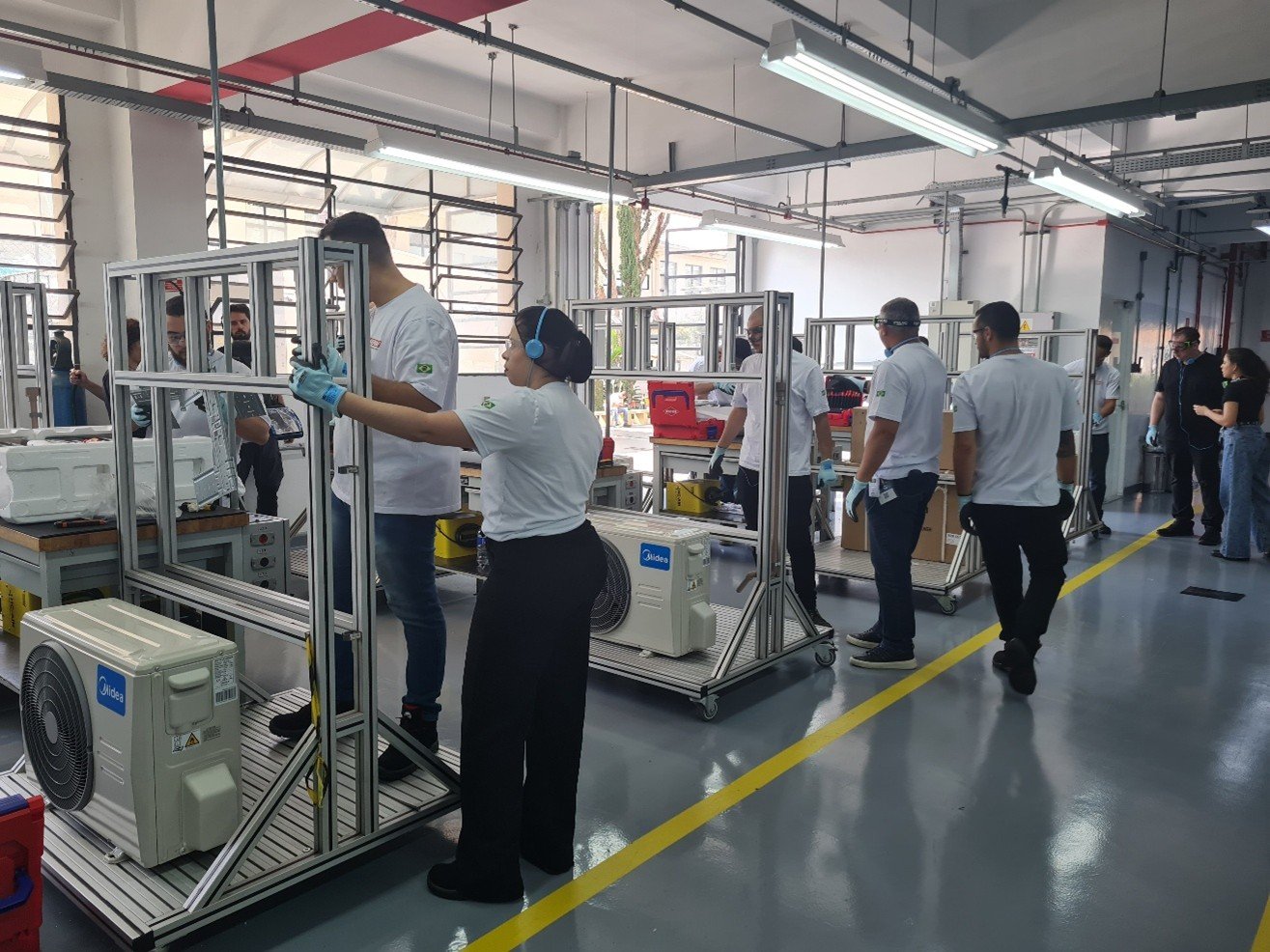
At SENAI São Paulo, instructors André Luiz Otaviano and Bianca Alves delivered the course, which included a dedicated class for female technicians. Otaviano emphasized that the course challenges outdated safety assumptions and rebuilds knowledge around modern refrigerants like propane. Alves added that the training helps participants recognize past errors and prepares them for evolving industry demands.
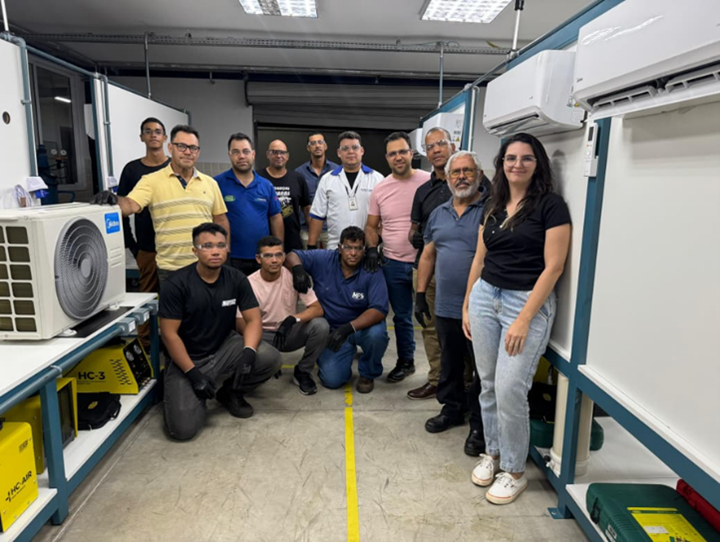
SENAI-CTGAS-ER in Natal (Rio Grande do Norte) developed a new R-290 laboratory and trained professionals from across the region. Instructor Daniel Lima described high demand for the course, stating, “This program brought a new perspective to refrigeration work in the Northeast and attracted technicians even from other states.”
In Paraná, SENAI Toledo adapted its facilities for R-290 use. Instructor Marcelo Hegele reported that many experienced professionals took part and realized the importance of adapting to new safety practices. “It’s no longer business as usual. Working with flammable refrigerants requires greater attention and updated procedures,” he said.
The PBH program encourages technicians to prepare for growing use of natural refrigerants across Brazil. Additional training opportunities are expected in 2026.