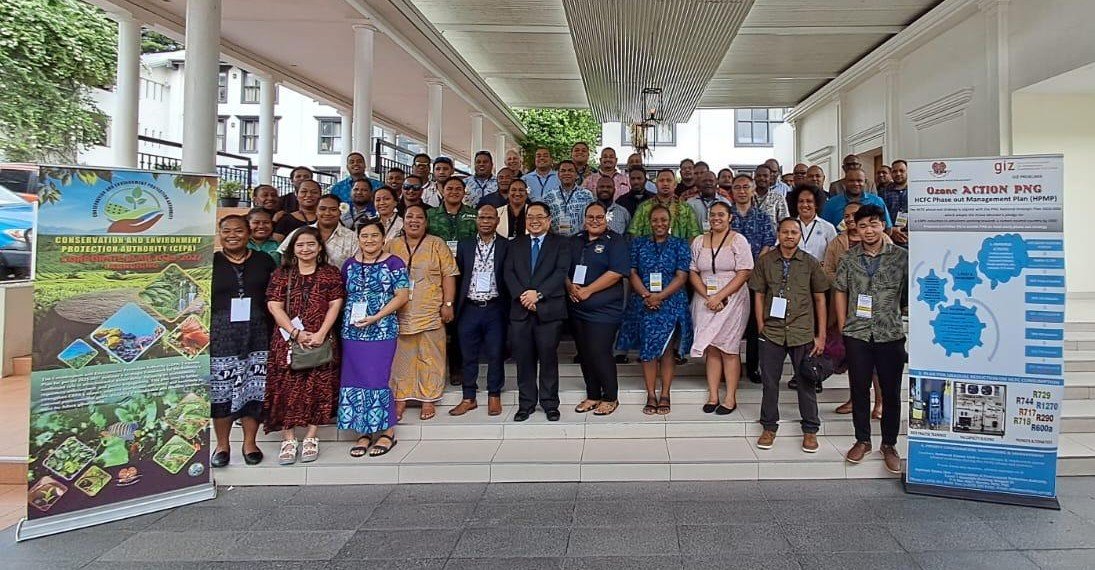
National Ozone Officers, Customs Officers, Energy Efficiency Officers and partner agencies from Pacific Island Countries met in Papua New Guinea from 25 to 31 March 2026 for three regional workshops on controlled substances and refrigeration and air-conditioning equipment.
The workshops were organized by the Conservation and Environment Protection Authority of Papua New Guinea and UNEP OzonAction, with support from the Multilateral Fund for the Implementation of the Montreal Protocol. The events were attended by 73 participants, including 42 women and 31 men, with 12 participants joining virtually.
The meetings focused on approved regional Multilateral Fund projects for Pacific Island Countries, including the HCFC Phase-out Management Plan Stage II and the Energy Efficiency in the Servicing Sector project under Decision 89/6. Participants discussed enforcement of trade control for controlled substances in bulk and RAC equipment, product registration systems for Minimum Energy Performance Standards, and monitoring, reporting and verification through market surveillance.
The first workshop, held from 25 to 26 March, covered licensing and quota systems, data discrepancies, prior informed consent, digitalization, National Single Window systems, mandatory labelling of refrigerant cylinders, market surveillance, customs training and standard operating procedures for enforcement. The meeting also recognized Papua New Guinea’s ratification of the Kigali Amendment as a regional milestone.
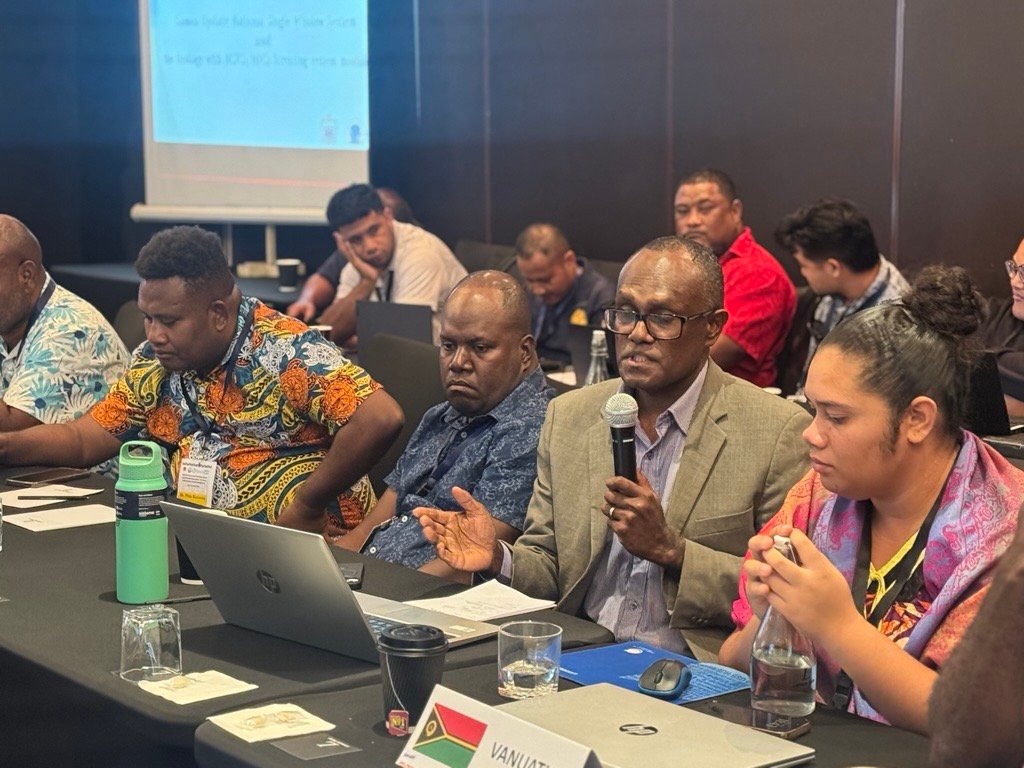
The second workshop, held from 27 to 28 March, addressed product registration and approval of MEPS and refrigerants in RAC equipment. Participants examined technical documentation, test reports, approval procedures, links between MEPS and refrigerant controls, the Pacific Appliance Database, integrated electronic systems, harmonized data on refrigerant and energy efficiency of RAC appliances, and the advantage of linking product registration approval with customs clearance.
“A single application system would help make energy efficiency and environmental approval requirements clear in one place, reduce duplication, and support a more practical approval process for RAC equipment. I would like to encourage countries to consider incorporating the Ozone Depleting Substances module and Energy Efficiency Module in the Single Window system and Vanuatu is ready to provide guidance to our neighboring countries on this process,” said Mr. Stanley Trief, Manager of the Vanuatu Single Window Systems.