A new report launched on 31 March 2026 examines how to expand sustainable space cooling solutions for rural communities in sub-Saharan Africa and South Asia, where more than 260 million people face high risks due to lack of access to cooling. Developed by Energy Saving Trust under the Efficiency for Access coalition and the Low Energy Inclusive Appliances programme, the publication focuses on improving thermal comfort in areas with limited electricity, inadequate housing, and financial constraints.
Titled Cooling the Last Mile: Landscape Mapping of Space Cooling Solutions for Rural Sub-Saharan Africa and South Asia, the report identifies 13 passive and active cooling solutions and evaluates them using a seven-criteria framework. These include climate performance, ease of implementation, supply chain resilience, and end-of-life impacts. According to Florencia Azar Sales, Energy Access Research Analyst at Energy Saving Trust, “Passive measures are lower cost, applicable to off-grid contexts, and reduce the heat load so that when active solutions are needed, they become more effective and more affordable.”
The report also highlights opportunities for cross-regional adaptation of technologies, such as the China mosaic cool roof already applied in India. At the same time, it notes that active cooling remains essential in certain settings, including healthcare facilities and extreme heat conditions, and that further research and development is needed to design solutions tailored to rural households.
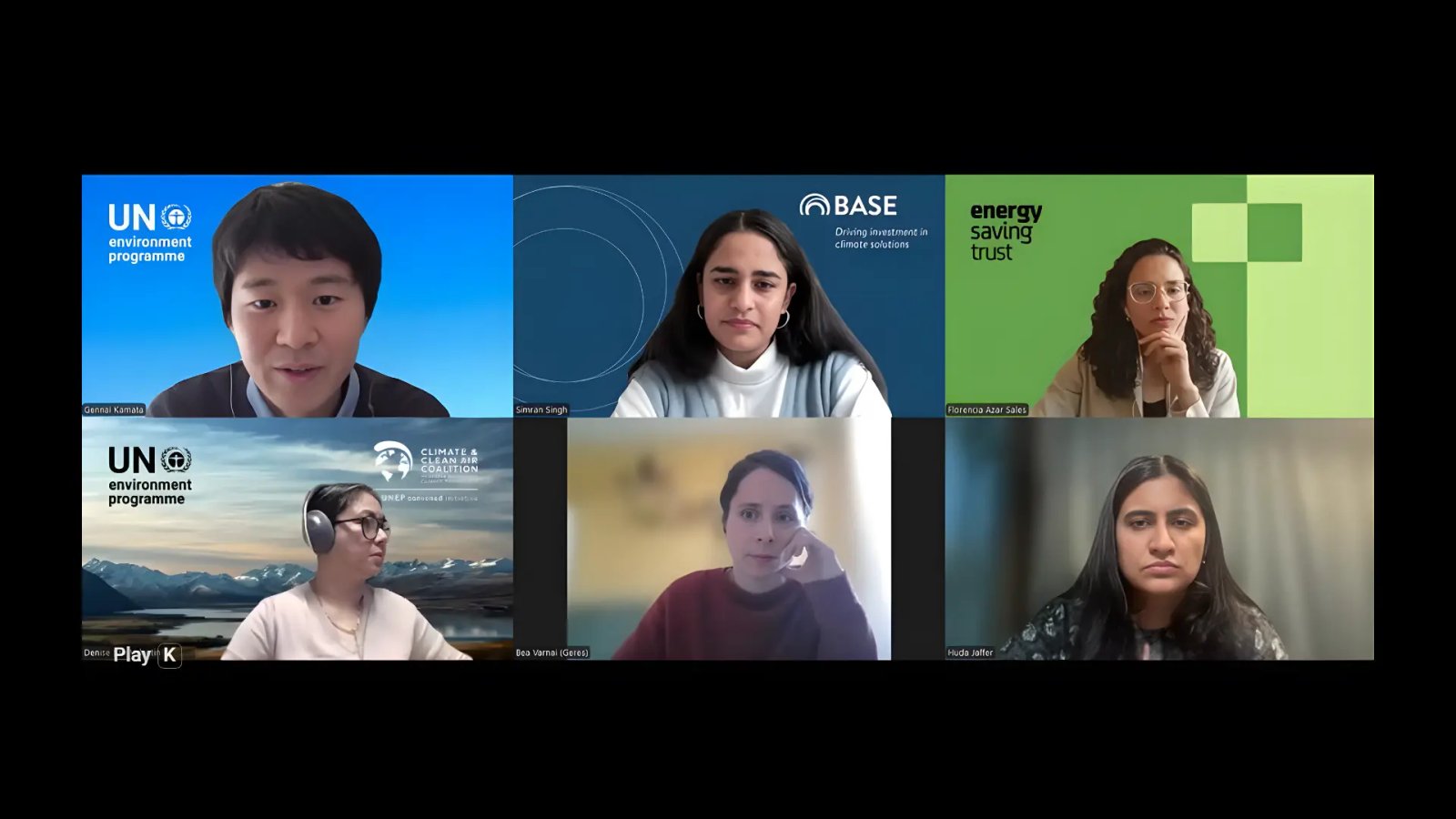
Speakers at the launch event emphasised that barriers to adoption extend beyond technology. Huda Jaffer, Director of SELCO Foundation, stated: “The main problem today is that you have separate climate action plans, separate cooling action plans, and separate livelihood plans. The convergence piece becomes extremely crucial.” The discussion pointed to gaps in business models, supply chains, and integration with existing financing schemes.
Examples shared during the session included solar-powered cold room projects in Kenya supported by the Climate and Clean Air Coalition, and community-based approaches in Guinea-Bissau using passive cooling to build user trust before introducing larger systems. Digital tools such as BASE Foundation’s Coldtivate platform were also highlighted for improving cold room operations and market access.
The report concludes that while technical solutions for rural cooling exist, their deployment is limited by fragmented policy attention, insufficient financing, and weak distribution networks. Participants stressed that integrating cooling into broader development strategies will be key to scaling adoption and improving resilience in vulnerable communities.
Source