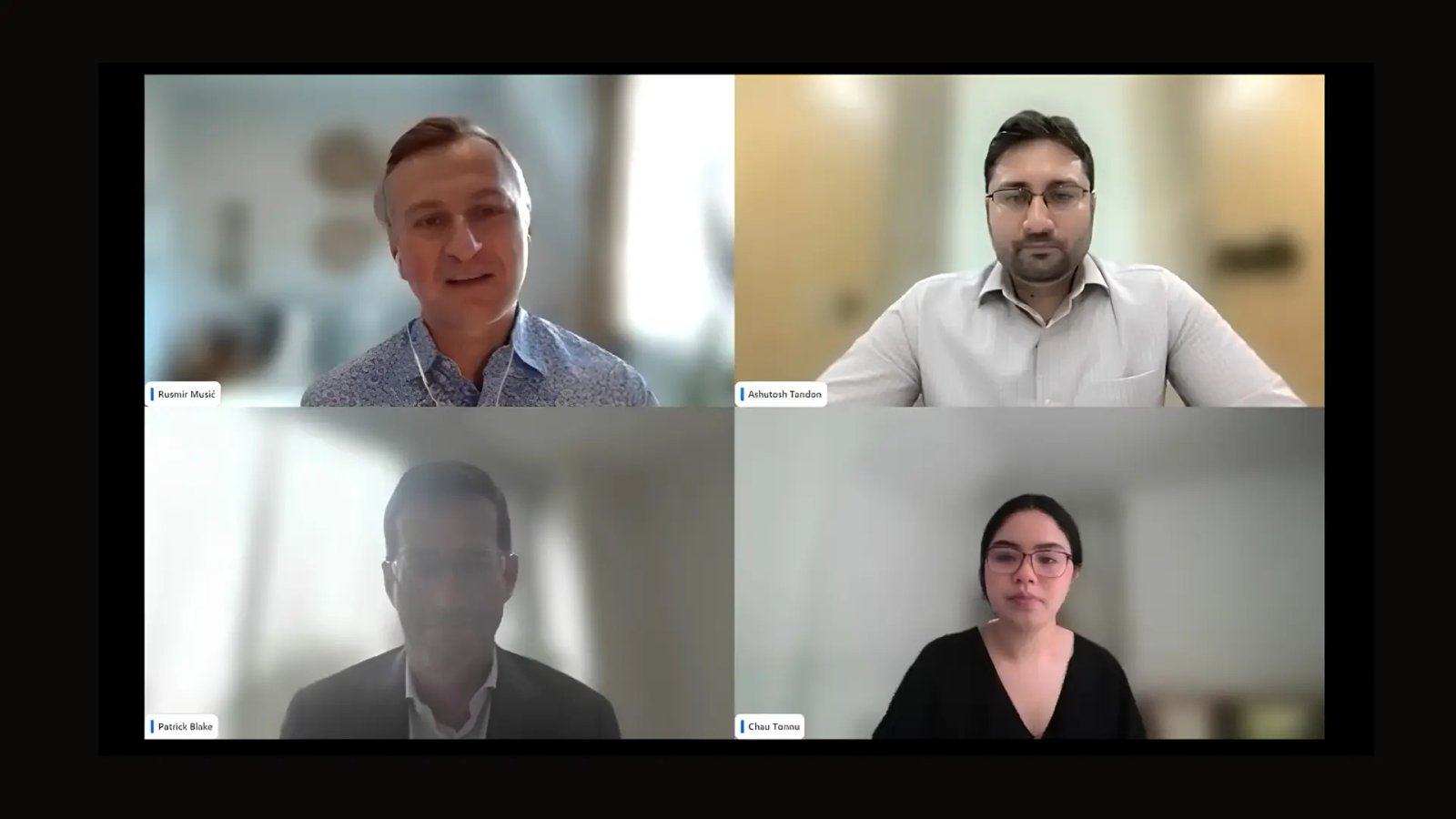
May’s Cool Talk on Taxonomies for Financing Efficient Consumer Appliances examined how classification frameworks can connect product efficiency standards with practical financing criteria for banks and other financial institutions.
The discussion focused on how taxonomies can help lenders identify eligible appliances, structure use-of-proceeds lending and track climate impact. Moderator Rusmir Musić, Global Cooling Lead at the World Bank Group, said many financial institutions may already be financing cooling assets but cannot identify or track them because they are included in agriculture, green buildings or wider energy efficiency portfolios.
“Practical tools such as positive lists can help institutions compare existing portfolios, isolate eligible assets, and expand dedicated lending for efficient cooling,” Musić said.
Patrick Blake, Programme Manager at UNEP’s United for Efficiency initiative, said Minimum Energy Performance Standards set the market floor by removing the least efficient products, while labels and financial incentives can support demand for higher-performing appliances. “MEPS eliminate the least efficient products from the market, but financial incentives and taxonomies can help advance products further in terms of efficiency and environmental impacts,” he said. Blake added that frameworks for cooling products must address both energy efficiency and refrigerants.
IFC, a member of the World Bank Group, presented its work on use-of-proceeds taxonomies for efficient consumer appliances in India, with emerging lessons from Viet Nam and Sri Lanka. Ashutosh Tandon, Advisory Services, Financial Institutions Group, said India’s household appliance market is expected to reach nearly USD 100 billion by 2030–31, while only 31 percent of appliances under mandatory labels in 2023 were rated four or five stars.
IFC used India’s labelling system to develop a positive list of eligible appliances, assessing sales volumes, technical baselines and energy savings potential against a minimum 20 percent improvement threshold. “Having a positive list-based approach can work both in the context of consumer appliances and when we look at MSME equipment,” Tandon said. The approach is informing financing in India and Viet Nam, with potential application in Sri Lanka, and is supported by a toolkit for estimating GHG savings and building efficient-appliance portfolios.
Senior Investment Officer Abhishek Sinha described IFC’s work with Bajaj Finance Limited, which has around 55% of India’s consumer durable financing market. “We looked at specific underlying asset classes in their portfolio, identified a few that made sense, looked at what the potential growth was in that asset class, and nudged them to grow the four- and five-star portfolio rather than the three-star portfolio,” Sinha said.
The discussion also covered passive cooling, building envelope measures, cold chain finance for agriculture and the need to assess country-level labels against efficiency improvement thresholds before lenders use them. Chau Tonnu, Senior Programme Manager at the UK Department for Energy Security and Net Zero, said efficient cooling finance is part of a broader market-building challenge. “Financial innovation can drive technological innovation,” she said.
The next Cool Talk will take place on 18 June and will focus on Extreme Heat Action in Cities and Communities.