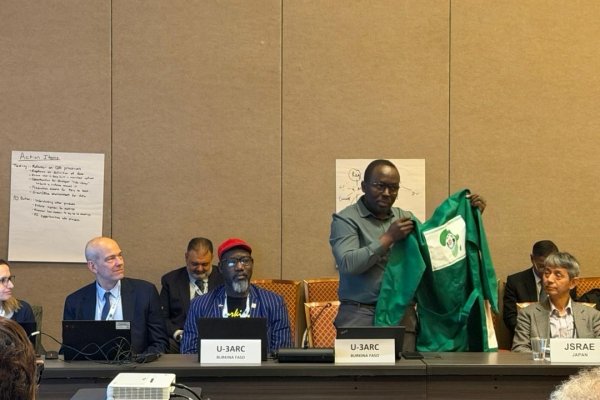
At the AASA internal technical seminar held in Las Vegas on February 2, 2026, the African Union of Associations of Refrigeration and Air Conditioning (U-3ARC) presented a strategic analysis on the refrigerant transition in Africa. Speaking before 62 global HVACR associations, U-3ARC emphasized the continent’s critical position in shaping the future of the refrigeration and air conditioning industry.
Represented by President Madi Sakandé and Secretary for Communication and External Affairs Basile Seburikoko, U-3ARC outlined Africa’s rising demand for cooling, driven by economic development, food security, and health-related cold chains. The organization identified this as a key opportunity to adopt sustainable technologies aligned with the Kigali Amendment.
According to U-3ARC, the adoption of natural refrigerants such as hydrocarbons offers benefits in energy efficiency, cost reduction, and suitability for solar and off-grid solutions. The transition also presents economic opportunities through local manufacturing, job creation, and technical innovation. The group underscored the importance of technician training as essential to achieving this transformation.
However, U-3ARC also detailed the major challenges the region faces, including limited technical knowledge of flammable refrigerants like R290 and R600a, regulatory inconsistencies, safety concerns, and the widespread presence of equipment using high-GWP HFCs.
As part of its presentation, U-3ARC introduced a proposal to establish a professional dress code for refrigeration technicians in Africa. The initiative aims to reinforce professional identity, safety culture, and recognition, with the potential to evolve into a global standard for the HVACR sector.
“Success will come through strengthened partnerships between African associations, industry, governments, and the international community,” the organization stated, highlighting technician training and professionalization as the foundation for a sustainable industry.