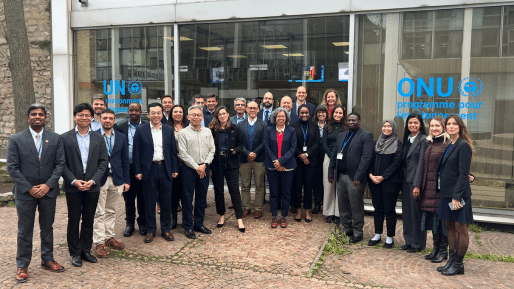
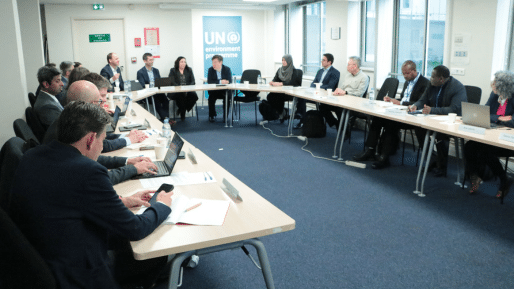
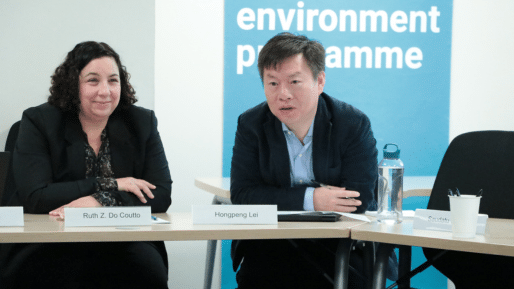
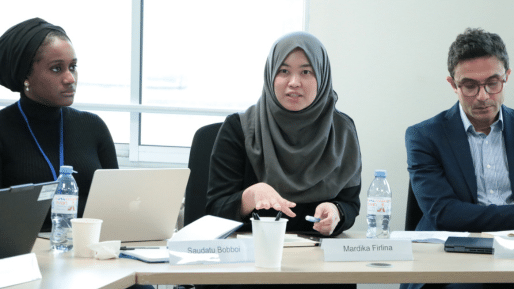
UNEP’s United for Efficiency (U4E) initiative hosted its second annual Partners’ Meeting on 3–4 December 2025 in Paris, bringing together around 35 representatives from governments, industry, financial institutions, and international organizations. The event aimed to strengthen collaboration on accelerating the adoption of energy-efficient products and systems worldwide.
Opening remarks from Ruth do Coutto, Deputy Director of UNEP’s Climate Change Division, and Hongpeng Lei, Chief of the Climate Change Mitigation Branch, emphasized energy efficiency as a critical pillar of climate action, referencing recent commitments from the G20 and COP28 under the Global Energy Efficiency Pledge for 2030 and findings from the IEA’s latest report.
U4E Programme Managers Brian Holuj and Patrick Blake highlighted growing global adoption of U4E’s Model Regulation Guidelines (MRGs), now used by over 60 countries. They noted increasing importance of digitalization, private-sector engagement, and new carbon footprint certification methods as countries prepare for upcoming regulatory and reporting requirements.
Participants from across Southeast Asia, Africa, Brazil, and China shared national and regional updates. In Southeast Asia, ASEAN governments are moving toward harmonized Minimum Energy Performance Standards (MEPS) and exploring a regional product registration system. In Africa, progress included new cooling MEPS in Mauritius and regional harmonization efforts through SADC and EAC. Nigeria presented results on MEPS and labeling impacts, including off-grid refrigeration for rural development.
Technical assistance projects in Brazil (commercial refrigeration) and Tunisia (lighting), along with insights from China’s standards and labeling programme, were identified as models for replication in other regions.
A recurring theme was the need to strengthen market monitoring and enforcement to ensure policy effectiveness. Participants discussed leveraging regional test facilities, such as the new environmental test chamber at the Africa Centre of Excellence for Sustainable Cooling and Cold Chain in Rwanda, and promoting mutual recognition agreements. Tools like Country Savings Assessments and sustainable public procurement frameworks were seen as essential to support long-term market transformation.
New strategic areas for U4E were also introduced, including support for energy-efficient data centres and AI infrastructure, system-level cooling solutions, tools for system-scale energy planning, and a manufacturer engagement platform to increase transparency and foster industry alignment on MEPS updates and refrigerant transitions. Participants stressed that affordability remains a key challenge, and noted that projects such as AGORA and coordinated bulk procurement could help address cost barriers.
The meeting concluded with renewed commitment from partners to continue collaboration and regular exchanges to advance shared energy-efficiency goals.
Source