Esta página solo está disponible en inglés. Ir a la portada en español

×

Questa pagina è disponibile solo in inglese. Home page in italiano

×

Diese Seite ist nur auf Englisch verfügbar. Zur deutschen Startseite

×

Cette page est disponible uniquement en anglais. Aller à la page d'accueil en français

×

Schmitz Cargobull introduces S.CU dc90 refrigeration unit with R454A in Europe

The model offers optional ePTO electric operation and integrates with the company's trailers, telematics and service packages.

Schmitz Cargobull introduces S.CU dc90 refrigeration unit with R454A in Europe

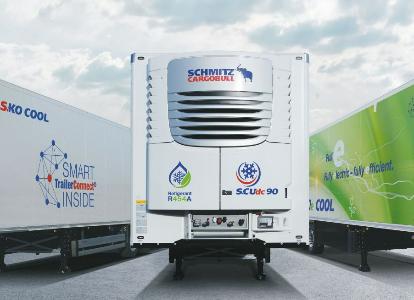
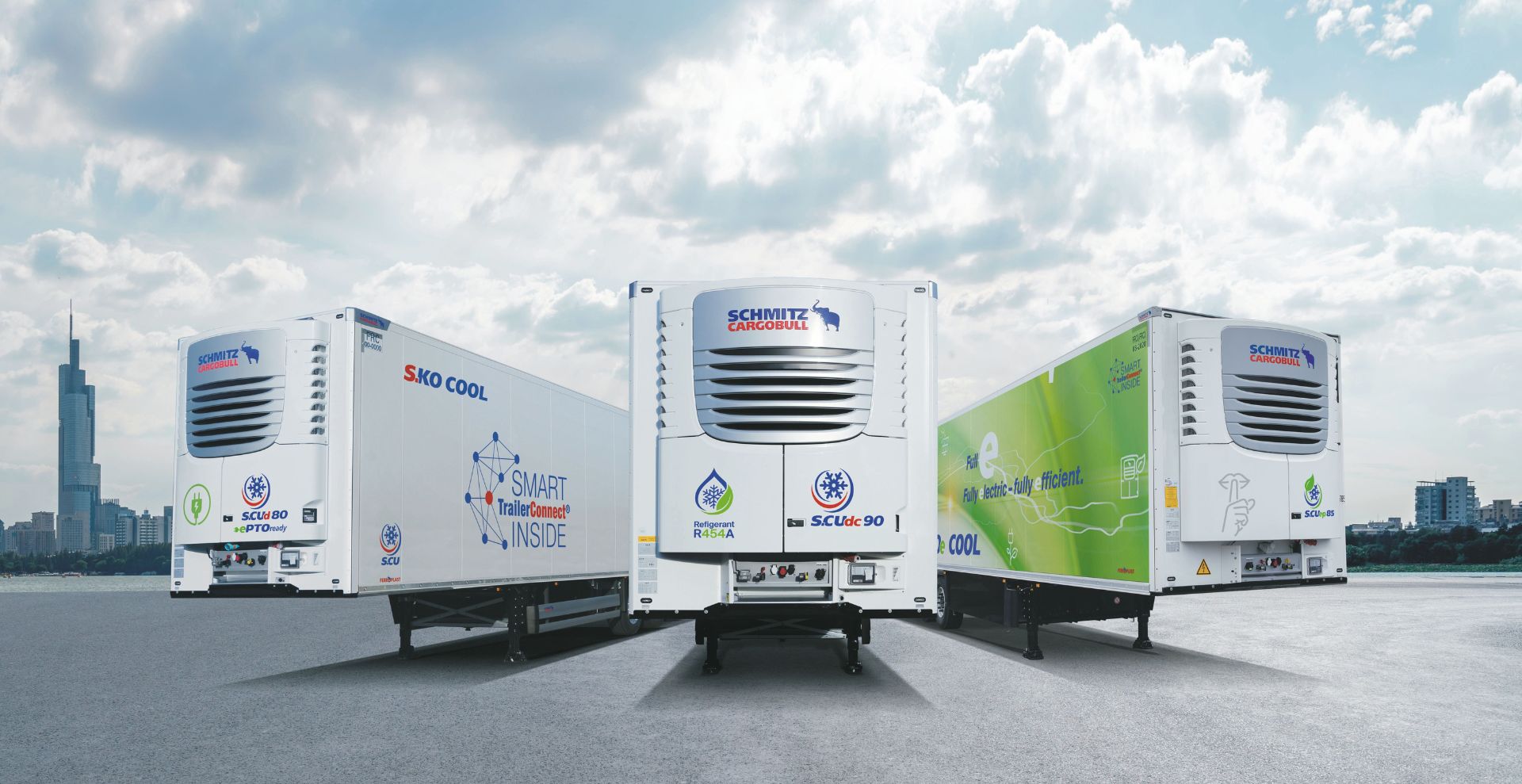
Schmitz Cargobull has launched the new S.CU dc90 transport refrigeration unit, expanding its modular refrigeration portfolio with a model designed for improved efficiency and sustainability. The new unit introduces the refrigerant R454A to the European market and supports future-oriented transport technologies, including electric operation via an optional ePTO (electric Power Take Off) interface.

The S.CU dc90 is part of Schmitz Cargobull’s full-system solution for temperature-controlled transport, which integrates the S.KO COOL refrigerated trailer, in-house S.CU refrigeration units, the TrailerConnect® telematics platform, and tailored service packages. According to the company, the coordinated interaction of these components ensures operational reliability, energy efficiency, and consistent temperature documentation across the cold chain.

Since establishing Cargobull Cool GmbH & Co. KG in 2012, Schmitz Cargobull has produced approximately 38,000 S.CU units. The penetration rate of the S.CU in S.KO COOL trailers has increased steadily, with about one in four trailers now delivered with an in-house refrigeration unit.

Ralph Kleideiter, CSO of Schmitz Cargobull AG, stated: “Reliability is the top priority in temperature-controlled transport. Today, our customers not only expect a high-performance refrigerated trailer, but also a seamlessly integrated system solution for their transport task.”

Schmitz Cargobull also continues to expand internationally. Following the 2023 formation of the joint venture “Cargobull North America (CBNA)” with Utility Trailer Manufacturing Company LLC, S.CU units are now produced for the North American market. These systems are tailored to local requirements and comply with the emissions standards of the California Air Resources Board (CARB). All units come standard with the TrailerConnect telematics system and are used exclusively in Utility refrigerated trailers.
Get the daily refrigeration briefing

One email a day. Trusted by 3,000+ RACHP professionals.

More on Cold Chain

All on Cold Chain →

Insights

Secop's Solar Direct Drive (SDD) System Earns WHO PQS Approval – The Team Behind It
Article

Secop’s Solar Direct Drive (SDD) System Earns WHO PQS Approval – The Team Behind It

Partner's material In March 2026, Secop’s Solar Direct Drive Power Management Module was granted WHO PQS prequalification and officially listed in the WHO Catalogue of Prequalified Immunization Devices. The WHO IMD-PQS (Immunization Devices Performance, Quality and Safety programme) is the global benchmark for cold chain equipment used in immunisation. Being listed in its catalogue is

22 Jun 2026
Case Study - Effect of Louvers or diffusers on air flow distribution and cooling time on a meat log during Chill cycle
Tech Guide

Case Study – Effect of Louvers or diffusers on air flow distribution and cooling time on a meat log during Chill cycle

By Kushal Aurangabadkar An experimental analysis was conducted on a cooler space measuring 3.66 m × 6.096 m (12.0 ft × 20.0 ft), equipped with an ammonia refrigeration coil, five 30 cm (12 in.) fans, and five diffusers. The study measured airflow patterns, cooling rates, and heat transfer efficiency in meat storage by testing two configurations:

Kushal Aurangabadkar · 21 Jan 2026
Total Cost of Ownership (TCO) for Modular Refrigeration Systems in Life Sciences Distribution Centers
Tech Guide

Total Cost of Ownership (TCO) for Modular Refrigeration Systems in Life Sciences Distribution Centers

by Ramez Naguib, P.E. Introduction Life sciences distribution centers are under immense pressure to deliver consistent temperature control, comply with increasingly stringent regulations, and optimize operational efficiency. Traditional built-up refrigeration systems often prove cumbersome, costly, and slow to implement. In contrast, modular, factory-assembled refrigeration systems have emerged as a compelling alternative. Drawing on lessons from

Ramez Naguib · 14 Jan 2026
Everything on Cold Chain: 2,058 articles, 2 case studies, 23 insights

Most read this month

All news →