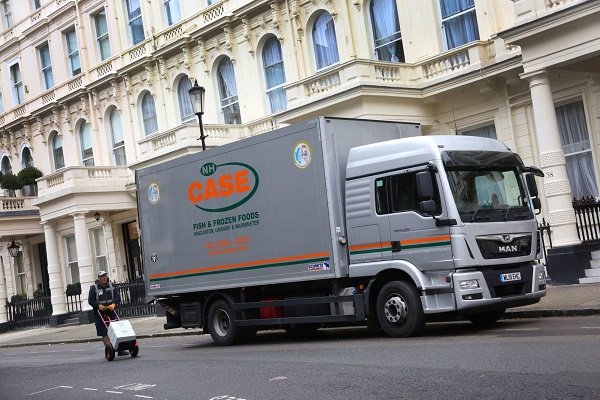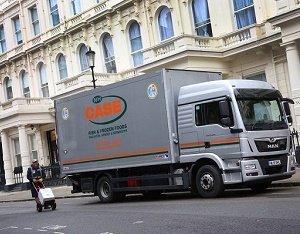
NH Case has marked 20 years of using Cold Chain Federation member Schmitz Cargobull truck bodies by acquiring a new rigid reefer for its chilled and frozen food transport operations across London.
The refrigerated truck body, mounted on a 15-tonne MAN TGM 4×2 chassis cab, will predominately operate in the capital’s new Ultra-Low Emission Zone, delivering fresh fish and ready meals to care homes, hospitals, prisons and schools.
NH Case chose the new addition to join its nine-strong rigid fleet because of the body’s robust build quality, which reduces repair requirements. As a result, the team, which makes approximately 75 deliveries a week, can be confident in meeting the intensive schedule without being affected by unplanned downtime.
Tony Thick, Transport Manager at NH Case, says: “Schmitz Cargobull’s truck bodies have the best build quality on the market. We’ve used them for two decades and we’ve always been impressed by their performance.
“The durability helps us to maximise our uptime and maintain our full fleet capacity at all times, which is essential as we’re operating according to time-critical delivery schedules.”
The new truck body features Schmitz Cargobull’s proven FERROPLAST panels for increased durability, which are stronger and thinner than standard glass-reinforced plastic (GRP) bodywork and less likely to sustain cosmetic damage.
An Anteo tail-lift also improves driver safety when unloading heavy goods from the truck.
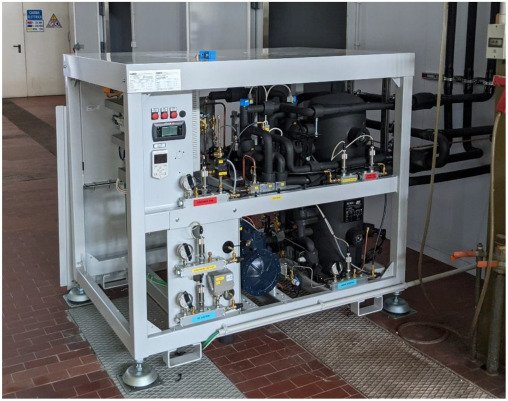
Cooling the truck body is a Carrier Transicold Supra 850 undermount refrigeration system, offering set points from -20 to +2 degrees Celsius.
Likely to remain in operation for at least a decade, all regular maintenance work will be carried out by NH Case at its vehicle depot in Wincanton. Additional aftersales support will be provided by Schmitz Cargobull’s nearby Service Partner, Spectra Specialist Engineering in Westbury, Wiltshire – one of more than 70 authorised workshops nationwide.
NH Case is a family-owned business established in the 1920s. It also has a fish processing facility in Grimsby and a ready meal production site in Warminster. The firm is accredited by the British Retail Consortium, and has additional certifications from the Marine Stewardship Council and British Standards Institute.